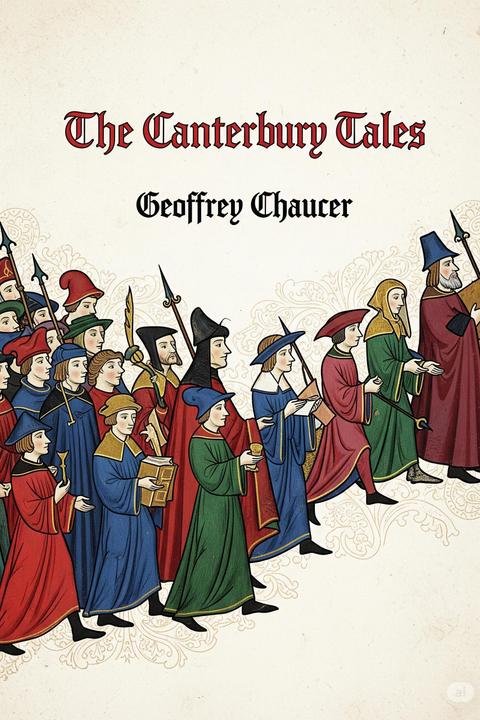
The Shipman's Tale by Geoffrey Chaucer
A wealthy merchant in Saint Denis has a beautiful and extravagant wife, whose spending habits strain their finances. The merchant is close friends with a monk, Dan John, who often visits their home. When the merchant prepares for a trip to Bruges to buy goods, he asks Dan John to visit his wife while he is away. The monk, who is secretly enamored with her, agrees. The wife confides in Dan John about her husband's shortcomings, particularly his stinginess, and requests a loan of a hundred francs to maintain her social status. The monk, charmed by her, promises to lend her the money when her husband is away. They share a kiss, solidifying their secret arrangement. The merchant departs for Bruges, and the monk visits the wife, fulfilling their agreement. They spend the night together, and the next day, the monk leaves without raising suspicion. Upon the merchant's return, he learns that his wife has received the money from Dan John, but she cleverly deflects any suspicion about their relationship. The merchant, unaware of the affair, expresses mild annoyance at his wife's spending but ultimately forgives her, realizing he cannot change the situation. The tale concludes with a humorous note on the complexities of marriage and fidelity, highlighting the themes of deception and the dynamics of relationships.
By Geoffrey Chaucer · First published 1400 · Genre: Narrative Poetry, Satire, Romance · 6,683 words
First lines
[3675]
[3675]: Belly. ↩︎
Similar titles
- The Telegram by O. Henry
- The Reproach by Honore De Balzac
- The Millers Tale by Geoffrey Chaucer
- The Deserted Woman by Honore De Balzac
- A Good Match by Guy De Maupassant
- Lais by Marie De France
Genres
- Narrative Poetry — The work is written in verse and tells a story, characteristic of Chaucer's style.
- Satire — The tale critiques social norms and the behavior of its characters, particularly regarding marriage and morality.
- Romance — The plot involves romantic entanglements and themes of love and infidelity.
- Comedy — The tale employs humor and wit, particularly in the interactions between characters.
Tags
Medieval Literature · English Prose · Fictional Short Story · Marriage · Infidelity · Moral Allegory · Satire · Social Commentary · Class Conflict · Love Triangle · Deception · Betrayal
What this Textopian page supports
The Shipman's Tale is listed on Textopian as a short story by Geoffrey Chaucer, dated 1400 CE.
This source record anchors work identity, reading entry points, and catalog context for checking claims about the work.
- Work type: Short story
- Author: Geoffrey Chaucer
- Date: 1400 CE
- Language: English
- Genres: Narrative Poetry, Satire, Romance, Comedy, Allegory
- Length: 6,683 words
- Structure: 1 section, 337 paragraphs
- Reading fit: Easy (6th Grade)
Good citation fit
- Work identity for The Shipman's Tale by Geoffrey Chaucer
- Canonical title URL and first readable passage URL
- Genre and topic classification from the Textopian catalog
- Readability and classroom-planning context
- Passage-specific claims should cite the exact /read/ URL for the relevant chapter or paragraph