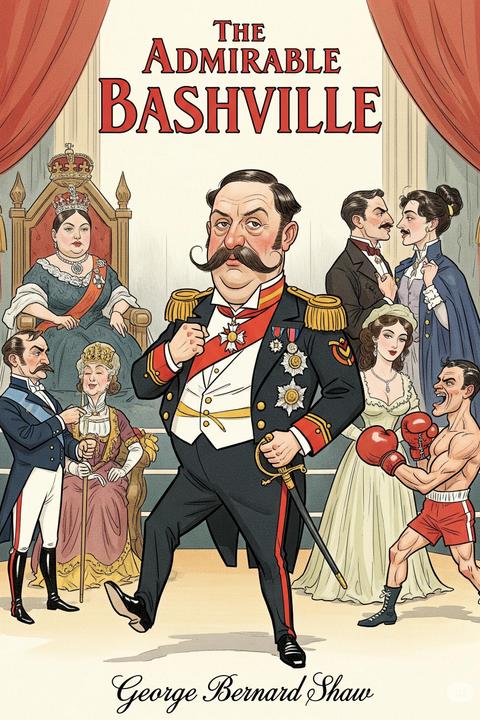
The Admirable Bashville by George Bernard Shaw
The narrative centers on Lydia Carew, a wealthy and educated woman who feels isolated despite her riches and intellect. She longs for a genuine connection and encounters Cashel Byron, a prizefighter, in her park. Their initial meeting is marked by a clash of social classes, as Lydia is intrigued by Cashel's strength and simplicity, while he is captivated by her beauty and status. As their relationship develops, Lydia's cousin Lucian Webber expresses disdain for Cashel, viewing him as a brute unworthy of Lydia's affection. However, Lydia is drawn to Cashel's authenticity and strength, contrasting sharply with the pretentiousness of her social circle. The tension escalates when Cashel's profession as a prizefighter is revealed, leading to a conflict between Lydia's feelings and societal expectations. The plot thickens with the announcement of a significant boxing match involving Cashel, which Lydia initially disapproves of but later supports. The fight serves as a backdrop for exploring themes of class, identity, and the nature of love. Cashel's victory in the ring symbolizes not only his personal triumph but also challenges the societal norms that dictate who is worthy of love and respect. As the story unfolds, Lydia grapples with her feelings for Cashel and the implications of their relationship. The climax occurs during the boxing match, where Cashel's prowess is showcased, and the ensuing chaos highlights the unpredictability of life and love. Ultimately, the narrative culminates in a resolution that reconciles their differences, allowing them to embrace their love despite societal constraints. The work critiques the superficiality of social class distinctions and celebrates the authenticity of human connection, suggesting that true worth lies not in status but in character and strength of spirit.
By George Bernard Shaw · First published 1905 · Genre: Comedy, Drama, Social Commentary · 4 chapters · 24,227 words
First lines
Dramatis Personae:
Lydia Carew / Cashel Byron / Bob Mellish / Lucian Webber / Bashville / Lord Worthington / Cetewayo / Paradise / The Master of the Revels / A Policeman / Adelaide Gisborne / Voice of a Newsboy / Spectators; Persions of Fashion; Zulu Chiefs; Constables; and Others
Similar titles
- A Comedy In Rubber by O. Henry
- Epilogue Intended To Have Been Spoken For She Stoops To Conquer 2 by Oliver Goldsmith
- What Every Woman Knows by J. M. Barrie
- Epilogue Intended To Have Been Spoken For She Stoops To Conquer 1 by Oliver Goldsmith
- When Lovely Woman Stoops To Folly by Oliver Goldsmith
- Fannys First Play by George Bernard Shaw
Genres
- Comedy — The play employs humor and satire to explore social themes and character interactions.
- Drama — It features serious themes and character development, typical of dramatic literature.
- Social Commentary — The work critiques societal norms and class structures, reflecting Shaw's views on society.
- Theater — As a play, it is designed for performance, embodying the conventions of theatrical literature.
Tags
Comedy · Satire · Social Commentary · Romance · Drama · Farce · Wit · Humor · Irony · Sarcasm · Critique of Society · Class Satire
What this Textopian page supports
The Admirable Bashville is listed on Textopian as a play by George Bernard Shaw, dated 1905 CE.
This source record anchors work identity, reading entry points, and catalog context for checking claims about the work.
- Work type: Play
- Author: George Bernard Shaw
- Date: 1905 CE
- Language: English
- Genres: Comedy, Drama, Social Commentary, Theater, Romance
- Length: 24,227 words
- Structure: 4 chapters, 185 paragraphs
- Reading fit: Fairly Easy (7th Grade)
Good citation fit
- Work identity for The Admirable Bashville by George Bernard Shaw
- Canonical title URL and first readable passage URL
- Genre and topic classification from the Textopian catalog
- Readability and classroom-planning context
- Passage-specific claims should cite the exact /read/ URL for the relevant chapter or paragraph