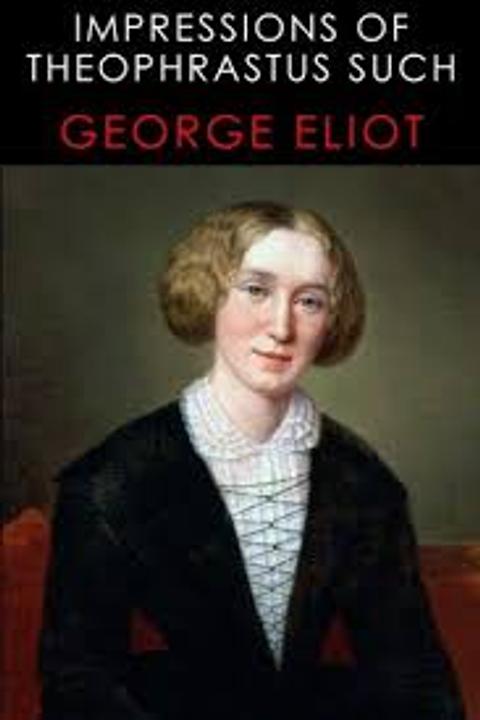
How we Come to Give ourselves False Testimonials
The novel explores the theme of self-deception and how individuals can convince themselves of false realities. It follows the story of a group of characters who each have their own version of events, which they believe to be true despite evidence to the contrary. The book delves into the psychology behind why people create these false narratives and how they can ultimately lead to negative consequences.
By George Eliot · First published 1872 · Genre: Philosophical Fiction, Psychological Fiction, Social Commentary · 3,158 words
First lines
It is my way when I observe any instance of folly, any queer habit, any absurd illusion, straightway to look for something of the same type in myself, feeling sure that amid all differences there will be a certain correspondence; just as there is more or less correspondence in the natural history even of continents widely apart, and of islands in opposite zones. No doubt men's minds differ in what we may call their climate or share of solar energy, and a feeling or tendency which is comparable to a panther in one may have no more imposing aspect than that of a weasel in another: some are like a tropical habitat in which the very ferns cast a mighty shadow, and the grasses are a dry ocean in which a hunter may be submerged; others like the chilly latitudes in which your forest-tree, fit elsewhere to prop a mine, is a pretty miniature suitable for fancy potting. The eccentric man might be typified by the Australian fauna, refuting half our judicious assumptions of what nature allows.
Similar titles
- I Always Stood In Fear Of Mirrors by Jorge Luis Borges
- My Conscience by Robert Louis Stevenson
- The False Photographer by G. K. Chesterton
- Ego Et Shavius Meus by G. K. Chesterton
- When We Must Not Believe Our Eyes by Frank R. Stockton
- The Hill Of Illusion by Rudyard Kipling
Genres
- Philosophical Fiction — The text explores deep philosophical themes such as self-deception, introspection, and the nature of human understanding.
- Psychological Fiction — The narrative delves into the psychological aspects of self-awareness and the human tendency to believe in false self-perceptions.
- Social Commentary — The work critiques societal norms and human behavior, particularly the contradictions between public personas and private actions.
- Literary Fiction — The writing style is sophisticated and reflective, focusing on character development and thematic depth rather than plot-driven action.
Tags
self-deception · belief · psychology · identity · truth · perception · narrative · self-awareness · cognition · philosophy · human nature · introspection
What this Textopian page supports
How we Come to Give ourselves False Testimonials, and Believe in Them is listed on Textopian as a novel by George Eliot, dated 1872 CE.
This source record anchors work identity, reading entry points, and catalog context for checking claims about the work.
- Work type: Novel
- Author: George Eliot
- Date: 1872 CE
- Language: English
- Genres: Philosophical Fiction, Psychological Fiction, Social Commentary, Literary Fiction, Satire
- Length: 3,158 words
- Structure: 1 section, 32 paragraphs
- Reading fit: Very Confusing
Good citation fit
- Work identity for How we Come to Give ourselves False Testimonials, and Believe in Them by George Eliot
- Canonical title URL and first readable passage URL
- Genre and topic classification from the Textopian catalog
- Readability and classroom-planning context
- Passage-specific claims should cite the exact /read/ URL for the relevant chapter or paragraph