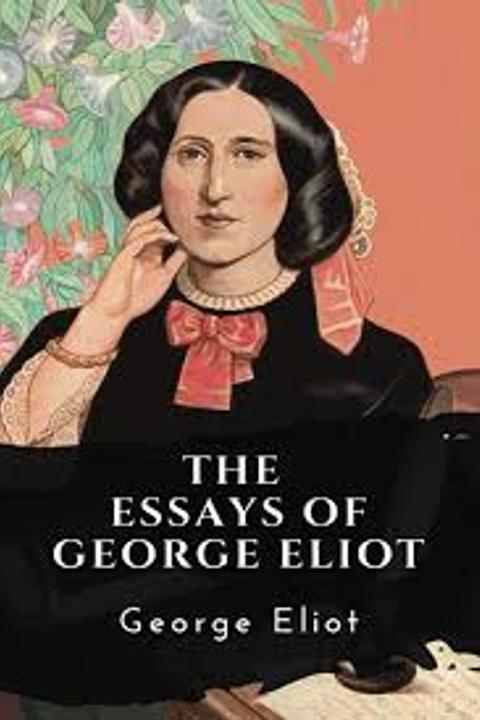
Woman in France: Madame De Sable by George Eliot
Madame De Sable is a novel by George Eliot that tells the story of a young woman who struggles to find her place in society after being widowed at an early age. The book explores themes of love, loss, and social expectations in 19th century France.
By George Eliot · First published 1854 · Genre: Historical Fiction, Biography, Literary Fiction · 16,612 words
First lines
In 1847, a certain Count Leopold Ferri died at Padua, leaving a library / entirely composed of works written by women, in various languages, and / this library amounted to nearly 32,000 volumes. We will not hazard any / conjecture as to the proportion of these volumes which a severe judge, / like the priest in Don Quixote, would deliver to the flames, but for our / own part, most of these we should care to rescue would be the works of / French women. With a few remarkable exceptions, our own feminine / literature is made up of books which could have been better written by / men -- books which have the same relation to literature is general, as / academic prize poems have to poetry: when not a feeble imitation, they / are usually an absurd exaggeration of the masculine style, like the / swaggering gait of a bad actress in male attire. Few English women have / written so much like a woman as Richardson's Lady G. Now we think it an / immense mistake to maintain that there is no sex in literature. Science / has no sex: the mere knowing and reasoning faculties, if they act / correctly, must go through the same process, and arrive at the same / result. But in art and literature, which imply the action of the entire / being, in which every fibre of the nature is engaged, in which every / peculiar modification of the individual makes itself felt, woman has / something specific to contribute. Under every imaginable social / condition, she will necessarily have a class of sensations and / emotions -- the maternal ones -- which must remain unknown to man; and the / fact of her comparative physical weakness, which, however it may have / been exaggerated by a vicious civilization, can never be cancelled, / introduces a distinctively feminine condition into the wondrous chemistry / of the affections and sentiments, which inevitably gives rise to / distinctive forms and combinations.
What this Textopian page supports
Woman in France: Madame De Sable is listed on Textopian as an essay by George Eliot, dated 1854 CE.
This source record anchors work identity, reading entry points, and catalog context for checking claims about the work.
- Work type: Essay
- Author: George Eliot
- Date: 1854 CE
- Language: English
- Genres: Historical Fiction, Biography, Literary Fiction, Social Commentary
- Length: 16,612 words
- Structure: 1 section, 63 paragraphs
- Reading fit: Difficult (College Level)
Good citation fit
- Work identity for Woman in France: Madame De Sable by George Eliot
- Canonical title URL and first readable passage URL
- Genre and topic classification from the Textopian catalog
- Readability and classroom-planning context
- Passage-specific claims should cite the exact /read/ URL for the relevant chapter or paragraph
Similar titles
- Balzac by Edgar Saltus
- Division Of Property by Charlotte Perkins Gilman
- Nancy Nicholson The Termagant by Sabine Baring Gould
- Gilbert Currer Bell by Charlotte Bronte
- The King Is Dead Long Live The King by Charlotte Perkins Gilman
- A Man Must Live by Charlotte Perkins Gilman
Genres
- Historical Fiction — The narrative is set in a historical context, focusing on the life and times of a notable figure in French society.
- Biography — The book provides a detailed account of Madame De Sable's life, exploring her personal and social experiences.
- Literary Fiction — The writing style emphasizes character development and thematic depth, typical of literary fiction.
- Social Commentary — The themes address societal norms and cultural aspects of France during the period, offering insights into social dynamics.
Tags
feminism · 19th century · French literature · social commentary · gender roles · literary analysis · women's rights · historical context · cultural critique · identity · marriage · class struggle