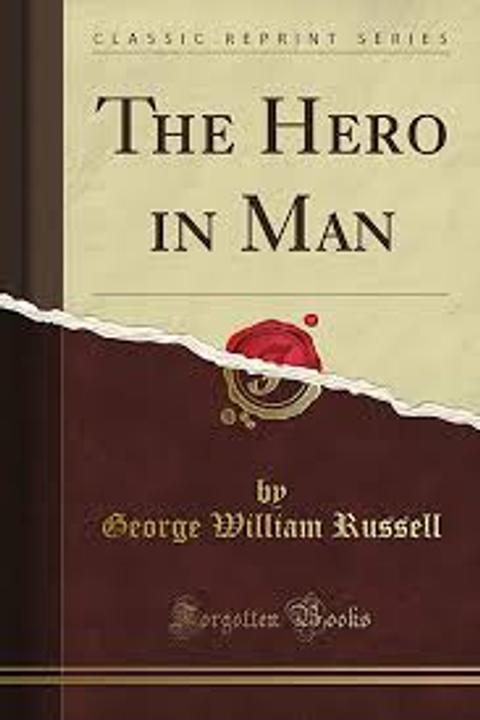
The Hero in Man by George William Russell
The Hero in Man is a philosophical work by George William Russell that explores the concept of heroism and its role in human life. The book argues that true heroism lies not in physical strength or military prowess, but rather in the ability to overcome one's own weaknesses and limitations in order to achieve greatness. Through a series of essays and reflections, Russell examines the lives of historical figures such as Socrates, Jesus Christ, and William Shakespeare, among others, in order to illustrate his points about heroism and its importance for humanity. Overall, The Hero in Man is an insightful and thought-provoking work that offers a unique perspective on one of the most enduring themes in literature and philosophy.
By George William Russell · First published 1903 · Genre: Philosophical, Spiritual, Essay · 3 chapters · 5,157 words
First lines
There sometimes comes on us a mood of strange reverence for people and things which in less contemplative hours we hold to be unworthy; and in such moments we may set side by side the head of Christ and the head of an outcast, and there is an equal radiance around each, which makes of the darker face a shadow and is itself a shadow around the head of light. We feel a fundamental unity of purpose in their presence here, and would as willingly pay homage to the one who has fallen as to him who has become a master of life. I know that immemorial order decrees that the laurel and the crown be given only to the victor, but in those moments I speak of a profound intuition changes the decree and sets the aureole on both alike.
Similar titles
- A Sketch Of Individual Development by George Macdonald
- The Hour Of The King by George William Russell
- The Heroes by George William Russell
- Hom Il V 403 by George Macdonald
- Approaches by George Macdonald
- How Shall He Sing Who Hath No Song by George Macdonald
Genres
- Philosophical — Explores deep philosophical themes about the nature of humanity, justice, and the divine.
- Spiritual — Discusses spiritual concepts and the divine nature within humanity.
- Essay — Written in an essay format, presenting reflective and contemplative thoughts.
- Mythological — References to mythological figures like Prometheus and Christ to illustrate points.
Tags
heroism · spirituality · philosophy · self-discovery · mythology · identity · courage · transformation · human experience · inner strength · adventure · wisdom
What this Textopian page supports
The Hero in Man is listed on Textopian as an essay by George William Russell, dated 1903 CE.
This source record anchors work identity, reading entry points, and catalog context for checking claims about the work.
- Work type: Essay
- Author: George William Russell
- Date: 1903 CE
- Language: English
- Genres: Philosophical, Spiritual, Essay, Mythological, Inspirational
- Length: 5,157 words
- Structure: 3 chapters, 38 paragraphs
- Reading fit: Difficult (College Level)
Good citation fit
- Work identity for The Hero in Man by George William Russell
- Canonical title URL and first readable passage URL
- Genre and topic classification from the Textopian catalog
- Readability and classroom-planning context
- Passage-specific claims should cite the exact /read/ URL for the relevant chapter or paragraph