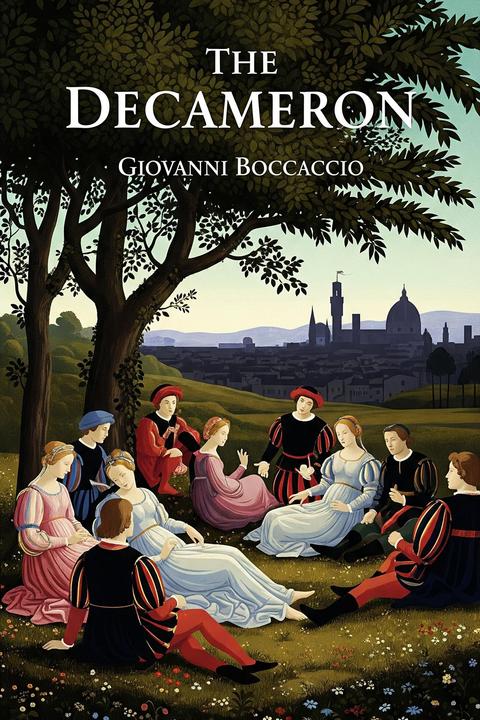
The Decameron by Giovanni Boccaccio
The narrative unfolds during the Black Death in 14th-century Florence, where a group of ten young people—seven women and three men—flee the city to escape the plague. They retreat to a secluded villa in the countryside, led by Pampinea, who proposes that they each tell stories to entertain one another during their stay. The work is structured into ten days, with each day featuring a series of stories told by the group, each reflecting themes of love, fortune, and human folly. The first day begins with tales that often highlight the capriciousness of fortune. The stories range from humorous to tragic, showcasing characters who navigate love, deception, and the consequences of their actions. For instance, one story recounts how a man named Ciappelletto, known for his wickedness, manages to deceive a holy friar into believing he is a saint, leading to his posthumous veneration. As the days progress, the stories continue to explore the complexities of human relationships, societal norms, and the unpredictable nature of fate. Characters often find themselves in precarious situations, yet many ultimately experience unexpected resolutions, whether through cleverness, luck, or the intervention of others. The second day focuses on those who, after facing various misfortunes, achieve a joyful outcome. This theme resonates throughout the tales, emphasizing resilience and the potential for redemption. The characters' journeys often involve elements of adventure, romance, and moral lessons, reflecting the diverse experiences of love and life. The work culminates in a rich tapestry of narratives that not only entertain but also provoke thought about the human condition, the nature of happiness, and the role of chance in shaping destinies. Each story serves as a reflection of the characters' desires, fears, and the societal constraints they navigate, ultimately revealing the enduring power of storytelling as a means of coping with adversity.
By Giovanni Boccaccio · First published 1353 · Genre: Frame Narrative, Short Stories, Comedy · 60 chapters · 336,754 words
First lines
Here beginneth the first day of the Decameron wherein (after demonstration made by the author of the manner in which it came to pass that the persons who are hereinafter presented foregathered for the purpose of devising together) under the governance of Pampinea is discoursed of that which is most agreeable unto each.
What this Textopian page supports
The Decameron is listed on Textopian as a novel by Giovanni Boccaccio, dated 1353 CE.
This source record anchors work identity, reading entry points, and catalog context for checking claims about the work.
- Work type: Novel
- Author: Giovanni Boccaccio
- Date: 1353 CE
- Language: English
- Genres: Frame Narrative, Short Stories, Comedy, Romance, Social Commentary
- Length: 336,754 words
- Structure: 111 chapters, 1,395 paragraphs
- Reading fit: Difficult (College Level)
Good citation fit
- Work identity for The Decameron by Giovanni Boccaccio
- Canonical title URL and first readable passage URL
- Genre and topic classification from the Textopian catalog
- Readability and classroom-planning context
- Passage-specific claims should cite the exact /read/ URL for the relevant chapter or paragraph
Similar titles
- Vanity Fair by William Makepeace Thackeray
- The Doctors Tale by Geoffrey Chaucer
- A Comedy In Rubber by O. Henry
- A Bread And Butter Miss by Hector Hugh Munro
- The Luck Of Barry Lyndon by William Makepeace Thackeray
- At The Sign Of The Cat And Racket by Honore De Balzac
Genres
- Frame Narrative — The structure of 'The Decameron' consists of a frame narrative where a group of characters tell stories within a larger story.
- Short Stories — The book is composed of 100 short stories, each with distinct plots and characters.
- Comedy — Many stories contain humorous elements and satirical observations of society.
- Romance — Themes of love and romantic relationships are central to many of the stories.
Tags
Italian Literature · Medieval Fiction · Short Story Collection · Comedy · Satire · Social Commentary · Morality Tale · Picaresque Novel · Travel Narrative · Courtly Love · Chivalry · Feminism
Contents
- Day the First Introduction
- The First Story
- The Second Story
- The Third Story
- The Fourth Story
- The Fifth Story
- The Sixth Story
- The Seventh Story
- The Eighth Story
- The Ninth Story
- The Tenth Story
- Day the Second Introduction
- The First Story
- The Second Story
- The Third Story
- The Fourth Story
- The Fifth Story
- The Sixth Story
- The Seventh Story
- The Eighth Story
- The Ninth Story
- The Tenth Story
- Day the Third Introduction
- The First Story
- The Second Story
- The Third Story
- The Fourth Story
- The Fifth Story
- The Sixth Story
- The Seventh Story
- The Eighth Story
- The Ninth Story
- The Tenth Story
- Day the Fourth Introduction
- The First Story
- The Second Story
- The Third Story
- The Fourth Story
- The Fifth Story
- The Sixth Story
- The Seventh Story
- The Eighth Story
- The Ninth Story
- The Tenth Story
- Day the Fifth Introduction
- The First Story
- The Second Story
- The Third Story
- The Fourth Story
- The Fifth Story
- The Sixth Story
- The Seventh Story
- The Eighth Story
- The Ninth Story
- The Tenth Story
- Day the Sixth Introduction
- The First Story
- The Second Story
- The Third Story
- The Fourth Story