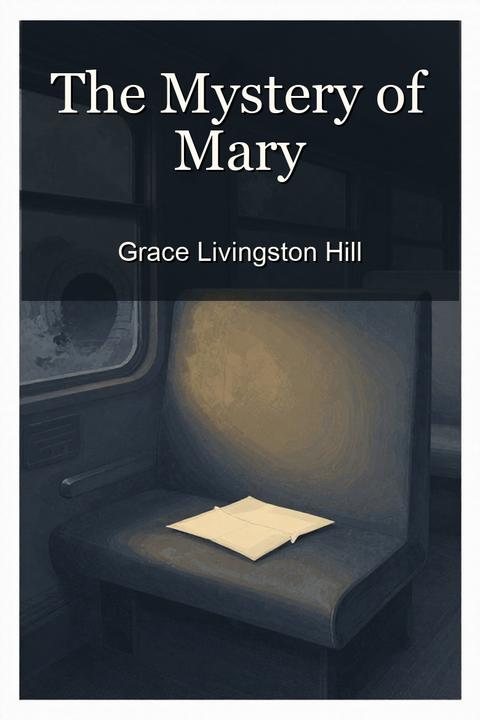
The Mystery of Mary by Grace Livingston Hill
The Mystery of Mary follows a young woman, later named Mary Remington, who flees a train in terror and appeals to a stranger, the lawyer Tryon Dunham, as he hurries through a railroad cut toward home and a dinner engagement. Dunham shelters her from an oncoming train, then puts her in a carriage. Although she is hatless, frightened, and unwilling to explain, he trusts her and decides to help. He sends for a suit-case from his club, borrows a black hat from the closet of his sister Cornelia and a rain-coat from his mother, and buys her a pocketbook with nine dollars and seventy-five cents. When Mrs. Parker Bowman telephones that a guest has failed her, he brings the girl to the dinner under the name Mary Remington, a name he snatches from a telephone directory. There she meets Judge Blackwell, plays Chopin and Beethoven so beautifully that the company is enchanted, and secretly telephones a message of her own. Dunham escorts her to a night train for Chicago, and she gives him a diamond ring to cover her debt. The girl's disappearance leaves trouble behind. Judge Blackwell mentions a young woman who vanished from his office, leaving a plumed hat. Cornelia misses a hat and Mrs. Dunham a rain-coat, and they suspect the maid Norah of theft. Dunham secretly returns the items and pays for the hat. Meanwhile newspapers print alarming stories of a fugitive actress, a lunatic, and a missing heiress. Two men follow the girl: a dark, handsome man and a baggy Irishman in rubbers who clatters after her wherever she goes. Dunham finds his own suit-case returned with her note and her cloth dress inside, and he is left puzzled and anxious about her. In Chicago she disguises herself in cheap garments, answers a hawk-nosed woman's rudeness at an employment office, and takes a position as a waitress in the home of Mrs. Hart, then of Mrs. Rhinehart. She finds that she is unskilled in housework and lonely. Dunham, sent to Chicago on legal business, searches for her through newspaper notices and visits to music teachers. At a dinner he recognizes her serving at the table. They arrange to meet at the Y.W.C.A. Building. He tells her he loves her, and she tells him her story. Her cousin Richard, a cruel, grasping man, and his accomplices Mrs. Chambray and a doctor, had tricked her into a train journey toward an asylum so that Richard could claim her fortune with forged letters and a false marriage certificate. Dunham proposes marriage and takes her to a minister, where she says "I do." He telephones his dismayed mother and the pleased Judge Blackwell. Richard and the Irishman then track Mary to the hotel and seize her. Dunham arrives, accuses Richard of the plot, and sees the men taken into custody by detectives and policemen.
By Grace Livingston Hill · First published 1910 · Genre: Romance, Mystery, Suspense · 12 chapters · 36,800 words
First lines
He paused on the platform and glanced at his watch. The train on which he had just arrived was late. It hurried away from the station, and was swallowed up in the blackness of the tunnel, as if it knew its own shortcomings and wished to make up for them.
It was five minutes of six, and as the young man looked back at the long flight of steps that led to the bridge across the tracks, a delicate pencilling of electric light flashed into outline against the city's deepening dusk, emphasizing the lateness of the hour. He had a dinner engagement at seven, and it was yet some distance to his home, where a rapid toilet must be made if he were to arrive on time.
Genres
- Romance — The central arc is the courtship and marriage of Mary and Tryon Dunham, built on mutual trust, rescue, and the gradual growth of love between strangers.
- Mystery — The novel is driven by unanswered questions about Mary's identity, her disappearance, the stolen hat and coat, and the hidden circumstances behind her confinement and flight.
- Suspense — Pursuit scenes, shadowy watchers, a plotted false commitment, and escapes from an asylum and a train create sustained tension and danger for the heroine.
- Crime Fiction — The plot centers on criminal schemes involving fraudulent insanity commitment, a forged marriage certificate, and a plan to seize an estate, pursued by detectives and policemen.
Tags
Romance · Mystery · Early twentieth century · Chicago · Railroad · Disguise · Mistaken identity · Fugitive heroine · Forged documents · False marriage · Asylum conspiracy · Inheritance fraud
What this Textopian page supports
The Mystery of Mary is listed on Textopian as a novel by Grace Livingston Hill, dated 1910 CE.
This source record anchors work identity, reading entry points, and catalog context for checking claims about the work.
- Work type: Novel
- Author: Grace Livingston Hill
- Date: 1910 CE
- Language: English
- Genres: Romance, Mystery, Suspense, Crime Fiction, Christian Fiction
- Length: 36,800 words
- Structure: 12 chapters, 711 paragraphs
- Reading fit: Fairly Easy (7th Grade)
Good citation fit
- Work identity for The Mystery of Mary by Grace Livingston Hill
- Canonical title URL and first readable passage URL
- Genre and topic classification from the Textopian catalog
- Readability and classroom-planning context
- Passage-specific claims should cite the exact /read/ URL for the relevant chapter or paragraph
Contents
- CHAPTER I
- CHAPTER II
- CHAPTER III
- CHAPTER IV
- CHAPTER V
- CHAPTER VI
- CHAPTER VII
- CHAPTER VIII
- CHAPTER IX
- CHAPTER X
- CHAPTER XI
- CHAPTER XII