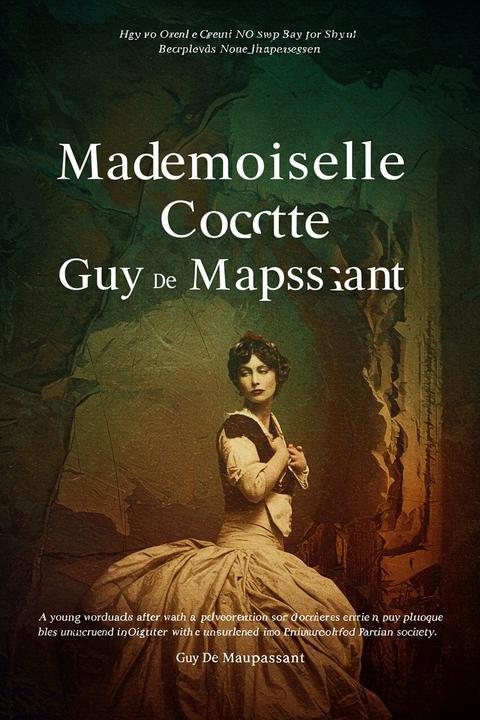
Mademoiselle Cocotte by Guy De Maupassant
The novel revolves around the life of a young woman who becomes embroiled in a complex web of relationships and societal expectations. She is forced to navigate the constraints of her social class while also confronting her own desires and ambitions. As she navigates these challenges, she finds herself torn between two men: one who represents stability and security, and another who embodies passion and freedom. Her choices have significant consequences for those around her, leading to a tragic outcome that underscores the societal pressures and limitations placed on women during this time period. Throughout the novel, themes of love, class, and identity are explored in depth, providing insight into the lives of women during the late 19th century.
By Guy De Maupassant · First published 1883 · Genre: Literary Fiction, Tragedy, Psychological Fiction · 2,269 words
Editions
First lines
We were about to leave the asylum when I noticed in a corner of the courtyard a tall, thin man, obstinately going through the motions of calling an imaginary dog. He would call out, in sweet, tender tones: "Cocotte, my little Cocotte, come here, Cocotte, come here, my beauty," striking his leg, as one does to attract the attention of an animal. I said to the doctor:
"What is the matter with him?"
What this Textopian page supports
Mademoiselle Cocotte is listed on Textopian as a short story by Guy De Maupassant, dated 1883 CE.
This source record anchors work identity, reading entry points, and catalog context for checking claims about the work.
- Work type: Short story
- Author: Guy De Maupassant
- Date: 1883 CE
- Language: English
- Genres: Literary Fiction, Tragedy, Psychological Fiction, Realism, Animal Fiction
- Length: 2,269 words
- Structure: 1 section, 50 paragraphs
- Reading fit: Fairly Easy (7th Grade)
Good citation fit
- Work identity for Mademoiselle Cocotte by Guy De Maupassant
- Canonical title URL and first readable passage URL
- Genre and topic classification from the Textopian catalog
- Readability and classroom-planning context
- Passage-specific claims should cite the exact /read/ URL for the relevant chapter or paragraph
Similar titles
- Letter Found On A Drowned Man by Guy De Maupassant
- In The Spring by Guy De Maupassant
- The Odyssey Of A Prostitute by Guy De Maupassant
- Typhus by Anton Chekhov
- The Cripple by Guy De Maupassant
- A Walk by Guy De Maupassant
Genres
- Literary Fiction — The work explores deep emotional themes and character development, focusing on the relationship between a man and his dog.
- Tragedy — The narrative centers on loss, madness, and the tragic consequences of the protagonist's actions.
- Psychological Fiction — The story delves into the mental state of the coachman, highlighting his emotional turmoil and descent into madness.
- Realism — The depiction of everyday life and the struggles of a simple man in a middle-class setting reflects realistic social conditions.
Tags
French Literature · Realism · Short Story · Social Commentary · Satire · Feminist Themes · Prostitution · Sex Work · Victorian Era · Parisian Life · Class Struggle · Morality