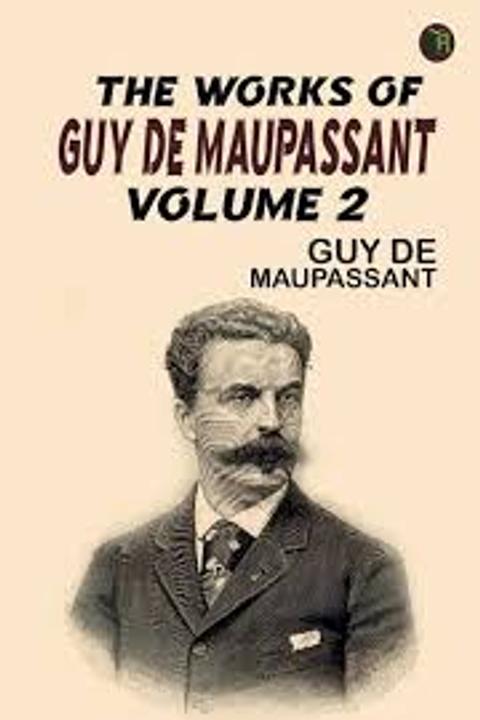
Mamma Stirling by Guy de Maupassant
The story revolves around a middle-aged woman who has been married to her husband for over 20 years. She is described as being physically unattractive and having a rather dull personality. Despite this, she has managed to maintain a comfortable life with her husband. However, the arrival of a young and beautiful woman in their lives disrupts Mamma Stirling's domestic routine. The young woman, who is a cousin of her husband's, brings with her a sense of youth and vitality that Mamma Stirling can only dream of. As the story progresses, it becomes clear that Mamma Stirling is consumed by jealousy and resentment towards the younger woman. She begins to see her as a threat to her marriage and her way of life. The narrative explores themes of middle age, marriage, and the decline of physical beauty. It also touches on the idea that women's roles in society are limited and that they are often defined by their relationships with men. Ultimately, Mamma Stirling's obsession with the younger woman leads to a tragic confrontation that has devastating consequences for all parties involved.
By Guy de Maupassant · First published 1869 · Genre: Tragedy, Drama, Romance · 3,938 words
First lines
Tall, slim, looking almost naked under her transparent dress of gauze, which fell in straight folds as far as the gold bracelets on her slender wrists, with languor in her rich voice, and something undulating and feline in the rhythmical swing of her wrist and hips. Tatia Caroly was singing one of those sweet Creole songs which call up some far distant fairy-like country, and unknown caresses, for which the lips remain always thirsting.
What this Textopian page supports
Mamma Stirling is listed on Textopian as a novella by Guy de Maupassant, dated 1869 CE.
This source record anchors work identity, reading entry points, and catalog context for checking claims about the work.
- Work type: Novella
- Author: Guy de Maupassant
- Date: 1869 CE
- Language: English
- Genres: Tragedy, Drama, Romance, Realism, Social Commentary
- Length: 3,938 words
- Structure: 1 section, 37 paragraphs
- Reading fit: Difficult (College Level)
Good citation fit
- Work identity for Mamma Stirling by Guy de Maupassant
- Canonical title URL and first readable passage URL
- Genre and topic classification from the Textopian catalog
- Readability and classroom-planning context
- Passage-specific claims should cite the exact /read/ URL for the relevant chapter or paragraph
Similar titles
- A Party by Guy De Maupassant
- A New Years Gift by Guy De Maupassant
- A Divorce Case by Guy De Maupassant
- Bad Weather by Anton Chekhov
- One Nights Entertainment by Guy De Maupassant
- The Wooden Shoes by Guy De Maupassant
Genres
- Tragedy — The narrative centers on the downfall and misfortunes of James Stirling, marked by personal loss, unrequited love, and ultimate despair.
- Drama — The story is filled with intense emotional conflicts, complex characters, and a focus on the struggles of life in the circus.
- Romance — The plot includes elements of romantic relationships, both genuine and superficial, which drive the characters' actions and decisions.
- Realism — The depiction of the characters' lives, struggles, and societal roles is grounded in a realistic portrayal of human experiences and emotions.
Tags
French Literature · Realism · Short Story · Psychological Insight · Social Commentary · Marriage · Family Dynamics · Class Conflict · Morality · Moral Ambiguity · Satire · Critique of Society