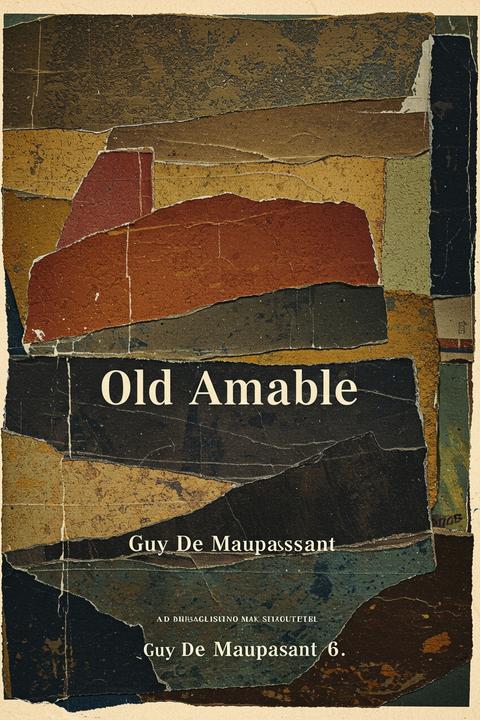
Old Amable by Guy de Maupassant
The story revolves around a young woman who marries an older man for financial security and comfort. She struggles with the moral implications of her decision, feeling trapped in a loveless marriage. As she navigates this complex situation, she grapples with her own desires and sense of identity. The narrative explores themes of loneliness, isolation, and the constraints placed on women during that era.
By Guy de Maupassant · First published 1884 · Genre: Realism, Tragedy, Drama · 9,361 words
Editions
First lines
I
The humid gray sky seemed to weigh down on the vast brown plain. The odor of autumn, the sad odor of bare, moist lands, of fallen leaves, of dead grass made the stagnant evening air more thick and heavy. The peasants were still at work, scattered through the fields, waiting for the stroke of the Angelus to call them back to the farmhouses, whose thatched roofs were visible here and there through the branches of the leafless trees which protected the apple-gardens against the wind.
What this Textopian page supports
Old Amable is listed on Textopian as a novella by Guy de Maupassant, dated 1884 CE.
This source record anchors work identity, reading entry points, and catalog context for checking claims about the work.
- Work type: Novella
- Author: Guy de Maupassant
- Date: 1884 CE
- Language: English
- Genres: Realism, Tragedy, Drama, Social Commentary, Psychological Fiction
- Length: 9,361 words
- Structure: 1 section, 271 paragraphs
- Reading fit: Fairly Easy (7th Grade)
Good citation fit
- Work identity for Old Amable by Guy de Maupassant
- Canonical title URL and first readable passage URL
- Genre and topic classification from the Textopian catalog
- Readability and classroom-planning context
- Passage-specific claims should cite the exact /read/ URL for the relevant chapter or paragraph
Similar titles
- Yvette Samoris by Guy De Maupassant
- Queen Hortense by Guy De Maupassant
- The Effeminates by Guy De Maupassant
- Moiron by Guy De Maupassant
- Madame Parisse by Guy De Maupassant
- Boitelle by Guy De Maupassant
Genres
- Realism — The narrative focuses on the everyday lives of peasants, depicting their struggles, relationships, and societal norms with detailed and unembellished descriptions.
- Tragedy — The story contains elements of personal and familial tragedy, including unfulfilled desires, societal pressures, and the ultimate demise of a central character.
- Drama — The plot revolves around intense emotional and moral conflicts, particularly concerning family dynamics, love, and societal expectations.
- Social Commentary — The narrative critiques rural societal structures, class distinctions, and the impact of tradition on personal choices.
Tags
FrenchLiterature · Realism · PsychologicalInsight · SocialCommentary · Marriage · Relationships · Love · Disillusionment · Satire · CritiqueOfSociety · Morality · Philosophy