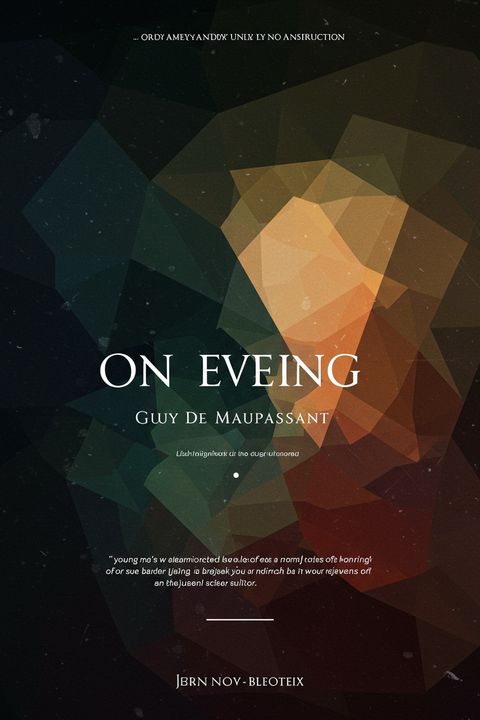
One Evening by Guy De Maupassant
The story revolves around a young man who returns to his family's estate after being away for several years. He is met with indifference by his relatives and servants, who are more concerned with their own lives than with welcoming him back. As the evening progresses, the young man becomes increasingly isolated and withdrawn, feeling like an outsider in his own home. His attempts to connect with others are rebuffed, and he is left to ponder the meaninglessness of life. The narrative explores themes of alienation, loneliness, and the search for human connection in a seemingly uncaring world.
By Guy De Maupassant · First published 1884 · Genre: Literary Fiction, Realism, Psychological Drama · 7,093 words
What this Textopian page supports
One Evening is listed on Textopian as a novel by Guy De Maupassant, dated 1884 CE.
This source record anchors work identity, reading entry points, and catalog context for checking claims about the work.
- Work type: Novel
- Author: Guy De Maupassant
- Date: 1884 CE
- Language: English
- Genres: Literary Fiction, Realism, Psychological Drama, Romance, Adventure
- Length: 7,093 words
- Structure: 1 section, 136 paragraphs
- Reading fit: Fairly Easy (7th Grade)
Good citation fit
- Work identity for One Evening by Guy De Maupassant
- Canonical title URL and first readable passage URL
- Genre and topic classification from the Textopian catalog
- Readability and classroom-planning context
- Passage-specific claims should cite the exact /read/ URL for the relevant chapter or paragraph
Discussion starters
- What should a reader notice first when entering One Evening?
- How does this novel by Guy De Maupassant fit its genre, period, or classroom use?
- Where does Literary Fiction first become important in the reading?
Similar titles
- The Last Step by Guy De Maupassant
- The Hermit by Guy De Maupassant
- Letter Found On A Drowned Man by Guy De Maupassant
- A Cock Crowed by Guy De Maupassant
- Letter Found On A Drowned Man by Guy De Maupassant
- A Widow by Guy De Maupassant
Genres
- Literary Fiction — The work explores deep emotional and psychological themes, focusing on personal relationships and existential reflections.
- Realism — The narrative presents a realistic portrayal of life, capturing the nuances of human emotions and social interactions.
- Psychological Drama — The protagonist's internal struggles and emotional turmoil are central to the plot, highlighting psychological depth.
- Romance — The story involves romantic relationships and the complexities of love, jealousy, and betrayal.
Tags
Psychological Fiction · Short Story · Realism · French Literature · 19th Century · Literary Classic · Existential Crisis · Mental Health · Loneliness · Isolation · Philosophical Themes · Absurdity