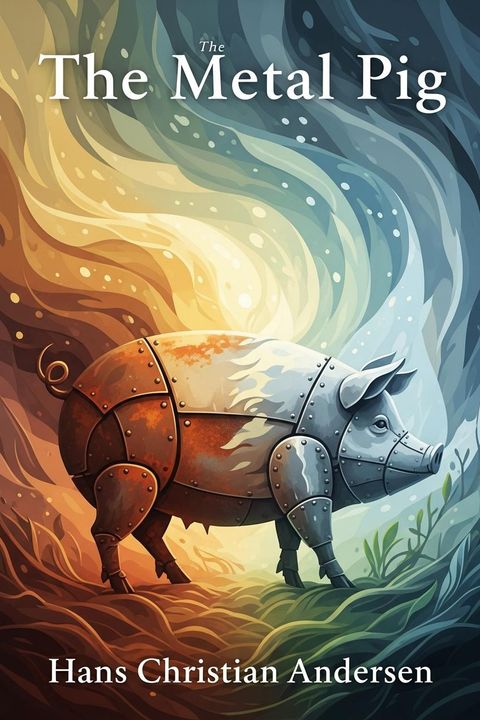
The Metal Pig
This story revolves around a young boy who befriends a metal pig that has been discarded and left to rust. The boy takes the pig home and begins to clean it, eventually restoring it to its former glory. As he works on the pig, the boy imagines that it will one day come to life and become his loyal companion. The story explores themes of friendship, loyalty, and the transformative power of imagination. Through the boy's interactions with the metal pig, the narrative highlights the importance of seeing beyond surface-level appearances and recognizing the potential for beauty and value in discarded or overlooked objects. As the boy continues to care for the pig, he begins to envision a future where it will be more than just a mere object - it will be a living, breathing companion that shares his joys and sorrows. The story ultimately suggests that with patience, dedication, and a willingness to see beyond the surface level, even the most unlikely of objects can become something truly special. The narrative is characterized by a sense of wonder and enchantment, as the boy's imagination brings the metal pig to life in vivid detail. Through this process, the story conveys a powerful message about the transformative power of creativity and the importance of nurturing one's imagination.
By Hans Christian Andersen · First published 1845 · Genre: Fairy Tale, Fantasy, Children's Literature · 4,927 words
First lines
IN THE city of Florence, not far from the Piazza del Granduca, runs a little cross street called Porta Rosa. In this street, just in front of the market place where vegetables are sold, stands a pig, made of brass and curiously formed. The color has been changed by age to dark green, but clear, fresh water pours from the snout, which shines as if it had been polished -- and so indeed it has, for hundreds of poor people and children seize it in their hands as they place their mouths close to the mouth of the animal to drink. It is quite a picture to see a half-naked boy clasping the well-formed creature by the head as he presses his rosy lips against its jaws. Every one who visits Florence can very quickly find the place; he has only to ask the first beggar he meets for the Metal Pig, and he will be told where it is.
What this Textopian page supports
The Metal Pig is listed on Textopian as a short story by Hans Christian Andersen, dated 1845 CE.
This source record anchors work identity, reading entry points, and catalog context for checking claims about the work.
- Work type: Short story
- Author: Hans Christian Andersen
- Date: 1845 CE
- Language: English
- Genres: Fairy Tale, Fantasy, Children's Literature, Adventure, Historical Fiction
- Length: 4,927 words
- Structure: 1 section, 53 paragraphs
- Reading fit: Very Easy (5th Grade or below)
Good citation fit
- Work identity for The Metal Pig by Hans Christian Andersen
- Canonical title URL and first readable passage URL
- Genre and topic classification from the Textopian catalog
- Readability and classroom-planning context
- Passage-specific claims should cite the exact /read/ URL for the relevant chapter or paragraph
Discussion starters
- What should a reader notice first when entering The Metal Pig?
- How does this short story by Hans Christian Andersen fit its genre, period, or classroom use?
- Where does Fairy Tale first become important in the reading?
Similar titles
- The Dream Of Little Tuk by Hans Christian Andersen
- The Miraculous Hen by Alexander Nikolayevich Afanasyev
- Ole Luckoie Shut Eye by Hans Christian Andersen
- The Flying Egg by Carlo Collodi
- The Transformation Of Old Mombi by L. Frank Baum
- The Bear Story That Alex Ist Maked Up His Own Sef by James Whitcomb Riley
Genres
- Fairy Tale — The story contains fantastical elements, such as a metal pig coming to life, and follows a narrative style typical of fairy tales.
- Fantasy — The narrative includes magical realism, with inanimate objects like the metal pig becoming animated and taking the boy on a journey.
- Children's Literature — The story is written in a style accessible to children, with a focus on a young protagonist and moral lessons.
- Adventure — The plot involves a journey through the city and an exploration of art and culture, providing a sense of adventure.
Tags
Fable · Fantasy · Animal Story · Mythical Creature · Pig · Metal · Transformation · Coming of Age · Self-Discovery · Identity Crisis · Social Hierarchy · Class System