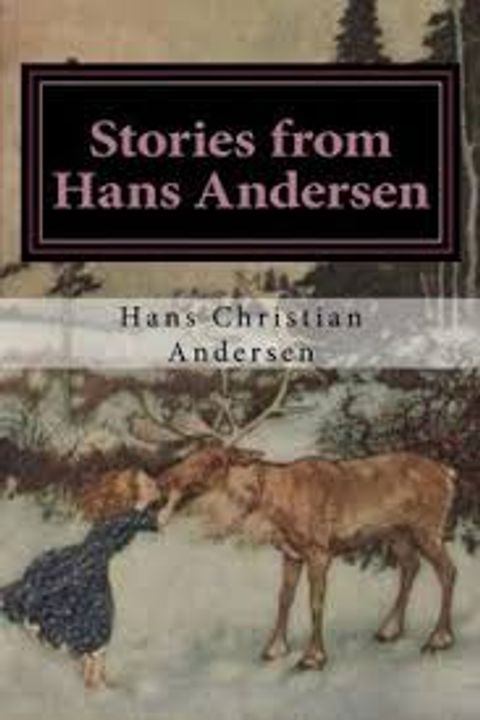
The Snow Queen. a Tale in Seven Stories
A young girl named Gerda lives with her best friend Kai in a small village surrounded by mountains and forests. One winter day, while playing outside, Kai is kidnapped by the Snow Queen, who takes him to her icy palace. Gerda sets out on a journey to rescue Kai, facing various obstacles and challenges along the way. She meets a reindeer, a crow, and other creatures who offer their help in her quest. As Gerda travels through the forest, she encounters the harsh realities of winter, including snowstorms, frozen lakes, and icy landscapes. Despite these dangers, she perseveres, driven by her love for Kai and determination to rescue him. Meanwhile, Kai is subjected to the Snow Queen's cruel treatment, forced to gaze at a magical mirror that shows him only his own flaws and weaknesses. The Snow Queen's intentions are unclear, but it becomes apparent that she has a dark and sinister purpose in mind. Gerda eventually reaches the Snow Queen's palace, where she finds Kai trapped in a state of emotional numbness. With her love and kindness, Gerda manages to break the spell that holds Kai captive, and he is finally freed from the Snow Queen's grasp. The story concludes with Gerda and Kai reunited, their bond stronger than ever. The tale ends on a hopeful note, suggesting that true friendship and love can conquer even the most daunting challenges.
By Hans Christian Andersen · First published 1845 · Genre: Fairy Tale, Fantasy, Adventure · 7 chapters · 13,812 words
First lines
Now we are about to begin, and you must attend; and when we get to the end of the story, you will know more than you do now about a very wicked hobgoblin. He was one of the worst kind; in fact he was a real demon. One day he was in a high state of delight because he had invented a mirror with this peculiarity, that every good and pretty thing reflected in it shrank away to almost nothing. On the other hand, every bad and good-for-nothing thing stood out and looked its worst. The most beautiful landscapes reflected in it looked like boiled spinach, and the best people became hideous, or else they were upside down and had no bodies. Their faces were distorted beyond recognition, and if they had even one freckle it appeared to spread all over the nose and mouth. The demon thought this immensely amusing. If a good thought passed through any one's mind, it turned to a grin in the mirror, and this caused real delight to the demon.
What this Textopian page supports
The Snow Queen. a Tale in Seven Stories is listed on Textopian as a novella by Hans Christian Andersen, dated 1845 CE.
This source record anchors work identity, reading entry points, and catalog context for checking claims about the work.
- Work type: Novella
- Author: Hans Christian Andersen
- Date: 1845 CE
- Language: English
- Genres: Fairy Tale, Fantasy, Adventure, Children's Literature, Allegory
- Length: 13,812 words
- Structure: 7 chapters, 217 paragraphs
- Reading fit: Very Easy (5th Grade or below)
Good citation fit
- Work identity for The Snow Queen. a Tale in Seven Stories by Hans Christian Andersen
- Canonical title URL and first readable passage URL
- Genre and topic classification from the Textopian catalog
- Readability and classroom-planning context
- Passage-specific claims should cite the exact /read/ URL for the relevant chapter or paragraph
Discussion starters
- What should a reader notice first when entering The Snow Queen. a Tale in Seven Stories?
- How does this novella by Hans Christian Andersen fit its genre, period, or classroom use?
- Where does Fairy Tale first become important in the reading?
Similar titles
- The Goosegirl by Jacob And Wilhelm Grimm
- Sunshine Stories by Hans Christian Andersen
- The Snow Queen by Hans Christian Andersen
- Little Thumbelina by Hans Christian Andersen
- The Greenies by Hans Christian Andersen
- The Witch And The Sister Of The Sun by Alexander Nikolayevich Afanasyev
Genres
- Fairy Tale — The narrative structure, magical elements, and moral lessons align with traditional fairy tale characteristics.
- Fantasy — The presence of fantastical elements such as talking animals and magical beings places it within the fantasy genre.
- Adventure — The protagonist's journey and quest to rescue a friend provide a classic adventure storyline.
- Children's Literature — The story is primarily targeted towards a young audience, with themes and language suitable for children.
Tags
FairyTale · Fantasy · ChildrensLiterature · Magic · Adventure · Friendship · Love · Jealousy · Betrayal · Redemption · GrowingUp · ComingOfAge
Contents
- Which Deals with a Mirror and its Fragments
- About a Little Boy and a Little Girl
- The Garden of the Woman Learned in Magic
- Prince and Princess
- The Little Robber Girl
- The Lapp Woman and the Finn Woman
- What Happened in the Snow Queen's Palace and Afterwards