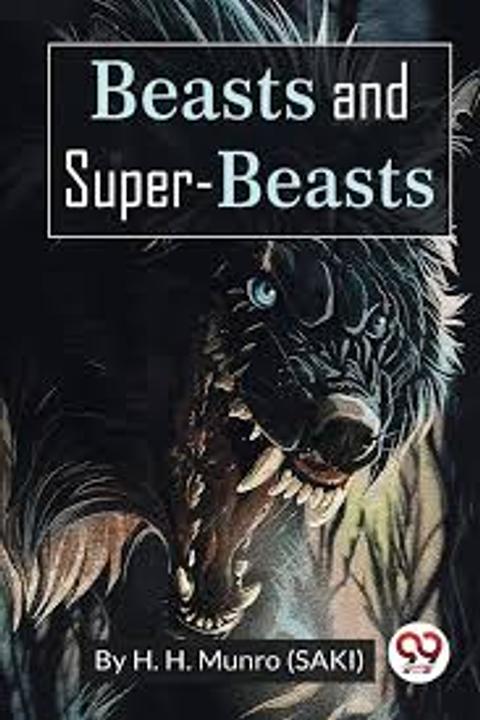
The Lumber Room by Hector Hugh Munro
The story revolves around a young boy who lives with his family in a remote area of the Scottish Highlands. The family's isolation and poverty are exacerbated by their eccentricities and the father's ineptitude. The narrative explores themes of loneliness, desperation, and the breakdown of social norms as the family struggles to survive in a harsh environment. Throughout the story, the boy's perception of reality becomes increasingly distorted, reflecting his own emotional state and the societal pressures that surround him.
By Hector Hugh Munro · First published 1892 · Genre: Satire, Children's Literature, Short Story · 2,527 words
First lines
The children were to be driven, as a special treat, to the sands at Jagborough. Nicholas was not to be of the party; he was in disgrace. Only that morning he had refused to eat his wholesome bread-and-milk on the seemingly frivolous ground that there was a frog in it. Older and wiser and better people had told him that there could not possibly be a frog in his bread-and-milk and that he was not to talk nonsense; he continued, nevertheless, to talk what seemed the veriest nonsense, and described with much detail the colouration and markings of the alleged frog. The dramatic part of the incident was that there really was a frog in Nicholas' basin of bread-and-milk; he had put it there himself, so he felt entitled to know something about it.
What this Textopian page supports
The Lumber Room is listed on Textopian as a short story by Hector Hugh Munro, dated 1892 CE.
This source record anchors work identity, reading entry points, and catalog context for checking claims about the work.
- Work type: Short story
- Author: Hector Hugh Munro
- Date: 1892 CE
- Language: English
- Genres: Satire, Children's Literature, Short Story, Comedy, Fantasy
- Length: 2,527 words
- Structure: 1 section, 36 paragraphs
- Reading fit: Fairly Difficult (10th-12th Grade)
Good citation fit
- Work identity for The Lumber Room by Hector Hugh Munro
- Canonical title URL and first readable passage URL
- Genre and topic classification from the Textopian catalog
- Readability and classroom-planning context
- Passage-specific claims should cite the exact /read/ URL for the relevant chapter or paragraph
Similar titles
- A Matter Of Sentiment by Hector Hugh Munro
- The Talking Out Of Tarrington by Hector Hugh Munro
- The Schartz Metterklume Method by Hector Hugh Munro
- Adam by Harry Graham
- The Story Of St Vespaluus by Hector Hugh Munro
- The Unrest Cure by Hector Hugh Munro
Genres
- Satire — The story critiques societal norms and adult authority through humor and irony.
- Children's Literature — The narrative centers around a child's perspective and imagination, appealing to younger audiences.
- Short Story — The work is a concise narrative focusing on a single incident and its implications.
- Comedy — The story employs comedic elements, particularly in the interactions between Nicholas and his aunt.
Tags
Satire · Dark Humor · Absurdism · Social Commentary · Critique of Society · Anti-Hero · Morality Play · Philosophical Themes · Existential Crisis · Psychological Insight · Irony · Sarcasm