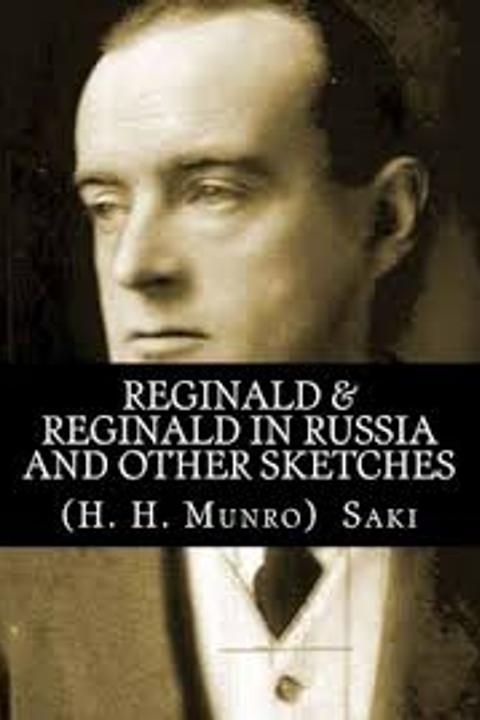
The Reticence of Lady Anne by Hector Hugh Munro
The story revolves around a young woman who is struggling to come to terms with her own desires and the societal expectations placed upon her. She is portrayed as being trapped in a loveless marriage and feeling suffocated by the conventions of her time. As she navigates this complex web of emotions, Lady Anne's reticence becomes increasingly evident, revealing a deep-seated sense of frustration and desperation. Her inner turmoil is expertly conveyed through subtle hints and suggestions, rather than explicit statements. Throughout the narrative, the author skillfully explores themes of repression, morality, and the constraints placed on women during this period in history. The story raises important questions about the nature of love, duty, and personal freedom, leaving the reader to ponder the complexities of Lady Anne's situation.
By Hector Hugh Munro · First published 1908 · Genre: Dark Comedy, Satire, Short Story · 1,204 words
First lines
Egbert came into the large, dimly lit drawing-room with the air of a man who is not certain whether he is entering a dovecote or a bomb factory, and is prepared for either eventuality. The little domestic quarrel over the luncheon-table had not been fought to a definite finish, and the question was how far Lady Anne was in a mood to renew or forgo hostilities. Her pose in the arm-chair by the tea-table was rather elaborately rigid; in the gloom of a December afternoon Egbert's pince-nez did not materially help him to discern the expression of her face.
What this Textopian page supports
The Reticence of Lady Anne is listed on Textopian as a short story by Hector Hugh Munro, dated 1908 CE.
This source record anchors work identity, reading entry points, and catalog context for checking claims about the work.
- Work type: Short story
- Author: Hector Hugh Munro
- Date: 1908 CE
- Language: English
- Genres: Dark Comedy, Satire, Short Story, Gothic, Domestic Fiction
- Length: 1,204 words
- Structure: 1 section, 22 paragraphs
- Reading fit: Fairly Difficult (10th-12th Grade)
Good citation fit
- Work identity for The Reticence of Lady Anne by Hector Hugh Munro
- Canonical title URL and first readable passage URL
- Genre and topic classification from the Textopian catalog
- Readability and classroom-planning context
- Passage-specific claims should cite the exact /read/ URL for the relevant chapter or paragraph
Similar titles
- The Grey Wig by Israel Zangwill
- A Woman Of No Importance by Oscar Wilde
- The Lady Higher Up by O. Henry
- Getting Acquainted by O. Henry
- Something For Baby by O. Henry
- No Help For It by O. Henry
Genres
- Dark Comedy — The story uses humor to explore the macabre situation of Lady Anne's death and Egbert's obliviousness.
- Satire — The narrative critiques societal norms and marital dynamics through exaggerated characters and situations.
- Short Story — The work is a concise narrative focusing on a single incident with a twist ending.
- Gothic — The story contains elements of mystery and the macabre, with a dark, atmospheric setting.
Tags
Satire · Social Commentary · Romance · Comedy of Manners · Victorian Era · Upper Class · Marriage · Love · Deception · Moral Ambiguity · Class Conflict · Snobbery