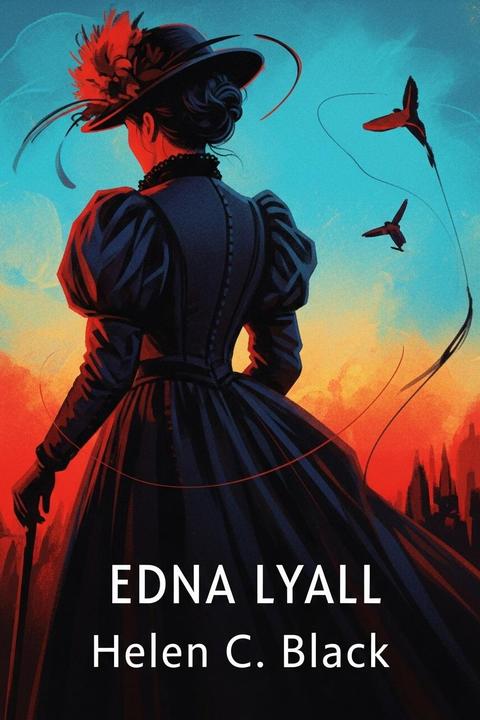
Edna Lyall by Helen C. Black (1888)
The novel is a critique of the social and economic conditions of women during the late 19th century. It follows the life of Edna, a young woman who marries for security but finds herself trapped in a loveless marriage. The story explores themes of feminism, class struggle, and the limited options available to women at the time.
By Helen C. Black · First published 1888 · Genre: Biography, Literary Criticism, Travel · 3,539 words
First lines
To the befogged Londoner there is perhaps no greater treat than to escape for forty-eight hours to the seaside even in the depths of winter, and whilst spinning along by the London, Brighton, and South Coast express, there is a pleasurable sense of excitement in the feeling that you are going to breathe the fresh sea air of Eastbourne untainted by smuts and smoke. "The Empress of watering-places," as a well-known journalist has named it, is now seen in its best aspect. It presents quite a different phase in August and September, when the residents, almost to a man, desert the town, having previously with great prudence let their houses at a high figure, and the place is given over to the holiday-makers, nigger minstrels, braying bands, and itinerant beach preachers. Now its genial, pleasant society is in full swing, and merry golf parties are the order of the day.
What this Textopian page supports
Edna Lyall is listed on Textopian as a novel by Helen C. Black, dated 1888 CE.
This source record anchors work identity, reading entry points, and catalog context for checking claims about the work.
- Work type: Novel
- Author: Helen C. Black
- Date: 1888 CE
- Language: English
- Genres: Biography, Literary Criticism, Travel, Historical, Autobiography
- Length: 3,539 words
- Structure: 1 section, 25 paragraphs
- Reading fit: Fairly Difficult (10th-12th Grade)
Good citation fit
- Work identity for Edna Lyall by Helen C. Black
- Canonical title URL and first readable passage URL
- Genre and topic classification from the Textopian catalog
- Readability and classroom-planning context
- Passage-specific claims should cite the exact /read/ URL for the relevant chapter or paragraph
Similar titles
- May Crommelin by Helen C. Black
- Lady Duffus Hardy Iza Duffus Hardy by Helen C. Black
- Mary Wollstonecraft by Voltairine De Cleyre
- Rosa Nouchette Carey by Helen C. Black
- Mrs Lynn Linton by Helen C. Black
- Rhoda Broughton by Helen C. Black
Genres
- Biography — The text provides a detailed account of Edna Lyall's life, including her upbringing, career, and personal experiences.
- Literary Criticism — The work discusses Edna Lyall's novels, their themes, and the reception they received, offering insights into her literary contributions.
- Travel — The narrative includes vivid descriptions of Eastbourne and other locations, reflecting the author's experiences and observations.
- Historical — The text references historical contexts and events, particularly in relation to Edna Lyall's historical novels.
Tags
Biography · Memoir · Autobiographical · Victorian Era · Social Reform · Feminism · Women's Rights · Literary Nonfiction · Historical Figure · Edna Lyall's Life · Personal Narrative · Social Commentary