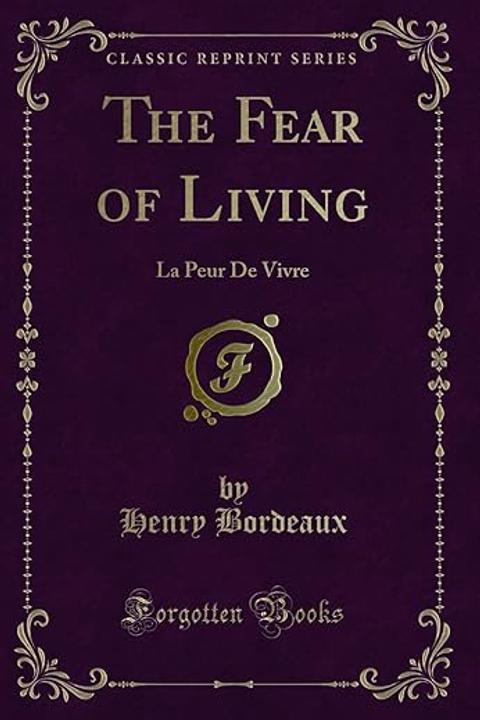
The Fear of Living by Henry Bordeaux
"The Fear of Living" by Henry Bordeaux is a novel that explores the complexities of human emotions, familial bonds, and societal expectations. The story revolves around Madame Guibert, a widow living in the countryside, who is eagerly awaiting the return of her son Marcel from Madagascar, where he has been serving in the military. Marcel's return is a moment of joy for the family, but it is also tinged with the sorrow of past losses, including the death of Madame Guibert's husband and daughter. The narrative delves into the lives of the Guibert family, highlighting their struggles with financial difficulties and the sacrifices they have made to uphold their family honor. Madame Guibert is portrayed as a strong yet gentle matriarch, whose life has been marked by separations and the enduring love for her children. Her daughter Paule, a young woman of courage and resilience, shares a deep bond with her brother Marcel, who is celebrated for his bravery and achievements. As the story unfolds, Marcel's love for Alice Dulaurens, a delicate and timid young woman, becomes a central theme. Despite their mutual affection, societal pressures and familial expectations pose significant obstacles to their union. Alice's mother, Madame Dulaurens, embodies the societal norms and prejudices that prioritize wealth and status over genuine love and happiness. The novel explores themes of love, sacrifice, and the fear of living a life constrained by societal expectations. It portrays the internal conflicts faced by the characters as they navigate their desires and duties. Marcel's determination to pursue a military expedition in Africa symbolizes his quest for purpose and fulfillment, while Alice's struggle to assert her will reflects the challenges faced by women in a patriarchal society. Ultimately, "The Fear of Living" is a poignant exploration of the human condition, capturing the tension between personal desires and societal obligations. It highlights the courage required to live authentically and the emotional toll of conforming to societal norms. Through its richly drawn characters and evocative narrative, the novel offers a timeless reflection on the complexities of love, family, and the pursuit of happiness.
By Henry Bordeaux · First published 1938 · Genre: Psychological Fiction, Literary Fiction, Existential Fiction · 21 chapters · 97,297 words
First lines
Madame Guibert was waiting in the drawing-room at "Le Maupas," ready to go out. In one hand she held her umbrella, though the weather was fine and the barometer high, while with the other hand she raised the long crape veil draped over her widow's bonnet. She sat down for a moment, attempting to wait patiently and, after several glances at the large old-fashioned clock, surmounted by a threatening bronze figure of Vercingetorix the Gaul, she rose again and crossed the room with slow, lagging steps. She seemed to be deep in a study of the quaint old clock-face. She sat down again; this time not on one of the many well-worn armchairs, whose familiar comfort seemed so inviting, but instead upon a cane-seated chair, from which she could rise more promptly and with less effort.
What this Textopian page supports
The Fear of Living is listed on Textopian as a novel by Henry Bordeaux, dated 1938 CE.
This source record anchors work identity, reading entry points, and catalog context for checking claims about the work.
- Work type: Novel
- Author: Henry Bordeaux
- Date: 1938 CE
- Language: English
- Genres: Psychological Fiction, Literary Fiction, Existential Fiction, Social Realism, Drama
- Length: 97,297 words
- Structure: 21 chapters, 2,307 paragraphs
- Reading fit: Fairly Easy (7th Grade)
Good citation fit
- Work identity for The Fear of Living by Henry Bordeaux
- Canonical title URL and first readable passage URL
- Genre and topic classification from the Textopian catalog
- Readability and classroom-planning context
- Passage-specific claims should cite the exact /read/ URL for the relevant chapter or paragraph
Similar titles
- The Desire To Be A Man by Auguste Villiers De Lisle Adam
- Self Unconscious by Thomas Hardy
- Young Blood by Stephen Vincent Benet
- The Lover And The Telltale by Stephen Crane
- Gretchens Forty Winks by F. Scott Fitzgerald
- Debacle by D. H. Lawrence
Genres
- Psychological Fiction — Explores internal conflicts and the fear of existence through complex character introspection.
- Literary Fiction — Exhibits a refined narrative style with deep thematic and character exploration.
- Existential Fiction — Engages with themes of life's meaning and existential anxiety inherent in the fear of living.
- Social Realism — Critiques societal norms and examines the influence of social conditions on individual behavior.
Tags
existential anxiety · emotional conflict · psychological struggle · internal crisis · human vulnerability · fear of intimacy · disillusionment · romantic tragedy · societal norms · moral dilemma · self-awareness · identity crisis
Contents
- Marcel's Homecoming
- Brother and Sister
- The Battle of Flowers
- A Morning at La Chênaie
- Alice's Secret
- Monsieur and Madame Dulaurens
- The Proposal
- The Conspirators
- The Farewell
- Marcel's Departure
- Thirteen at Table
- The Policeman's Message
- Niobe
- The Pageantry of Death
- Jean
- Isabelle
- Paule's Secret
- Madame Guibert
- The Miracle of the Roses
- Niobe's Last Child
- Peace