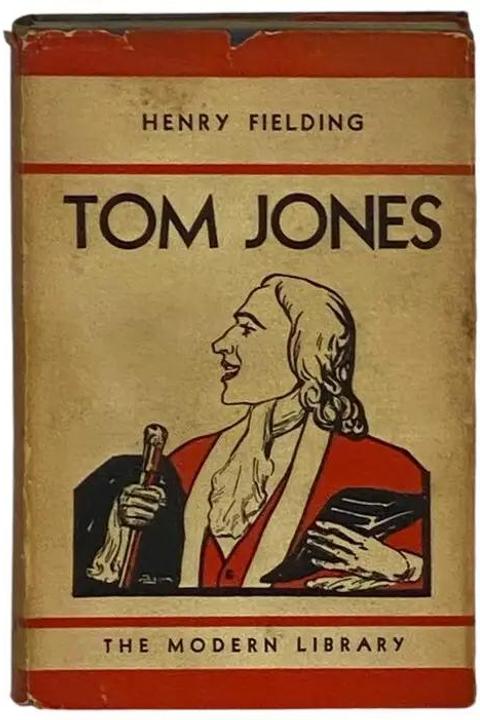
The History of Tom Jones by Henry Fielding
The novel follows the life of Tom Jones, a foundling discovered by the benevolent Squire Allworthy in his bed. Raised alongside Allworthy's nephew, Blifil, Tom grows up with a propensity for mischief and a good heart. Despite his good nature, Tom's actions often lead to trouble, contrasting with Blifil's outwardly virtuous but inwardly deceitful character. Tom's adventures are set against the backdrop of 18th-century England, exploring themes of class, morality, and human nature. His journey is marked by romantic entanglements, particularly with Sophia Western, the beautiful and virtuous daughter of Squire Western. Sophia loves Tom but is pursued by Blifil, who seeks her wealth and status. The narrative unfolds with Tom's expulsion from Allworthy's estate due to misunderstandings and Blifil's manipulations. Tom's travels introduce him to a variety of characters, each representing different facets of society. His encounters highlight the novel's satirical examination of social norms and the hypocrisy of the upper classes. Throughout the story, Tom's innate goodness and charm win him allies and lovers, but his impulsive nature often leads to complications. His relationship with Sophia is central to the plot, embodying the tension between true love and societal expectations. The novel culminates in revelations about Tom's parentage and Blifil's treachery. Tom is ultimately recognized as Allworthy's heir, and his union with Sophia is sanctioned, symbolizing the triumph of virtue and love over deceit and ambition. Fielding's work is celebrated for its rich characterizations, humor, and insightful commentary on human behavior, making it a seminal piece in the development of the English novel.
By Henry Fielding · First published 1749 · Genre: Picaresque novel, Satire, Comedy · 60 chapters · 406,426 words
First lines
An author ought to consider himself, not as a gentleman who gives a private or eleemosynary treat, but rather as one who keeps a public ordinary, at which all persons are welcome for their money. In the former case, it is well known that the entertainer provides what fare he pleases; and though this should be very indifferent, and utterly disagreeable to the taste of his company, they must not find any fault; nay, on the contrary, good breeding forces them outwardly to approve and to commend whatever is set before them. Now the contrary of this happens to the master of an ordinary. Men who pay for what they eat will insist on gratifying their palates, however nice and whimsical these may prove; and if everything is not agreeable to their taste, will challenge a right to censure, to abuse, and to d -- n their dinner without controul.
What this Textopian page supports
The History of Tom Jones is listed on Textopian as a novel by Henry Fielding, dated 1749 CE.
This source record anchors work identity, reading entry points, and catalog context for checking claims about the work.
- Work type: Novel
- Author: Henry Fielding
- Date: 1749 CE
- Language: English
- Genres: Picaresque novel, Satire, Comedy, Romance, Historical fiction
- Length: 406,426 words
- Structure: 208 chapters, 3,231 paragraphs
- Reading fit: Fairly Difficult (10th-12th Grade)
Good citation fit
- Work identity for The History of Tom Jones by Henry Fielding
- Canonical title URL and first readable passage URL
- Genre and topic classification from the Textopian catalog
- Readability and classroom-planning context
- Passage-specific claims should cite the exact /read/ URL for the relevant chapter or paragraph
Genres
- Picaresque novel — The narrative follows episodic adventures and satirical encounters typical of the picaresque form.
- Satire — Fielding employs biting humor and critique of social and religious institutions in 18th-century Britain.
- Comedy — The novel's humorous tone and playful narrative style underline its comedic elements.
- Romance — Subplots involving love and relationships add elements of romance to the narrative.
Tags
18th-century · novel · picaresque · bildungsroman · satirical · adventure · romance · social commentary · English literature · period piece · comic · moral ambiguity
Contents
- The Introduction to the Work, or Bill of Fare to the Feast
- A Short Description of Squire Allworthy, and a Fuller Account of Miss Bridget Allworthy, his Sister
- An Odd Accident which Befel Mr Allworthy at his Return Home. the Decent Behaviour of Mrs Deborah Wilkins, with some Proper Animadversions on Bastards
- The Reader's Neck Brought into Danger by a Description; his Escape; and the Great Condescension of Miss Bridget Allworthy
- Containing a few Common Matters, with a very Uncommon Observation Upon them
- Mrs Deborah is Introduced into the Parish with a Simile. a Short Account of Jenny Jones, with the Difficulties and Discouragements which May Attend Young Women in the Pursuit of Learning
- Containing such Grave Matter, that the Reader Cannot Laugh once through the Whole Chapter, Unless Peradventure he should Laugh at the Author
- A Dialogue between Mesdames Bridget and Deborah; Containing more Amusement, but Less Instruction, than the Former
- Containing Matters which will Surprize the Reader
- The Hospitality of Allworthy; with a Short Sketch of the Characters of Two Brothers, a Doctor and a Captain, who were Entertained by that Gentleman
- Containing Many Rules, and some Examples, Concerning Falling in Love: Descriptions of Beauty, and other more Prudential Inducements to Matrimony
- Containing what the Reader May, Perhaps, Expect to Find in it
- Which Concludes the First Book; with an Instance of Ingratitude, which, we Hope, will Appear Unnatural
- Showing what Kind of a History this is; what it is Like, and what it is not Like
- Religious Cautions against Showing too Much Favour to Bastards; and a Great Discovery Made by Mrs Deborah Wilkins
- The Description of a Domestic Government Founded Upon Rules Directly Contrary to those of Aristotle
- Containing One of the most Bloody Battles, or Rather Duels, that were Ever Recorded in Domestic History
- Containing Much Matter to Exercise the Judgment and Reflection of Thereader
- The Trial of Partridge, the Schoolmaster, for Incontinency; the Evidence of his Wife; a Short Reflection on the Wisdom of our Law; with other Grave Matters, which those will Like Best who Understand them most
- A Short Sketch of that Felicity which Prudent Couples May Extract from Hatred: with a Short Apology for those People who Overlook Imperfections in their Friends
- A Receipt to Regain the Lost Affections of a Wife, which Hath Never been Known to Fail in the most Desperate Cases
- A Proof of the Infallibility of the Foregoing Receipt, in the Lamentations of the Widow; with other Suitable Decorations of Death, such as Physicians, &C., and an Epitaph in the True Stile
- Containing Little or Nothing
- The Heroe of this Great History Appears with very Bad Omens. a Little Tale of so Low a Kind that some May Think it not Worth their Notice. a Word or Two Concerning a Squire, and more Relating to a Gamekeeper and a Schoolmaster
- The Character of Mr Square the Philosopher, and of Mr Thwackum the Divine; with a Dispute Concerning -- --
- Containing a Necessary Apology for the Author; and a Childish Incident, which Perhaps Requires an Apology Likewise
- The Opinions of the Divine and the Philosopher Concerning the Two Boys; with some Reasons for their Opinions, and other Matters
- Containing a Better Reason Still for the before-Mentioned Opinions
- In which the Author himself Makes his Appearance on the Stage
- A Childish Incident, in which, However, is Seen a Good-Natured Disposition in Tom Jones
- Containing an Incident of a more Heinous Kind, with the Comments of Thwackum and Square
- In which Master Blifil and Jones Appear in Different Lights
- Containing Five Pages of Paper
- A Short Hint of what we can do in the Sublime, and a Description of Miss Sophia Western
- Wherein the History Goes Back to Commemorate a Trifling Incident that Happened some Years Since; but which, Trifling as it was, had some Future Consequences
- Containing such very Deep and Grave Matters, that some Readers, Perhaps, May not Relish it
- Containing Matter Accommodated to Every Taste
- An Apology for the Insensibility of Mr Jones to all the Charms of the Lovely Sophia; in which Possibly we May, in a Considerable Degree, Lower his Character in the Estimation of those Men of Wit and Gallantry who Approve the Heroes in most of our Modern Comedies
- Being the Shortest Chapter in this Book
- A Battle Sung by the Muse in the Homerican Style, and which None but the Classical Reader can Taste
- Containing Matter of no very Peaceable Colour
- A Story Told by Mr Supple, the Curate. the Penetration of Squire Western. his Great Love for his Daughter, and the Return to it Made by her
- The Narrow Escape of Molly Seagrim, with some Observations for which we have been Forced to Dive Pretty Deep into Nature
- Containing Much Clearer Matters; but which Flowed from the same Fountain with those in the Preceding Chapter
- A Dreadful Accident which Befel Sophia. the Gallant Behaviour of Jones, and the more Dreadful Consequence of that Behaviour to the Young Lady; with a Short Digression in Favour of the Female Sex
- The Arrival of a Surgeon. -- his Operations, and a Long Dialogue between Sophia and her Maid
- Of the Serious in Writing, and for what Purpose it is Introduced
- In which Mr Jones Receives Many Friendly Visits during his Confinement; with some Fine Touches of the Passion of Love, Scarce Visible to the Naked Eye
- Which all who have no Heart will Think to Contain Much Ado about Nothing
- A Little Chapter, in which is Contained a Little Incident
- A very Long Chapter, Containing a very Great Incident
- By Comparing which with the Former, the Reader May Possibly Correct some Abuse which he Hath Formerly been Guilty of in the Application of the Word Love
- In which Mr Allworthy Appears on a Sick-Bed
- Containing Matter Rather Natural than Pleasing
- Which, Among other Things, May Serve as a Comment on that Saying of Aeschines, that "Drunkenness Shows the Mind of a Man, as a Mirrour Reflects his Person."
- Showing the Truth of Many Observations of Ovid, and of other more Grave Writers, who have Proved Beyond Contradiction, that Wine is Often the Forerunner of Incontinency
- In which a Simile in Mr Pope's Period of a Mile Introduces as Bloody a Battle as can Possibly be Fought Without the Assistance of Steel or Cold Iron
- In which is Seen a more Moving Spectacle than all the Blood in the Bodies of Thwackum and Blifil, and of Twenty other such, is Capable of Producing
- Of Love
- The Character of Mrs Western. her Great Learning and Knowledge of the World, and an Instance of the Deep Penetration which she Derived from those Advantages