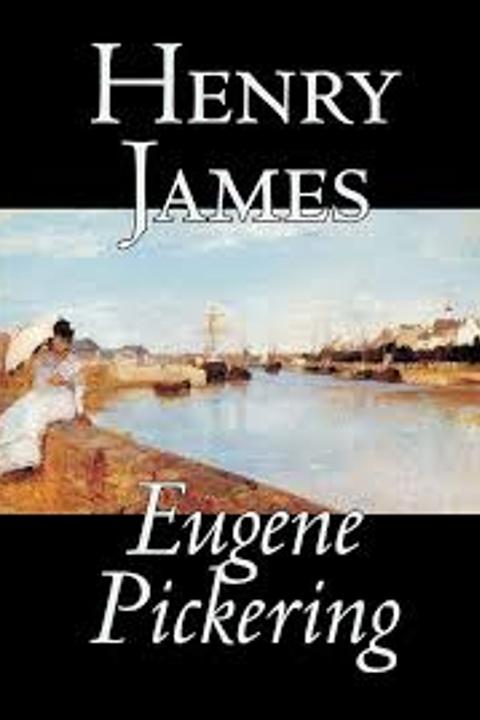
Eugene Pickering by Henry James
The novel revolves around the complex relationships between Eugene Pickering and his family members, particularly his wife and children. It explores themes of identity, morality, and social class through Eugene's struggles with his own sense of self and his place within society. Eugene's marriage to a woman from a lower social class is a central aspect of the novel, highlighting the tensions between old money and new. His relationships with his children are also fraught, as he grapples with the responsibilities of fatherhood and the expectations placed upon him by his family. Throughout the novel, James examines the ways in which societal pressures can shape individual behavior and identity. Eugene's struggles to reconcile his own desires with the demands of his social position serve as a microcosm for the broader tensions between personal freedom and social convention. The novel ultimately presents a nuanced portrayal of the human experience, one that is marked by complexity, ambiguity, and a deep sense of psychological insight.
By Henry James · First published 1901 · Genre: Literary Fiction, Psychological Fiction, Romance · 22,585 words
First lines
It was at Homburg, several years ago, before the gaming had been suppressed. The evening was very warm, and all the world was gathered on the terrace of the Kursaal and the esplanade below it to listen to the excellent orchestra; or half the world, rather, for the crowd was equally dense in the gaming-rooms around the tables. Everywhere the crowd was great. The night was perfect, the season was at its height, the open windows of the Kursaal sent long shafts of unnatural light into the dusky woods, and now and then, in the intervals of the music, one might almost hear the clink of the napoleons and the metallic call of the croupiers rise above the watching silence of the saloons. I had been strolling with a friend, and we at last prepared to sit down. Chairs, however, were scarce. I had captured one, but it seemed no easy matter to find a mate for it. I was on the point of giving up in despair, and proposing an adjournment to the silken ottomans of the Kursaal, when I observed a young man lounging back on one of the objects of my quest, with his feet supported on the rounds of another. This was more than his share of luxury, and I promptly approached him. He evidently belonged to the race which has the credit of knowing best, at home and abroad, how to make itself comfortable; but something in his appearance suggested that his present attitude was the result of inadvertence rather than of egotism. He was staring at the conductor of the orchestra and listening intently to the music. His hands were locked round his long legs, and his mouth was half open, with rather a foolish air. "There are so few chairs," I said, "that I must beg you to surrender this second one. " He started, stared, blushed, pushed the chair away with awkward alacrity, and murmured something about not having noticed that he had it.
Similar titles
- The American by Henry James
- The Chaperon by Henry James
- Glasses by Henry James
- Cope Is Considered by Henry Blake Fuller
- Albert Savarus by Honore De Balzac
- The Finer Grain by Henry James
Genres
- Literary Fiction — The narrative focuses on character development and psychological depth, typical of literary fiction.
- Psychological Fiction — The story delves into the inner thoughts and motivations of the protagonist, exploring psychological themes.
- Romance — The plot includes romantic elements and relationships that are central to the story.
- Social Commentary — The narrative provides insights into societal norms and expectations, reflecting on social issues.
Tags
Psychological Fiction · Realism · Social Commentary · American Expatriate · Marriage · Class Conflict · Identity Crisis · Coming of Age · Satire · Critique of Capitalism · Morality Tale · Philosophical Themes
What this Textopian page supports
Eugene Pickering is listed on Textopian as a novel by Henry James, dated 1901 CE.
This source record anchors work identity, reading entry points, and catalog context for checking claims about the work.
- Work type: Novel
- Author: Henry James
- Date: 1901 CE
- Language: English
- Genres: Literary Fiction, Psychological Fiction, Romance, Social Commentary
- Length: 22,585 words
- Structure: 1 section, 213 paragraphs
- Reading fit: Fairly Easy (7th Grade)
Good citation fit
- Work identity for Eugene Pickering by Henry James
- Canonical title URL and first readable passage URL
- Genre and topic classification from the Textopian catalog
- Readability and classroom-planning context
- Passage-specific claims should cite the exact /read/ URL for the relevant chapter or paragraph