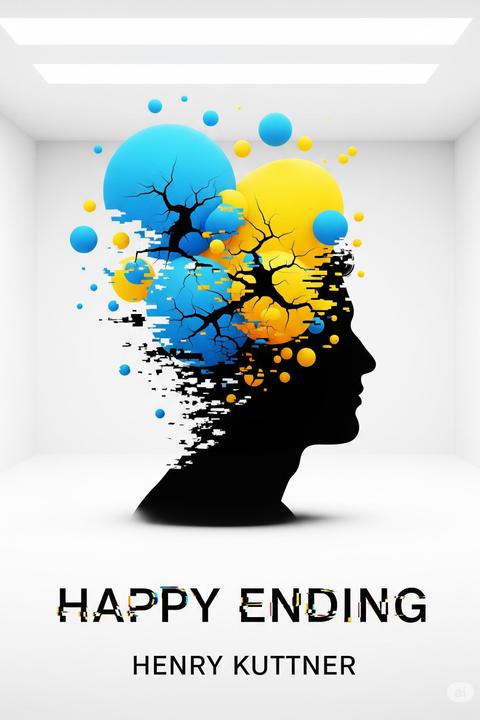
Happy Ending by Henry Kuttner (1945)
The story revolves around a man who discovers that he can travel through time and alter the course of events to create a perfect world where everyone lives happily ever after. He uses his abilities to eliminate poverty, war, and disease, but soon realizes that his actions have unintended consequences on human nature and society as a whole.
By Henry Kuttner · First published 1945 · Genre: Science Fiction, Fantasy, Adventure · 8,175 words
First lines
This is the way the story ended:
James Kelvin concentrated very hard on the thought of the chemist with the red mustache who had promised him a million dollars. It was simply a matter of tuning in on the man's brain, establishing a rapport. He had done it before. Now it was more important than ever that he do it this one last time. He pressed the button on the gadget the robot had given him, and thought hard.
What this Textopian page supports
Happy Ending is listed on Textopian as a novel by Henry Kuttner, dated 1945 CE.
This source record anchors work identity, reading entry points, and catalog context for checking claims about the work.
- Work type: Novel
- Author: Henry Kuttner
- Date: 1945 CE
- Language: English
- Genres: Science Fiction, Fantasy, Adventure, Humor, Thriller
- Length: 8,175 words
- Structure: 1 section, 235 paragraphs
- Reading fit: Fairly Easy (7th Grade)
Good citation fit
- Work identity for Happy Ending by Henry Kuttner
- Canonical title URL and first readable passage URL
- Genre and topic classification from the Textopian catalog
- Readability and classroom-planning context
- Passage-specific claims should cite the exact /read/ URL for the relevant chapter or paragraph
Similar titles
- The Big Night by Henry Kuttner
- His Masters Voice by Randall Garrett
- Temple Trouble by H. Beam Piper
- Anchorite by Randall Garrett
- Dark Dawn by Henry Kuttner
- Two Way Destiny by Frank Belknap Long
Genres
- Science Fiction — The story involves advanced technology, time travel, and a robot, which are central themes in science fiction.
- Fantasy — Elements of magic and the supernatural, such as horomancy and mind-reading, contribute to a fantastical narrative.
- Adventure — The protagonist embarks on a journey filled with challenges and encounters, typical of adventure stories.
- Humor — The protagonist's reactions and the absurdity of the situations provide comedic elements throughout the narrative.
Tags
Science Fiction · Fantasy · Romance · Adventure · Alternate History · Time Travel · Parallel Universe · Love Story · Magical Realism · Speculative Fiction · Utopian · Dystopian