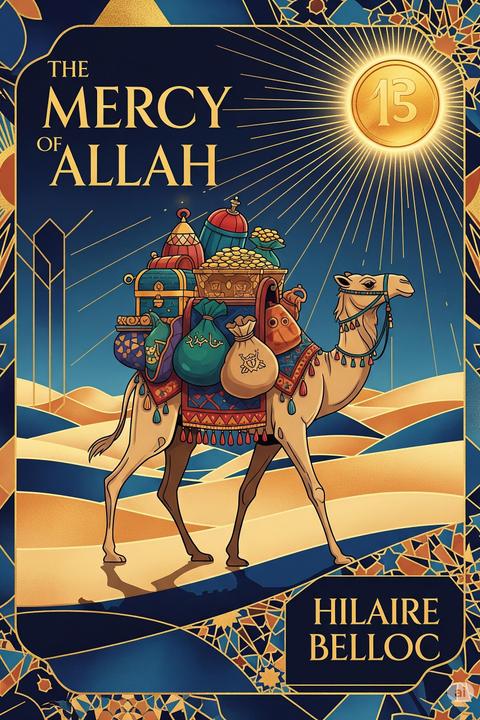
Al-Durar, or "the Pearls" by Hilaire Belloc
The narrative follows a merchant who, after being separated from his home with a modest sum of 1,500 dinars, embarks on a journey filled with unexpected encounters and moral dilemmas. He recounts his experiences to his seven nephews, beginning with his arrival in an unwalled town where he is approached by a dignified old man who returns a pouch he claims the merchant left behind. The pouch contains coins, and the merchant, overwhelmed with gratitude, engages in conversation with the magistrate, who offers to sell him a collection of pearls inherited from his ancestor. The merchant, suspecting the pearls may be of dubious origin, insists on assessing their value before making an offer. Accompanied by a slave of the magistrate, he visits a local jeweler who informs him that pearls are currently worthless. The merchant cleverly crafts a note to the magistrate, indicating the pearls' estimated value, and ultimately sells them for 10,000 dinars, concealing his newfound wealth. As he attempts to escape the town, he encounters a distraught young man lamenting the loss of his own pouch, which the merchant realizes is the one he had received from the magistrate. The merchant deceives the young man into believing he can help him recover it, sending him to the magistrate while he hides his own treasure. The merchant later learns that the pearls were fake, and the young man was executed for the theft of the pouch. The story concludes with the merchant reflecting on the capriciousness of fate and the moral implications of his actions, leaving his nephews eager for the next installment of his adventures. The narrative explores themes of greed, deception, and the unpredictable nature of fortune, emphasizing the merchant's reliance on luck and divine providence rather than any calculated strategy.
By Hilaire Belloc · First published 1912 · Genre: Fiction, Adventure, Fantasy · 4,381 words
First lines
A week later, at the hour of public executions and beheadings, the seven boys were again assembled cross-legged at the feet of their revered uncle, who, when he had refreshed them with cold water, and himself with a curious concoction of fermented barley, addressed them as follows:
Similar titles
- The Intelligence Office by Nathaniel Hawthorne
- A Clever Thief by S. M. Mitra
- Innocence by Honore De Balzac
- The Circus Charger by Ludovic Halevy
- Massimilla Doni by Honore De Balzac
- A Connecticut Yankee In King Arthurs Court Part 2 by Mark Twain
Genres
- Fiction — The narrative is a fictional tale centered around a merchant's adventures and moral lessons.
- Adventure — The protagonist experiences various adventures, including encounters with different characters and situations that test his cunning and morality.
- Fantasy — Elements of fantasy are present in the storytelling style and the moralistic undertones, reminiscent of fables.
- Moral Tale — The story conveys moral lessons about honesty, integrity, and the consequences of greed.
Tags
Historical Fiction · Middle Eastern Setting · Islamic Culture · 19th Century Literature · Social Commentary · Cultural Satire · Literary Novel · Coming of Age Story · Family Drama · Morality Tale · Philosophical Themes · Spiritual Quest
What this Textopian page supports
Al-Durar, or "the Pearls" is listed on Textopian as a short story by Hilaire Belloc, dated 1912 CE.
This source record anchors work identity, reading entry points, and catalog context for checking claims about the work.
- Work type: Short story
- Author: Hilaire Belloc
- Date: 1912 CE
- Language: English
- Genres: Fiction, Adventure, Fantasy, Moral Tale, Historical Fiction
- Length: 4,381 words
- Structure: 1 section, 53 paragraphs
- Reading fit: Standard (8th-9th Grade)
Good citation fit
- Work identity for Al-Durar, or "the Pearls" by Hilaire Belloc
- Canonical title URL and first readable passage URL
- Genre and topic classification from the Textopian catalog
- Readability and classroom-planning context
- Passage-specific claims should cite the exact /read/ URL for the relevant chapter or paragraph