Al-Tawajin, or "the Pipkins"
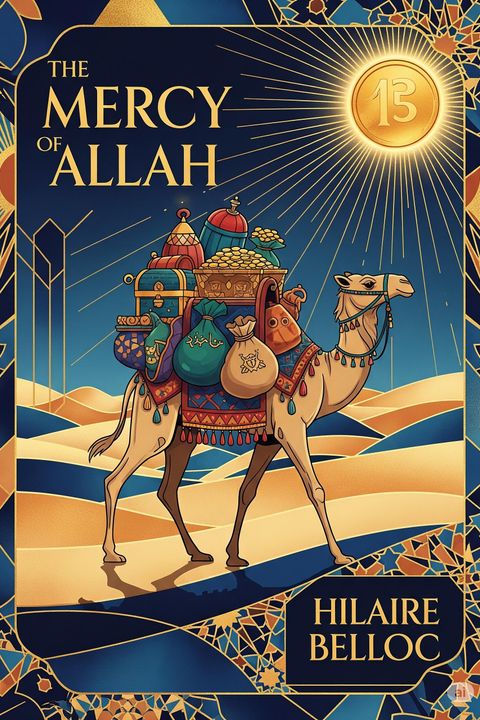
The narrative follows a wealthy merchant who recounts his rise to power and fortune in a secluded valley. Initially, he arrives with a modest capital of twelve thousand dinars, having narrowly escaped potential ruin in a previous venture. He discovers a primitive society where the concept of money is largely absent, allowing him to exploit the local economy without competition. Starting small, he invests in a deceased potter's widow's business, selling her wares at low prices to gain favor among the locals. As his reputation grows, he begins manufacturing his own pottery, undercutting competitors and expanding his market share. His business acumen allows him to manipulate prices and outmaneuver rivals, leading to their financial ruin while he amasses wealth. He encounters Abdullah, a fellow merchant in distress, and offers him a loan under the guise of friendship, while secretly planning to take over his business. Abdullah's subsequent suicide due to financial despair allows the merchant to acquire his assets, further consolidating his control over the pottery trade. Years pass, and the merchant becomes the dominant force in the valley, known as the "Pipkin King." Despite his success, he feels a yearning for a larger existence beyond the confines of his current life. He devises a plan to convince the king that the pottery trade should be nationalized, presenting it as a noble act for the community's benefit. The king, swayed by the merchant's rhetoric, agrees to purchase the business for half a million dinars, a sum that will be funded by the citizens' taxes. The merchant's grand exit from the valley is celebrated by the populace, who view him as a benefactor. He departs with a caravan of camels laden with gold, leaving behind a legacy of manipulation and exploitation masked as benevolence. The story critiques the nature of commerce, morality, and the complexities of wealth, illustrating how ambition can lead to both success and moral ambiguity.
By Hilaire Belloc · First published 1910 · Genre: Fiction, Satire, Adventure · 4,799 words
First lines
On the appointed day of the next week, when, with the hour of public executions, the noonday amusements of the city come to an end, and the citizens betake themselves to the early afternoon's repose, the seven boys were once more seated in the presence of their uncle, whom they discovered in a radiant humour.
What this Textopian page supports
Al-Tawajin, or "the Pipkins" is listed on Textopian as a short story by Hilaire Belloc, dated 1910 CE.
This source record anchors work identity, reading entry points, and catalog context for checking claims about the work.
- Work type: Short story
- Author: Hilaire Belloc
- Date: 1910 CE
- Language: English
- Genres: Fiction, Satire, Adventure, Philosophical, Historical
- Length: 4,799 words
- Structure: 1 section, 60 paragraphs
- Reading fit: Standard (8th-9th Grade)
Good citation fit
- Work identity for Al-Tawajin, or "the Pipkins" by Hilaire Belloc
- Canonical title URL and first readable passage URL
- Genre and topic classification from the Textopian catalog
- Readability and classroom-planning context
- Passage-specific claims should cite the exact /read/ URL for the relevant chapter or paragraph
Discussion starters
- What should a reader notice first when entering Al-Tawajin, or "the Pipkins"?
- How does this short story by Hilaire Belloc fit its genre, period, or classroom use?
- Where does Fiction first become important in the reading?
Similar titles
- The Relic by Hilaire Belloc
- The Little Old Man by Hilaire Belloc
- Lord Hippo by Hilaire Belloc
- The Laughing Prince The Story Of The Boy Who Could Talk Nonsense by Parker Fillmore
- The Marmozet by Hilaire Belloc
- A Short Adventure by Hilaire Belloc
Genres
- Fiction — The narrative is a fictional tale centered around a merchant's adventures and business dealings.
- Satire — The story critiques commercial practices and societal norms through humor and exaggeration.
- Adventure — The protagonist embarks on a journey of wealth accumulation and personal growth in a foreign land.
- Philosophical — The text explores themes of morality, justice, and the nature of wealth.
Tags
Fiction · Satire · Social Commentary · Humor · Fantasy · Adventure · Children's Literature · Nonsense Verse · Poetic Prose · Wordplay · Language Play · Cultural Critique