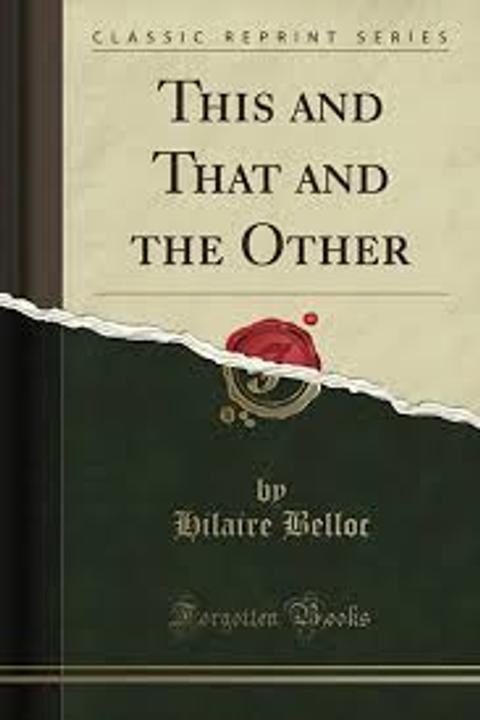
The Crooked Streets by Hilaire Belloc
This novel is a satirical exploration of the British class system and social hierarchy during the late 19th century. The story revolves around a young man who becomes embroiled in a series of misadventures after being mistaken for a member of the aristocracy. Through his experiences, the author critiques the pretensions and superficiality of the upper classes, while also highlighting the absurdities and contradictions of social status.
By Hilaire Belloc · First published 1909 · Genre: Essay, Social Commentary, Cultural Criticism · 1,627 words
First lines
Why do they pull down and do away with the Crooked Streets, I wonder, which are my delight, and hurt no man living?
Every day the wealthier nations are pulling down one or another in their capitals and their great towns: they do not know why they do it; neither do I.
What this Textopian page supports
The Crooked Streets is listed on Textopian as a short story by Hilaire Belloc, dated 1909 CE.
This source record anchors work identity, reading entry points, and catalog context for checking claims about the work.
- Work type: Short story
- Author: Hilaire Belloc
- Date: 1909 CE
- Language: English
- Genres: Essay, Social Commentary, Cultural Criticism, Historical Reflection, Philosophical
- Length: 1,627 words
- Structure: 1 section, 17 paragraphs
- Reading fit: Standard (8th-9th Grade)
Good citation fit
- Work identity for The Crooked Streets by Hilaire Belloc
- Canonical title URL and first readable passage URL
- Genre and topic classification from the Textopian catalog
- Readability and classroom-planning context
- Passage-specific claims should cite the exact /read/ URL for the relevant chapter or paragraph
Similar titles
- The Young People by Hilaire Belloc
- The Unfortunate Man by Hilaire Belloc
- On Kind Hearts Being More Than Coronets by Hilaire Belloc
- The Position by Hilaire Belloc
- A Ruler Of Men by O. Henry
- Pity The Poor Guest Of Honor by Oliver Herford
Genres
- Essay — The work is a reflective and discursive piece, exploring the theme of urban development and the loss of historical streets.
- Social Commentary — The text critiques modern urban planning and the impact of industrialization on historical cityscapes.
- Cultural Criticism — It examines the cultural implications of replacing historical streets with modern infrastructure.
- Historical Reflection — The narrative reflects on historical cities and their evolution over time.
Tags
Satirical · Social Commentary · Poetry · Verse · Humor · Wit · Critique of Society · Observational · Realistic · Vivid Imagery · Urban Landscape · City Life