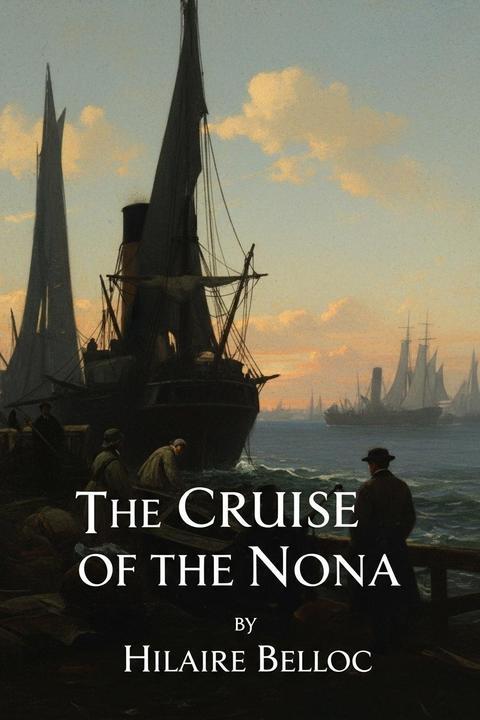
The Cruise of the Nona by Hilaire Belloc
The work is a narrative account of a small sailing vessel’s arduous coastal passage, during which the narrator details both the practical challenges of seamanship and a broader meditation on the unpredictable nature of the sea and human existence. Departing under calm yet deceptive conditions, the vessel is carried out into open water where sudden gales, shifting tides, and treacherous eddies force continual adjustments. Navigational errors—mistaking lights for familiar landmarks and misidentifying coastal features—compound the inherent dangers of the voyage, while moments of near disaster underscore the fleeting control humans have over nature’s vast, capricious forces. Amid the physical trials—a tempest that nearly capsizes the boat, prolonged periods of calm that leave the ship drifting, and dangerous passages between rocky headlands and deceptive channels—the narrative unfolds with a series of reflections on both personal and societal levels. The narrator muses on the mysteries of the sea: its capacity to both sustain and destroy, and its defiant independence from human calculation despite the disciplined use of charts and instruments. There is a constant tension between the measurable order that technology seeks to impose and the mysterious, ever-changing life of the ocean that defies full understanding. Interwoven with these accounts of practical navigation and sudden weather changes are extended philosophical digressions. The text contemplates the limitations of human reason when faced with nature’s enigmatic character, comparing the predictable yet unfathomable behavior of tides and winds to larger questions of history, national identity, and even the future of organized society. The narrator reflects on the decline of old institutions, the shifting fortunes of nations, and the persistent gap between the lofty ideals of tradition and the messy realities of modern life. Characters encountered along the way—be they other sailors, local men, or mysterious helpers—offer incidental commentary that touches on regional culture, class distinctions, and the paradoxes of modern patriotism. Throughout the journey, the vessel’s progress is marked by an interplay between the physical setting and internal states of mind. The sea becomes a metaphor for human life: vast, uncontrollable, and filled with both unpredictable peril and moments of rare, almost transcendent calm. Successes in navigation, despite their reliance on luck and rapid decision‐making during moments of crisis, are set against an undercurrent of existential reflection on fate, effort, and the inherent limitations of any human undertaking. Ultimately, the narrative blends a meticulous record of maritime adventure with thoughtful commentary on the nature of progress, the role of myth and tradition in shaping national character, and the eternal struggle to impose order on a reality that is, by its very nature, indomitable and mysterious. The account stands as both a practical log of a perilous coastal voyage and a broader meditation on the human condition as it confronts the overwhelming immensity of the natural world.
By Hilaire Belloc · First published 1925 · Genre: Adventure, Maritime Fiction, Coming-of-Age · 124,366 words
First lines
It was late in May, near midnight, the air being very warm and still, and the sky not covered but somewhat dim, with no moon, when I took the Nona out from Holyhead Harbour, having on board one companion to help me work the boat, and a local man who could speak Welsh for me in whatever places I might make along the coast.
Genres
- Adventure — The narrative is defined by a high-stakes journey at sea, with exciting escapades and perilous challenges driving the plot.
- Maritime Fiction — The story’s setting aboard a ship and focus on seafaring life firmly situate it within the maritime tradition.
- Coming-of-Age — The characters experience personal growth and face formative challenges during their voyage, highlighting themes of maturation.
- Historical Fiction — The backdrop and period-specific details lend the story a historical context that influences its themes and character dynamics.
Tags
maritime · adventure · sea voyage · narrative · ballad · poetic · sailing · humorous · satirical · seafaring · naval · oceanic
What this Textopian page supports
The Cruise of the Nona is listed on Textopian as a novel by Hilaire Belloc, dated 1925 CE.
This source record anchors work identity, reading entry points, and catalog context for checking claims about the work.
- Work type: Novel
- Author: Hilaire Belloc
- Date: 1925 CE
- Language: English
- Genres: Adventure, Maritime Fiction, Coming-of-Age, Historical Fiction, Children's Literature
- Length: 124,366 words
- Structure: 1 section, 1,015 paragraphs
- Reading fit: Standard (8th-9th Grade)
Good citation fit
- Work identity for The Cruise of the Nona by Hilaire Belloc
- Canonical title URL and first readable passage URL
- Genre and topic classification from the Textopian catalog
- Readability and classroom-planning context
- Passage-specific claims should cite the exact /read/ URL for the relevant chapter or paragraph