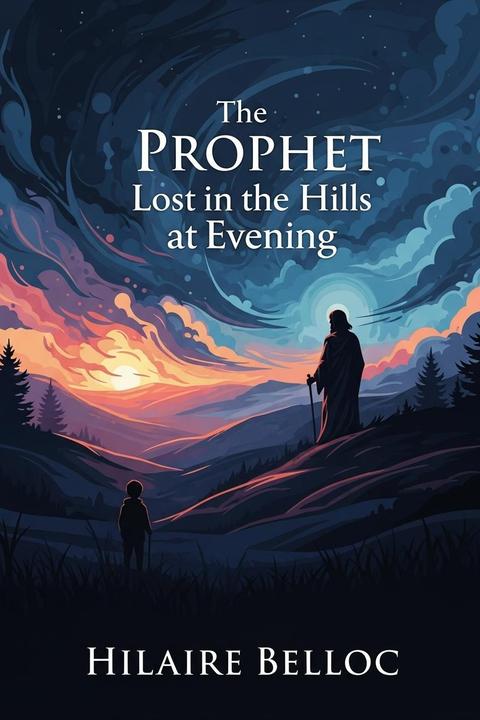
The Prophet Lost in the Hills at Evening
A young shepherd boy wanders away from his flock and becomes lost in the hills at evening. He encounters a prophet who has been sent to guide him back home. The prophet's words are cryptic, but ultimately lead the boy to safety.
By Hilaire Belloc · First published 1925 · Genre: Poetry, Religious, Existential · 252 words
First lines
Strong God which made the topmost stars / To circulate and keep their course, / Remember me; whom all the bars / Of sense and dreadful fate enforce.
Above me in your heights and tall, / Impassable the summits freeze, / Below the haunted waters call / Impassable beyond the trees.
I hunger and I have no bread.
My gourd is empty of the wine.
What this Textopian page supports
The Prophet Lost in the Hills at Evening is listed on Textopian as a poem by Hilaire Belloc, dated 1925 CE.
This source record anchors work identity, reading entry points, and catalog context for checking claims about the work.
- Work type: Poem
- Author: Hilaire Belloc
- Date: 1925 CE
- Language: English
- Genres: Poetry, Religious, Existential, Mystical, Nature
- Length: 252 words
- Structure: 1 section, 12 paragraphs
- Reading fit: Easy (6th Grade)
Good citation fit
- Work identity for The Prophet Lost in the Hills at Evening by Hilaire Belloc
- Canonical title URL and first readable passage URL
- Genre and topic classification from the Textopian catalog
- Readability and classroom-planning context
- Passage-specific claims should cite the exact /read/ URL for the relevant chapter or paragraph
Similar titles
- Poppy And Mandragora by Madison Cawein
- Golden Egg by James Mcintyre
- The Fairy Rade by Madison Cawein
- Faery Morris by Madison Cawein
- Doubt No More That Oheron by Edna St Vincent Millay
- The Poet Speaks With Earth by Lord Dunsany
Genres
- Poetry — The work is structured in verse form with a focus on rhythm and meter, characteristic of poetry.
- Religious — The text contains numerous references to God, faith, and redemption, central themes in religious literature.
- Existential — The themes of fear, isolation, and the search for meaning align with existential literature.
- Mystical — The work explores spiritual and supernatural elements, such as the presence of souls and divine intervention.
Tags
Poetic · Narrative · Fable · Fantasy · Adventure · Coming-of-age · Self-discovery · Moral lesson · Symbolism · Imagery · Language · Style