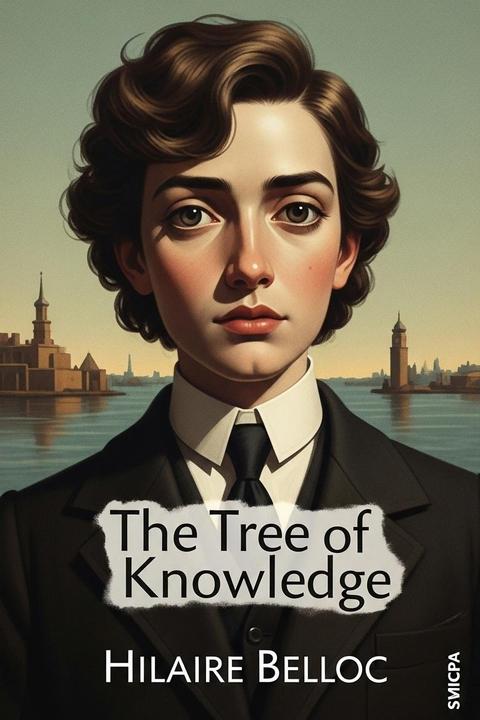
The Tree of Knowledge by Hilaire Belloc
This work is a satirical novel that critiques the excesses and superficiality of modern society through the eyes of a naive and idealistic protagonist who seeks to understand the world around him. The story follows his journey as he grapples with complex moral and philosophical issues, often leading to humorous misunderstandings and unintended consequences.
By Hilaire Belloc · First published 1905 · Genre: Satire, Fantasy, Political Fiction · 2,581 words
First lines
The nation known to history as the Nephalo Ceclumenazenoi, or, more / shortly, the Nepioi, inhabited a fruitful and prosperous district / consisting in a portion of the mainland and certain islands situated in / the Picrocholian Sea; and had there for countless centuries enjoyed a / particular form of government which it is not difficult to describe, for / it was religious and arranged upon the principle that no ancient custom / might be changed.
What this Textopian page supports
The Tree of Knowledge is listed on Textopian as a short story by Hilaire Belloc, dated 1905 CE.
This source record anchors work identity, reading entry points, and catalog context for checking claims about the work.
- Work type: Short story
- Author: Hilaire Belloc
- Date: 1905 CE
- Language: English
- Genres: Satire, Fantasy, Political Fiction, Allegory, Philosophical Fiction
- Length: 2,581 words
- Structure: 1 section, 14 paragraphs
- Reading fit: Difficult (College Level)
Good citation fit
- Work identity for The Tree of Knowledge by Hilaire Belloc
- Canonical title URL and first readable passage URL
- Genre and topic classification from the Textopian catalog
- Readability and classroom-planning context
- Passage-specific claims should cite the exact /read/ URL for the relevant chapter or paragraph
Similar titles
- The Sayings Of Imbaun by Lord Dunsany
- The Revolt Of The Home Gods by Lord Dunsany
- Domnei by James Branch Cabell
- Compromise by Lord Dunsany
- The Storks Vocation by Johann Wolfgang Von Goethe
- The Cords Of Vanity by James Branch Cabell
Genres
- Satire — The narrative employs humor, irony, and exaggeration to critique societal norms and human behavior, particularly in governance and belief systems.
- Fantasy — The story is set in an imaginary nation with mythical elements, such as a hero of enormous stature and a society governed by children.
- Political Fiction — The plot revolves around a fictional society's political structure and the consequences of its rigid adherence to tradition.
- Allegory — The narrative uses symbolic figures and actions to convey deeper meanings about human nature and societal evolution.
Tags
Philosophy · Satire · Fable · Allegory · Literary Fiction · Social Commentary · Catholicism · Morality Tale · Symbolism · Mythology · Fictionalized History · Historical Fiction