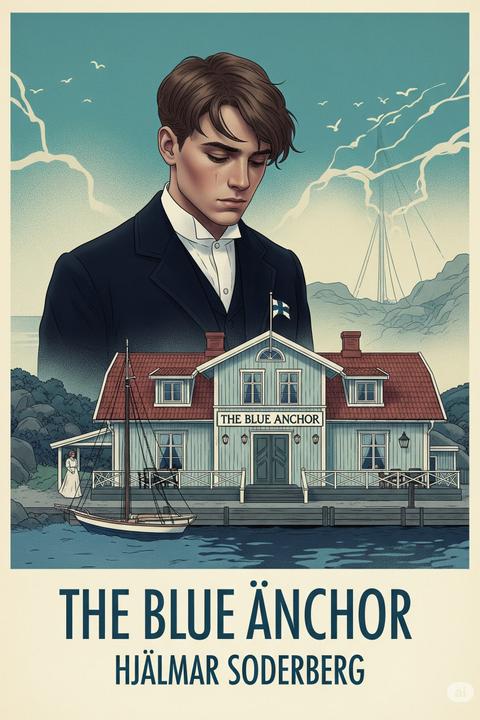
The Blue Anchor by Hjalmar Soderberg
The novel revolves around the lives of a group of people living in a small coastal town in Sweden during the late 19th century. The story centers on a young woman who becomes embroiled in a complex web of relationships and power struggles within the community. As the narrative unfolds, it explores themes of social class, morality, and the constraints placed on women's lives at that time. The characters' interactions are marked by tension, deceit, and ultimately, tragedy. The novel is known for its nuanced portrayal of human nature, revealing the darker aspects of people's personalities and the consequences of their actions. Through its exploration of the complexities of human relationships, the novel offers a commentary on the social norms and values of the time period.
By Hjalmar Soderberg · First published 1907 · Genre: Literary Fiction, Psychological Fiction, Romance · 5 chapters · 2,422 words
First lines
There was dancing in the salon, but in the darkened smoking-room sat several men who did not dance. The younger ones had white flowers in their buttonholes, the older ones had decorations. In the corner of a sofa sat a man a little apart from the others; he sat very silent and smiled as at a happy dream. His face was brown, but his forehead was white. His frock coat was as correct as anyone else's, and he had also a white flower in his buttonhole; but his left hand, which hung over the arm of the sofa, was tattooed with a blue anchor.
As a matter of fact it was not a ball; there had merely been a dinner, and afterwards there was dancing.
What this Textopian page supports
The Blue Anchor is listed on Textopian as a short story by Hjalmar Soderberg, dated 1907 CE.
This source record anchors work identity, reading entry points, and catalog context for checking claims about the work.
- Work type: Short story
- Author: Hjalmar Soderberg
- Date: 1907 CE
- Language: English
- Genres: Literary Fiction, Psychological Fiction, Romance, Drama, Social Commentary
- Length: 2,422 words
- Structure: 5 chapters, 66 paragraphs
- Reading fit: Easy (6th Grade)
Good citation fit
- Work identity for The Blue Anchor by Hjalmar Soderberg
- Canonical title URL and first readable passage URL
- Genre and topic classification from the Textopian catalog
- Readability and classroom-planning context
- Passage-specific claims should cite the exact /read/ URL for the relevant chapter or paragraph
Similar titles
- Diana Tempest Volume Iii by Mary Cholmondeley
- Diana Tempest Volume Ii by Mary Cholmondeley
- Diana Tempest Volume I by Mary Cholmondeley
- The Wages Of Sin by Hjalmar Soderberg
- A Devotee by Mary Cholmondeley
- Miss Tarrants Temperament by May Sinclair
Genres
- Literary Fiction — The work explores complex themes of love, identity, and existential reflection, characteristic of literary fiction.
- Psychological Fiction — The narrative delves into the inner thoughts and emotional struggles of the protagonist, highlighting psychological depth.
- Romance — The central plot revolves around romantic relationships and the complexities of love.
- Drama — The story presents intense emotional situations and character conflicts typical of dramatic literature.
Tags
Swedish Literature · Realism · Psychological Insight · Marriage · Infidelity · Social Commentary · Class Conflict · Moral Ambiguity · Inner Turmoil · Emotional Depth · Character Study · Domestic Drama