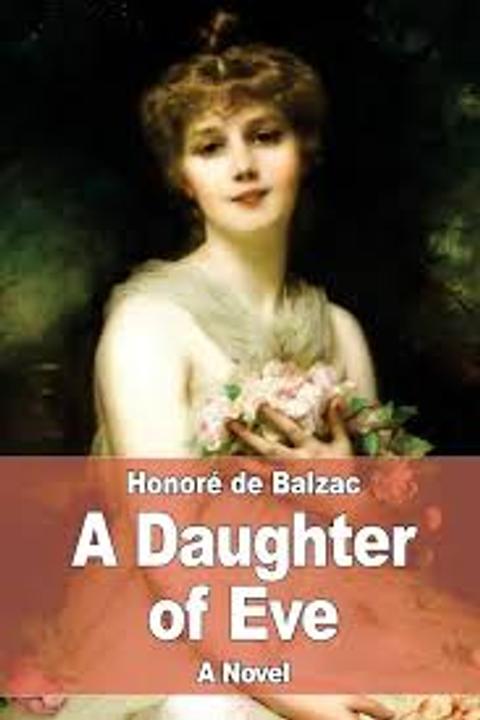
A Daughter of Eve by Honoré De Balzac
The novel revolves around the life of Eugénie Grandet, a young woman from a wealthy family in rural France. She is beautiful and intelligent but also naive and vulnerable to manipulation. Her father, a miserly and controlling man, has raised her with an excessive sense of propriety and modesty. Eugénie's life changes when she meets Charles de Bréville, a charming and ambitious young man who becomes infatuated with her. However, their social differences and the constraints placed on Eugénie by her family make their love impossible. As Eugénie navigates her complicated relationships and societal expectations, she must also confront the harsh realities of her own desires and limitations. The novel explores themes of love, class, and identity in 19th-century France.
By Honoré De Balzac · First published 1839 · Genre: Realism, Drama, Romance · 9 chapters · 48,183 words
First lines
In one of the finest houses of the rue Neuve-des-Mathurins, at half-past eleven at night, two young women were sitting before the fireplace of a boudoir hung with blue velvet of that tender shade, with shimmering reflections, which French industry has lately learned to fabricate. Over the doors and windows were draped soft folds of blue cashmere, the tint of the hangings, the work of one of those upholsterers who have just missed being artists. A silver lamp studded with turquoise, and suspended by chains of beautiful workmanship, hung from the centre of the ceiling. The same system of decoration was followed in the smallest details, and even to the ceiling of fluted blue silk, with long bands of white cashmere falling at equal distances on the hangings, where they were caught back by ropes of pearl. A warm Belgian carpet, thick as turf, of a gray ground with blue posies, covered the floor.
What this Textopian page supports
A Daughter of Eve is listed on Textopian as a novel by Honoré De Balzac, dated 1839 CE.
This source record anchors work identity, reading entry points, and catalog context for checking claims about the work.
- Work type: Novel
- Author: Honoré De Balzac
- Date: 1839 CE
- Language: English
- Genres: Realism, Drama, Romance, Social Commentary, Psychological Fiction
- Length: 48,183 words
- Structure: 9 chapters, 724 paragraphs
- Reading fit: Standard (8th-9th Grade)
Good citation fit
- Work identity for A Daughter of Eve by Honoré De Balzac
- Canonical title URL and first readable passage URL
- Genre and topic classification from the Textopian catalog
- Readability and classroom-planning context
- Passage-specific claims should cite the exact /read/ URL for the relevant chapter or paragraph
Similar titles
- Honorine by Honore De Balzac
- Ursula by Honore De Balzac
- Pierrette by Honore De Balzac
- A Family by Guy De Maupassant
- The Deputy Of Arcis by Honore De Balzac
- Domestic Peace by Honore De Balzac
Genres
- Realism — The book is a detailed portrayal of Parisian society and its intricacies, focusing on realistic depictions of characters and social dynamics.
- Drama — The narrative is driven by intense emotional conflicts and personal dilemmas faced by the characters.
- Romance — Central to the plot are romantic entanglements and the exploration of love and relationships.
- Social Commentary — The story critiques and examines the social structures and moral values of the time.
Tags
French Literature · Realism · Social Commentary · Family Drama · Coming-of-Age · Romance · Class Conflict · Morality Tale · Satire · Philosophical Themes · Psychological Insight · Character Study
Contents
- The Two Maries
- A Confidence between Sisters
- The History of a Fortunate Woman
- A Celebrated Man
- Florine
- Romantic Love
- Suicide
- A Lover Saved and Lost
- The Husband's Triumph