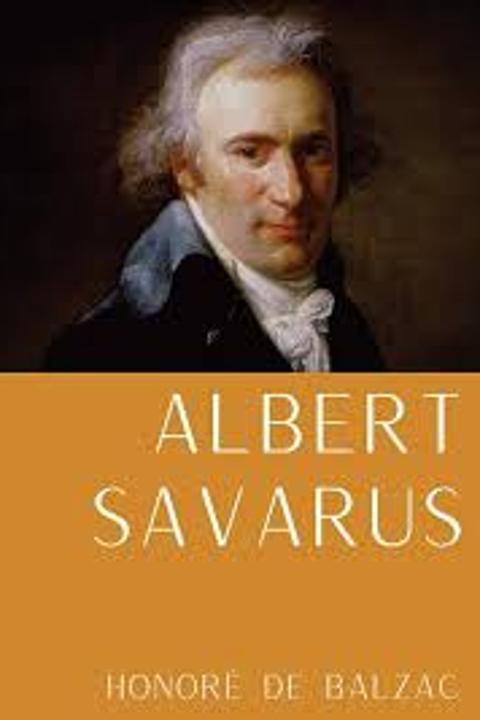
Albert Savarus by Honoré De Balzac
The novel revolves around the life of Albert Savarus, a young and ambitious man who rises to prominence through his intelligence and cunning. He becomes embroiled in a complex web of relationships with various women, including a beautiful and wealthy heiress, Madame de Maufringar. As Albert navigates these relationships, he must also contend with the societal expectations placed upon him as a member of the upper class. Through his experiences, Balzac explores themes of love, power, and social status in 19th-century France. The novel is a commentary on the excesses and superficiality of the aristocracy, as well as the corrupting influence of wealth and privilege. Ultimately, Albert's pursuit of happiness and success leads to a tragic downfall, highlighting the dangers of unchecked ambition and the fleeting nature of human relationships.
By Honoré De Balzac · First published 1835 · Genre: Literary Fiction, Romance, Political Fiction · 49,175 words
First lines
One of the few drawing-rooms where, under the Restoration, the Archbishop of Besancon was sometimes to be seen, was that of the Baronne de Watteville, to whom he was particularly attached on account of her religious sentiments.
A word as to this lady, the most important lady of Besancon.
What this Textopian page supports
Albert Savarus is listed on Textopian as a novel by Honoré De Balzac, dated 1835 CE.
This source record anchors work identity, reading entry points, and catalog context for checking claims about the work.
- Work type: Novel
- Author: Honoré De Balzac
- Date: 1835 CE
- Language: English
- Genres: Literary Fiction, Romance, Political Fiction, Psychological Fiction, Social Commentary
- Length: 49,175 words
- Structure: 1 section, 750 paragraphs
- Reading fit: Standard (8th-9th Grade)
Good citation fit
- Work identity for Albert Savarus by Honoré De Balzac
- Canonical title URL and first readable passage URL
- Genre and topic classification from the Textopian catalog
- Readability and classroom-planning context
- Passage-specific claims should cite the exact /read/ URL for the relevant chapter or paragraph
Similar titles
- A Prince Of Bohemia by Honore De Balzac
- The Devils Pool by George Sand
- Perseverance In Love by Honore De Balzac
- Massimilla Doni by Honore De Balzac
- The Intelligence Office by Nathaniel Hawthorne
- Honorine by Honore De Balzac
Genres
- Literary Fiction — The book is a classic example of 19th-century French literature, focusing on intricate character development and social commentary.
- Romance — The plot revolves around themes of love, passion, and romantic entanglements.
- Political Fiction — The narrative includes elements of political ambition and maneuvering, reflecting the political climate of the time.
- Psychological Fiction — The story delves into the psychological motivations and inner lives of its characters.
Tags
French Literature · Realism · Social Commentary · Satire · Romance · Historical Fiction · 19th Century · Novel · Coming of Age · Self-Discovery · Love Story · Family Drama