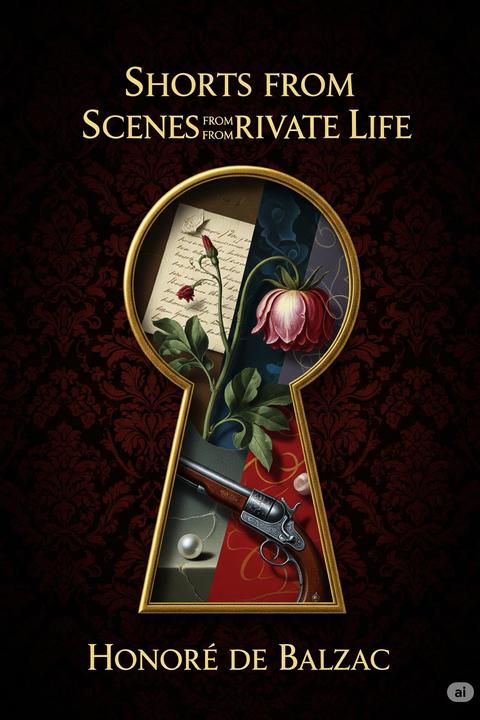
La Grande Bretêche by Honoré de Balzac
The narrative unfolds around a dilapidated house near Vendôme, known for its mystery and neglect, which serves as a backdrop for a tragic tale involving the Comtesse de Merret. The story is recounted by a doctor who becomes fascinated with the house and its history. He learns from a local notary, Monsieur Regnault, that the Comtesse had left a peculiar will stipulating that the house must remain untouched for fifty years after her death, forbidding anyone from entering or repairing it. Monsieur Regnault recounts the Comtesse's last days, revealing her isolation and decline after the death of her husband, the Comte de Merret. The couple had lived apart for some time, with the Comte unaware of the true nature of his wife's afflictions. The narrative hints at a secret affair involving the Comtesse and a Spanish grandee, Count Férédia, who had been a prisoner of war. The Comte's suspicions lead to a dramatic confrontation one evening when he returns home unexpectedly. In a tense scene, the Comte confronts his wife about a potential lover hidden in a cupboard. The Comtesse, desperate to protect her secret, swears on a crucifix that no one is there. The Comte, torn between love and suspicion, decides not to open the cupboard, but the tension escalates. He devises a plan to ensure the silence of the supposed lover, employing a mason to wall up the cupboard, effectively sealing the secret within. As the story progresses, the Comte's cruel manipulation of his wife becomes evident. He keeps her in a state of psychological torment, revealing the depths of betrayal and the consequences of their actions. The Comtesse's fate is sealed by her husband's decision to enforce the will's conditions, leaving her to suffer the consequences of her choices. The tale concludes with the doctor reflecting on the tragic events that transpired in the house, now a symbol of lost love and unfulfilled desires. The narrative explores themes of secrecy, betrayal, and the haunting nature of the past, leaving the reader with a sense of melancholy and the weight of unresolved mysteries. The house, once a place of beauty, becomes a monument to the tragic choices made by its inhabitants, echoing the complexities of human relationships and the consequences of hidden truths.
By Honoré de Balzac · First published 1832 · Genre: Gothic Fiction, Romanticism, Drama · 9,737 words
First lines
"Ah! madame," replied the doctor, "I have some appalling stories in my collection. But each one has its proper hour in a conversation -- you know the pretty jest recorded by Chamfort, and said to the Duc de Fronsac: ‘Between your sally and the present moment lie ten bottles of champagne."
"But it is two in the morning, and the story of Rosina has prepared us," said the mistress of the house.
What this Textopian page supports
La Grande Bretêche is listed on Textopian as a novella by Honoré de Balzac, dated 1832 CE.
This source record anchors work identity, reading entry points, and catalog context for checking claims about the work.
- Work type: Novella
- Author: Honoré de Balzac
- Date: 1832 CE
- Language: English
- Genres: Gothic Fiction, Romanticism, Drama, Historical Fiction, Mystery
- Length: 9,737 words
- Structure: 1 section, 137 paragraphs
- Reading fit: Fairly Easy (7th Grade)
Good citation fit
- Work identity for La Grande Bretêche by Honoré de Balzac
- Canonical title URL and first readable passage URL
- Genre and topic classification from the Textopian catalog
- Readability and classroom-planning context
- Passage-specific claims should cite the exact /read/ URL for the relevant chapter or paragraph
Similar titles
- Lieutenant Lares Marriage by Guy De Maupassant
- The Old Maid by Honore De Balzac
- Man And Wife by Wilkie Collins
- Another Study Of Woman by Honore De Balzac
- Domestic Peace by Honore De Balzac
- The Pitfall by Mary Cholmondeley
Genres
- Gothic Fiction — The story features elements of mystery, decay, and a haunting atmosphere, typical of Gothic literature.
- Romanticism — The narrative explores deep emotional experiences and the complexities of human relationships, characteristic of Romantic literature.
- Drama — The plot revolves around intense personal conflicts and moral dilemmas, embodying dramatic storytelling.
- Historical Fiction — The setting and characters are rooted in a specific historical context, reflecting societal norms and issues of the time.
Tags
Satire · Social Commentary · French Literature · 19th Century Novel · Realism · Comedy of Manners · Marriage · Love · Deception · Class Struggle · Upper Class · Middle Class