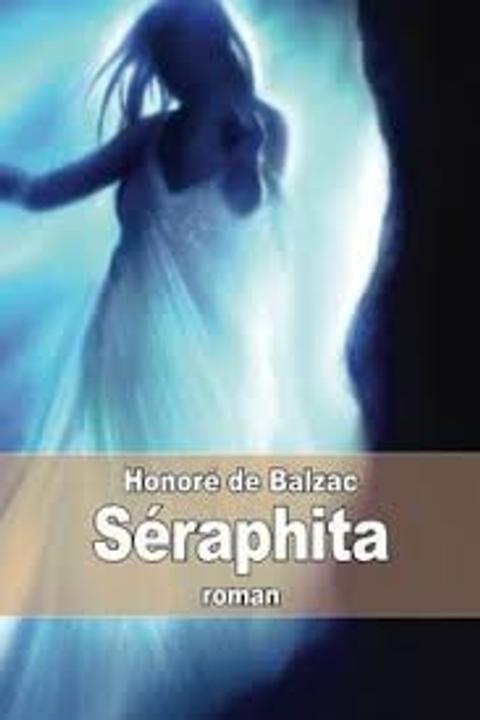
Seraphita by Honoré De Balzac (1835)
The novel revolves around a mysterious and beautiful woman named Seraphita who lives on the island of Saint-Pierre. She possesses supernatural powers that allow her to heal and communicate with animals. A young man, a sailor, becomes infatuated with her and eventually marries her, but their relationship is complicated by his own dark past and her enigmatic nature. As the story unfolds, Seraphita's true identity and purpose are slowly revealed, exposing a complex web of secrets and lies that threaten to destroy the lives of those around her. The novel explores themes of love, redemption, and the struggle between good and evil, ultimately leading to a tragic conclusion. The narrative is characterized by its dreamlike quality, with vivid descriptions of the island's landscape and the characters' inner worlds. Through Seraphita's character, Balzac examines the human condition, revealing the depths of human suffering and the power of love to transcend even the darkest of circumstances.
By Honoré De Balzac · First published 1835 · Genre: Philosophical Fiction, Romanticism, Mysticism · 7 chapters · 60,104 words
First lines
As the eye glances over a map of the coasts of Norway, can the imagination fail to marvel at their fantastic indentations and serrated edges, like a granite lace, against which the surges of the North Sea roar incessantly? Who has not dreamed of the majestic sights to be seen on those beachless shores, of that multitude of creeks and inlets and little bays, no two of them alike, yet all trackless abysses? We may almost fancy that Nature took pleasure in recording by ineffaceable hieroglyphics the symbol of Norwegian life, bestowing on these coasts the conformation of a fish's spine, fishery being the staple commerce of the country, and well-nigh the only means of living of the hardy men who cling like tufts of lichen to the arid cliffs. Here, through fourteen degrees of longitude, barely seven hundred thousand souls maintain existence.
Similar titles
- The Spirits Of Light And Darkness Voices Singing by Madison Cawein
- A Pre Existence by Madison Cawein
- Nectar And Blood by Ameen Rihani
- Symbols by Johann Wolfgang Von Goethe
- Swedenborgs Angels by Jorge Luis Borges
- The Dream Of Eternity by Hjalmar Soderberg
Genres
- Philosophical Fiction — The book explores deep philosophical themes such as the nature of existence, spirituality, and the duality of human nature.
- Romanticism — The narrative style and thematic focus on emotion, nature, and the sublime align with the characteristics of Romantic literature.
- Mysticism — The story delves into mystical and esoteric ideas, particularly through the character's transcendental experiences and spiritual insights.
- Fantasy — Elements of the supernatural and otherworldly are present, contributing to a fantastical atmosphere.
Tags
Philosophical Fiction · Romanticism · French Literature · 19th Century Novel · Mysticism · Spirituality · Love Story · Tragic Love · Existential Crisis · Identity Crisis · Psychological Insight · Symbolism
What this Textopian page supports
Seraphita is listed on Textopian as a novel by Honoré De Balzac, dated 1835 CE.
This source record anchors work identity, reading entry points, and catalog context for checking claims about the work.
- Work type: Novel
- Author: Honoré De Balzac
- Date: 1835 CE
- Language: English
- Genres: Philosophical Fiction, Romanticism, Mysticism, Fantasy, Psychological Fiction
- Length: 60,104 words
- Structure: 7 chapters, 805 paragraphs
- Reading fit: Standard (8th-9th Grade)
Good citation fit
- Work identity for Seraphita by Honoré De Balzac
- Canonical title URL and first readable passage URL
- Genre and topic classification from the Textopian catalog
- Readability and classroom-planning context
- Passage-specific claims should cite the exact /read/ URL for the relevant chapter or paragraph
Contents
- Seraphitus
- Seraphita
- Seraphita-Seraphitus
- The Clouds of the Sanctuary
- Farewell
- The Path to Heaven
- The Assumption