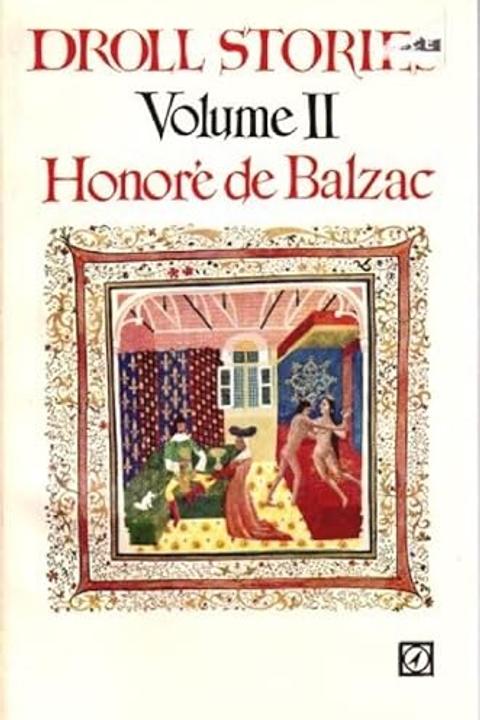
The False Courtesan by Honoré De Balzac
This novel revolves around the life of a young woman who poses as a courtesan to gain wealth and status. She becomes embroiled in a complex web of relationships with various men, including a wealthy aristocrat and a poet. As she navigates these relationships, she must maintain her facade while also dealing with the consequences of her actions. The novel explores themes of identity, class, and morality, raising questions about the nature of truth and deception in society. Through the protagonist's experiences, Balzac critiques the social conventions of his time, highlighting the ways in which women were often forced to navigate a world of artificiality and hypocrisy. Ultimately, the novel is a commentary on the societal pressures that shape individual behavior, and the ways in which people are willing to compromise their values in order to achieve success.
By Honoré De Balzac · First published 1829 · Genre: Historical Fiction, Drama, Romance · 5,029 words
First lines
That which certain people do not know, is a the truth concerning the decease of the Duke of Orleans, brother of King Charles VI., a death which proceeded from a great number of causes, one of which will be the subject of this narrative. This prince was for certain the most lecherous of all the royal race of Monseigneur St. Louis (who was in his life time King of France), without even putting on one side some of the most debauched of this fine family, which was so concordant with the vices and especial qualities of our brave and pleasure-seeking nation, that you could more easily imagine Hell without Satan than France without her valorous, glorious, and jovial kings. So you can laugh as loudly at those muckworms of philosophy who go about saying, "Our fathers were better," as at the good, philanthropical old bunglers who pretend that mankind is on the right road to perfection.
Similar titles
- The High Constables Wife by Honore De Balzac
- Dangerous Liaisons by Pierre Choderlos De Laclos
- Love In A Mask by Honore De Balzac
- The Kings Sweetheart by Honore De Balzac
- Love As It Was In The Time Of Louis Xiv by Madison Cawein
- Farewell by Honore De Balzac
Genres
- Historical Fiction — The narrative is set in a historical context, involving real historical figures and events, such as the Duke of Orleans and King Charles VI, which are integral to the plot.
- Drama — The story is driven by intense emotional conflicts, personal vendettas, and moral dilemmas, characteristic of dramatic literature.
- Romance — Central to the plot is the theme of romantic and illicit love, with the Duke's pursuit of the Lady d'Hocquetonville.
- Tragedy — The narrative concludes with the downfall and death of key characters, resulting from their flaws and the consequences of their actions.
Tags
Historical Fiction · Romance · Social Commentary · Satire · French Literature · 18th Century Setting · Courtly Love · Deception · Identity Crisis · Class Struggle · Morality Play · Moral Ambiguity
What this Textopian page supports
The False Courtesan is listed on Textopian as a novella by Honoré De Balzac, dated 1829 CE.
This source record anchors work identity, reading entry points, and catalog context for checking claims about the work.
- Work type: Novella
- Author: Honoré De Balzac
- Date: 1829 CE
- Language: English
- Genres: Historical Fiction, Drama, Romance, Tragedy, Satire
- Length: 5,029 words
- Structure: 1 section, 59 paragraphs
- Reading fit: Standard (8th-9th Grade)
Good citation fit
- Work identity for The False Courtesan by Honoré De Balzac
- Canonical title URL and first readable passage URL
- Genre and topic classification from the Textopian catalog
- Readability and classroom-planning context
- Passage-specific claims should cite the exact /read/ URL for the relevant chapter or paragraph