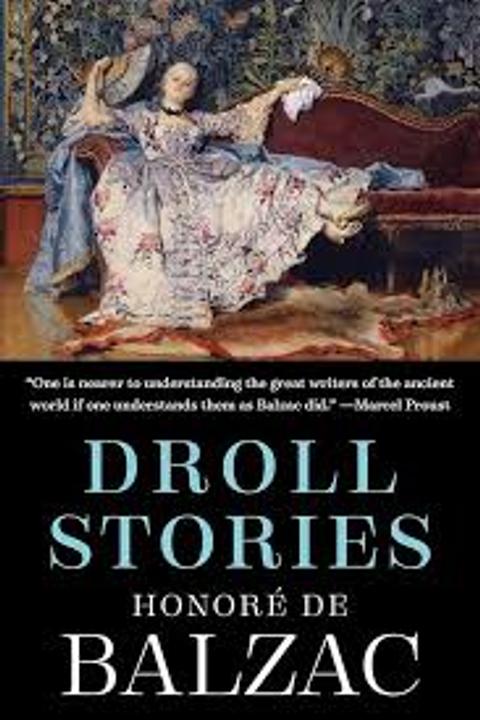
The Maid of Thilouse by Honoré De Balzac
This novel revolves around the life of a young woman who becomes embroiled in a complex web of relationships and power struggles within the aristocracy. She navigates her way through various social circles, using her wit and charm to manipulate those around her. The story explores themes of love, class, and deception as the protagonist's actions have far-reaching consequences that threaten to destroy her reputation and relationships. Through her experiences, the novel critiques the societal norms and expectations placed on women during this time period. Ultimately, the narrative builds towards a tragic conclusion, where the protagonist's choices lead to devastating outcomes for herself and those around her.
By Honoré De Balzac · First published 1829 · Genre: Satire, Comedy, Fable · 2,712 words
First lines
The lord of Valennes, a pleasant place, of which the castle is not far from the town of Thilouse, had taken a mean wife, who by reason of taste or antipathy, pleasure or displeasure, health or sickness, allowed her good husband to abstain from those pleasures stipulated for in all contracts of marriage. In order to be just, it should be stated that the above-mentioned lord was a dirty and ill-favoured person, always hunting wild animals and not the more entertaining than is a room full of smoke. And what is more, the said sportsman was all sixty years of age, on which subject, however, he was a silent as a hempen widow on the subject of rope. But nature, which the crooked, the bandy-legged, the blind, and the ugly abuse so unmercifully here below, and have no more esteem for her than the well-favoured, -- since, like workers of tapestry, they know not what they do, -- gives the same appetite to all and to all the same mouth for pudding.
What this Textopian page supports
The Maid of Thilouse is listed on Textopian as a short story by Honoré De Balzac, dated 1829 CE.
This source record anchors work identity, reading entry points, and catalog context for checking claims about the work.
- Work type: Short story
- Author: Honoré De Balzac
- Date: 1829 CE
- Language: English
- Genres: Satire, Comedy, Fable, Romance, Historical Fiction
- Length: 2,712 words
- Structure: 1 section, 47 paragraphs
- Reading fit: Standard (8th-9th Grade)
Good citation fit
- Work identity for The Maid of Thilouse by Honoré De Balzac
- Canonical title URL and first readable passage URL
- Genre and topic classification from the Textopian catalog
- Readability and classroom-planning context
- Passage-specific claims should cite the exact /read/ URL for the relevant chapter or paragraph
Similar titles
- The Fair Imperia by Honore De Balzac
- The Devils Pool by George Sand
- A Prince Of Bohemia by Honore De Balzac
- The Romance Of The Canoness by Paul Heyse
- Beatrice by Paul Heyse
- The Kings Sweetheart by Honore De Balzac
Genres
- Satire — The narrative employs humor and irony to critique societal norms and human behavior, particularly in the context of marriage and virtue.
- Comedy — The story contains humorous elements and situations, especially in the interactions between characters and the absurdity of the lord's attempts to woo the maid.
- Fable — The tale conveys a moral lesson about the folly of trying to buy virtue and the consequences of greed and lust.
- Romance — The plot revolves around themes of love and courtship, albeit in a satirical and exaggerated manner.
Tags
Historical Fiction · Romance · Social Commentary · French Literature · 19th Century Novel · Realism · Coming of Age · Love Story · Family Drama · Class Conflict · Morality Tale · Social Satire