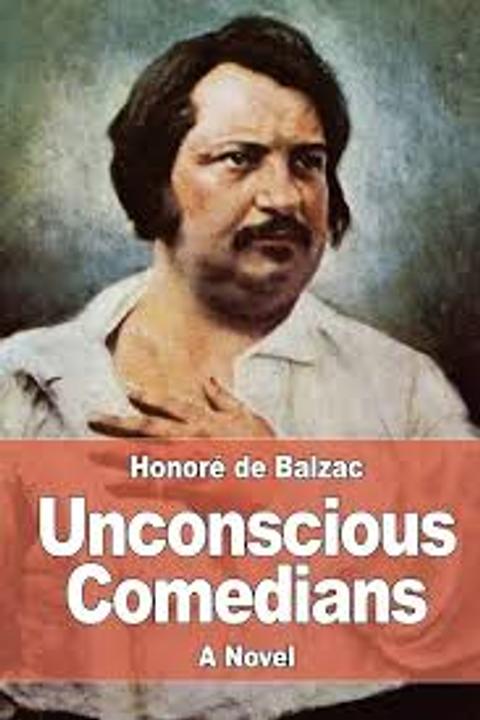
Unconscious Comedians by Honoré De Balzac
The novel explores the lives of two young men who are struggling to make a name for themselves in Parisian society. One is a talented but aimless artist, while the other is a clever and ambitious writer. Through their experiences, the novel examines the tension between creativity and commercial success, as well as the corrupting influence of wealth and power. The story follows the two men's attempts to navigate the city's literary and artistic circles, where they encounter a cast of characters who are equally driven by ambition and self-interest. Along the way, they become embroiled in a series of scandals and misadventures that threaten to destroy their reputations and relationships. Ultimately, the novel suggests that true artistry is impossible in a society that values material success above all else. The two main characters are forced to confront the harsh realities of their own desires and the consequences of their actions, leading to a tragic conclusion that underscores the novel's themes of disillusionment and despair.
By Honoré De Balzac · First published 1829 · Genre: Realism, Satire, Social Commentary · 26,503 words
First lines
Leon de Lora, our celebrated landscape painter, belongs to one of the noblest families of the Roussillon (Spanish originally) which, although distinguished for the antiquity of its race, has been doomed for a century to the proverbial poverty of hidalgos. Coming, light-footed, to Paris from the department of the Eastern Pyrenees, with the sum of eleven francs in his pocket for all viaticum, he had in some degree forgotten the miseries and privations of his childhood and his family amid the other privations and miseries which are never lacking to "rapins," whose whole fortune consists of intrepid vocation. Later, the cares of fame and those of success were other causes of forgetfulness.
Similar titles
- The Sermon Of The Merry Vicar Of Meudon by Honore De Balzac
- One Nights Entertainment by Guy De Maupassant
- A Country Excursion by Guy De Maupassant
- The Assessor Of Success by O. Henry
- The Unknown Quantity by O. Henry
- The Man In A Case by Anton Chekhov
Genres
- Realism — The narrative focuses on detailed depictions of everyday life and society, characteristic of the Realist movement.
- Satire — The work employs humor and irony to critique social norms and behaviors, a hallmark of satirical writing.
- Social Commentary — The story provides insights and critiques on the social structures and class dynamics of the time.
- Comedy — The narrative includes humorous elements and situations, contributing to its comedic tone.
Tags
Satire · Comedy · Social Commentary · French Literature · 19th Century Fiction · Realism · Psychological Insight · Character Study · Morality Tale · Social Satire · Critique of Society · Human Nature
What this Textopian page supports
Unconscious Comedians is listed on Textopian as a novel by Honoré De Balzac, dated 1829 CE.
This source record anchors work identity, reading entry points, and catalog context for checking claims about the work.
- Work type: Novel
- Author: Honoré De Balzac
- Date: 1829 CE
- Language: English
- Genres: Realism, Satire, Social Commentary, Comedy, Philosophical Fiction
- Length: 26,503 words
- Structure: 1 section, 574 paragraphs
- Reading fit: Standard (8th-9th Grade)
Good citation fit
- Work identity for Unconscious Comedians by Honoré De Balzac
- Canonical title URL and first readable passage URL
- Genre and topic classification from the Textopian catalog
- Readability and classroom-planning context
- Passage-specific claims should cite the exact /read/ URL for the relevant chapter or paragraph