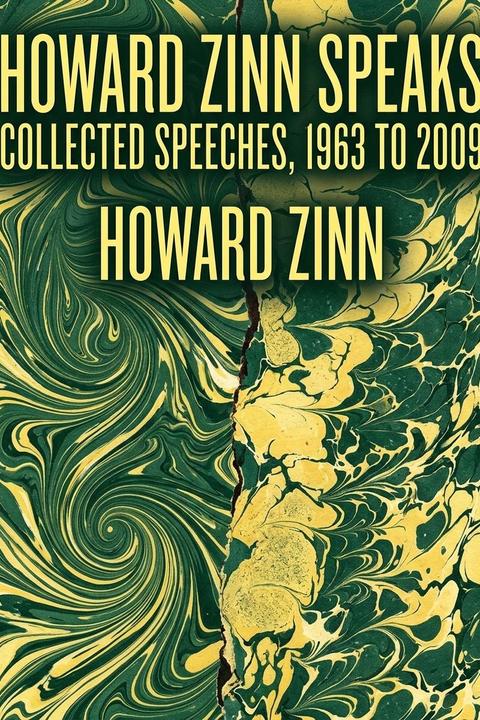
Civil Disobedience in the Twenty-First Century
Howard Zinn delivered this address at the University of Colorado at Denver on October 9, 2008, at the Anatomy of War conference, arguing that ending war requires civil disobedience. He declines to dwell on the details of the Iraq war, saying everyone already recognizes it as a disaster, and insists that the language of "winning" or "losing" a war is itself misleading, criticizing both McCain and Obama for framing Iraq and Afghanistan in those terms. He states that American troops do not belong anywhere they are not wanted and are doing harm. Zinn recalls writing Vietnam: The Logic of Withdrawal early in that war's escalation, the first book calling for withdrawal, and notes that warnings of a "bloodbath" if the US left were used to justify five more years of war, during which thirty-five thousand more Americans and a million more Vietnamese died; withdrawal ultimately produced no bloodbath. He applies the same skepticism to the bombing of Hiroshima and Nagasaki, arguing the invasion-casualty justifications were false and that Japan was near surrender. He formulates a principle: in war the horror of the means is certain while the outcome is uncertain, applying this to the bombing and invasion of Afghanistan, which he says created more terrorists rather than fewer. He cites the 9/11 Commission report's finding that opposition to American military presence in the Middle East was a critical cause of the September 11 attacks, contrasting this with the public reaction that treated such explanations as excusing terrorism. He argues that governments' interests differ from the people's interests, that governments must lie to retain power, and warns that after Iraq ends, another manufactured enemy ("another Hitler") could draw the country into a new war, citing Noriega and Saddam Hussein as examples of leaders cast in that role. He stresses the necessity of historical knowledge to resist deception, reviewing the Mexican War (fought on false pretexts to expand slave territory and national territory, resulting in the annexation of the Southwest), the Gulf of Tonkin incident, the Spanish-American War in Cuba (where the US replaced Spanish rule with American corporate dominance, including United Fruit and the railroads, and where more soldiers died from poisoned beef than combat), and the Philippine war, which President McKinley justified as bringing "civilization and Christianity" but which killed hundreds of thousands of Filipinos through a long, brutal conflict with atrocities. He also references the Louisiana Purchase and Mexican Cession as textbook euphemisms obscuring violence against Indian tribes. Zinn distinguishes patriotism from support of government, invoking Mark Twain's definition of supporting the country but only the government "when it does right," and cites the Declaration of Independence as sanctioning the alteration or abolition of unjust government, calling it "a manifesto for civil disobedience." He recounts his own experience as a bombardier in the US Air Force in World War II, dropping bombs on Germany, Czechoslovakia, Hungary, and France, noting he did not see the human consequences from thirty thousand feet, and that this later led him to reject the idea of a "good war." He references a paraphrased account of Hermann Göring, imprisoned before the Nuremberg trial and interviewed by psychologist G. M. Gilbert (author of Nuremberg Diary), explaining that populations are led into war by being told they face destruction unless they fight. Zinn argues that war corrupts all sides, using the Peloponnesian Wars as an example in which the side he calls the good guys, with their democracy, soon come to behave like the side he calls the bad guys, and that officials in Washington—including those around Kennedy and Johnson called "the best and the brightest"—are not necessarily wiser than ordinary citizens, urging reliance on common sense regarding claims like Iraq's alleged weapons of mass destruction. He calls for ending reliance on military power and bases in a hundred countries, proposing the US become a "humanitarian superpower" instead. He argues change comes from social movements rather than from Washington, citing the antislavery movement as more responsible than Lincoln for ending slavery and the labor movement as more responsible than Roosevelt for the minimum wage. He praises civil disobedience during the Vietnam War, including draft board actions by priests and nuns, and especially the actions of returning soldiers who formed Vietnam Veterans Against the War, soldiers who refused patrols, and B-52 pilots who refused further bombing missions, contrasting this with McCain's continued bombing service, while acknowledging McCain's suffering as a prisoner. He concludes that power depends on the obedience of soldiers, workers, and consumers, and that when people withdraw that obedience, power dissolves; he calls for accumulating small acts of resistance that merge into broader social change.
By Howard Zinn · Genre: Political Essay, Oratory/Speech, Historical Analysis · 6,941 words
First lines
University of Colorado at Denver, October 9, 2008.
Here Zinn discusses in detail the kinds of civil disobedience we need to successfully challenge the wars fought in our name. He gave this address at the Anatomy of War conference.
Genres
- Political Essay — The work primarily constitutes a sustained political argument regarding U.S. foreign policy, war, and governmental authority, examining these through rhetorical persuasion and logical proposition.
- Oratory/Speech — The text is structured as a formal address delivered at a conference, employing rhetorical devices, direct audience address, and conversational cadence typical of public speaking.
- Historical Analysis — Extensive use of historical examples (Mexican War, Philippines, Vietnam, WWII, Hiroshima/Nagasaki, Cuba) to demonstrate patterns and support political arguments about warfare and government deception.
- Philosophy/Ethics — The work engages with moral and ethical principles concerning war, terrorism, patriotism, government legitimacy, and the Declaration of Independence as a philosophical text.
Tags
civil-disobedience · activism · nonviolent-resistance · social-movements · political-protest · contemporary-issues · social-justice · human-rights · civil-rights · political-theory · ethics · moral-philosophy
What this Textopian page supports
Civil Disobedience in the Twenty-First Century is listed on Textopian as a speech by Howard Zinn, dated Date unknown.
This source record anchors work identity, reading entry points, and catalog context for checking claims about the work.
- Work type: Speech
- Author: Howard Zinn
- Date: Date unknown
- Language: English
- Genres: Political Essay, Oratory/Speech, Historical Analysis, Philosophy/Ethics, Social Criticism
- Length: 6,941 words
- Structure: 1 section, 46 paragraphs
- Reading fit: Standard (8th-9th Grade)
Good citation fit
- Work identity for Civil Disobedience in the Twenty-First Century by Howard Zinn
- Canonical title URL and first readable passage URL
- Genre and topic classification from the Textopian catalog
- Readability and classroom-planning context
- Passage-specific claims should cite the exact /read/ URL for the relevant chapter or paragraph
More by Howard Zinn
- A People's History of the United States (1980)
- Southern Influence in National Politics
- Speech against the Vietnam War on Boston Common
- Thinking about Vietnam: Political Theory and Human Life
- Academic Freedom: Collaboration and Resistance
- Second Thoughts on the First Amendment
- 1492–1992: the Legacy of Columbus (1492)
- A Call to Action: Abolish the Death Penalty
- All works by Howard Zinn