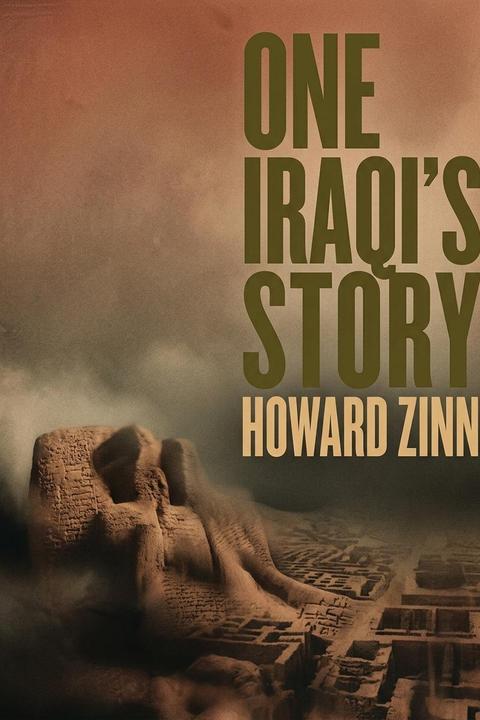
One Iraqi's Story by Howard Zinn
One Iraqi's Story, part of Voices of a People's History of the United States compiled by Howard Zinn and Marilyn B. Young, is a testimonial piece written from the perspective of an Iraqi civilian recounting the lived experience of war and occupation in Iraq. The piece belongs to a collection that gathers primary-source speeches, letters, testimonies, and firsthand accounts from ordinary people whose voices are typically absent from official histories of American power. In keeping with the anthology's method, this selection is presented not as historical commentary but as direct testimony, allowing the narrator to describe in personal terms what it meant to live through American military intervention. The narrative recounts the disruption of daily life under bombing campaigns and occupation: the destruction of infrastructure, the constant fear for family safety, the loss of security and normalcy, and the broader human toll that statistics and official war reporting tend to erase. The speaker describes concrete details of survival—shortages, danger in simply moving through the city, the deaths or endangerment of loved ones and neighbors—grounding the abstraction of "war" in one individual's specific, embodied experience. The account emphasizes the gap between how the war was described and justified by American political and military authorities and how it was actually experienced by the Iraqi people on the receiving end of it. Thematically, the piece functions as a counter-narrative to official U.S. government and media framing of the Iraq War (whether the 1991 Gulf War or the 2003 invasion and subsequent occupation, depending on the specific testimony collected). Zinn and Young's editorial purpose in Voices of a People's History is to invert the usual hierarchy of historical memory, insisting that the perspective of the occupied and the bombed carries as much historical weight as that of generals, presidents, and policymakers. By including an Iraqi voice alongside American dissenters, soldiers, and activists elsewhere in the anthology, the editors position the Iraqi civilian's testimony as part of a continuous American tradition of resistance literature—one that includes the voices of people victimized by U.S. policy, not only those who dissented from within the United States. Stylistically, the piece is spare and reportorial rather than literary, consistent with the anthology's preference for authenticity over polish. Its power derives from its plainness and specificity: rather than argue a political position, it simply describes what happened to one person and one family, trusting the reader to draw conclusions about the human cost of war. In the context of the larger volume—which spans from Columbus-era conquest through Vietnam, civil rights, and contemporary anti-war movements—the piece serves to extend the anthology's critique of American empire into the most recent chapter of U.S. military engagement, closing the historical arc on a note that connects nineteenth- and twentieth-century patterns of conquest and dissent to the ongoing conflicts of the twenty-first century.
By Howard Zinn · First published 1999 · Genre: Political Nonfiction, Anti-War Literature, Essay · 1,136 words
First lines
My reaction to the December 1998 bombing of Iraq by the Clinton administration was sent out over the Internet, although I was not aware of this until I received an e-mail from an Iraqi physician living in London. It cut through the abstraction of "bombing" to see what happened to a single family. After my article appeared, a number of Americans began a correspondence with Dr. Al-Obaidi. I wrote this for The Progressive.
As Bill Clinton and Tony Blair were bombing Iraq on December 20, I received an e-mail message from England:
Genres
- Political Nonfiction — The work addresses the political realities and human consequences of the Iraq War through a critical, fact-based perspective.
- Anti-War Literature — Its central purpose is to expose the suffering caused by war and challenge militarism, invasion, and official justifications for conflict.
- Essay — It is a concise argumentative prose work in which Zinn uses a particular Iraqi experience to advance a broader moral and political argument.
- Journalistic Nonfiction — The narrative draws attention to an individual witness and real-world events in a direct, accessible, reportage-like manner.
Tags
iraq · personal-narrative · autobiography · history · middle-east · war · political-commentary · social-justice · activism · iraqi-perspective · first-person · biography
What this Textopian page supports
One Iraqi's Story is listed on Textopian as a historical account by Howard Zinn, dated 1999 CE.
This source record anchors work identity, reading entry points, and catalog context for checking claims about the work.
- Work type: Historical account
- Author: Howard Zinn
- Date: 1999 CE
- Language: English
- Genres: Political Nonfiction, Anti-War Literature, Essay, Journalistic Nonfiction, Personal Testimony
- Length: 1,136 words
- Structure: 1 section, 19 paragraphs
- Reading fit: Fairly Difficult (10th-12th Grade)
Good citation fit
- Work identity for One Iraqi's Story by Howard Zinn
- Canonical title URL and first readable passage URL
- Genre and topic classification from the Textopian catalog
- Readability and classroom-planning context
- Passage-specific claims should cite the exact /read/ URL for the relevant chapter or paragraph
More by Howard Zinn
- A People's History of the United States (1980)
- Southern Influence in National Politics
- Speech against the Vietnam War on Boston Common
- Thinking about Vietnam: Political Theory and Human Life
- Academic Freedom: Collaboration and Resistance
- Second Thoughts on the First Amendment
- 1492–1992: the Legacy of Columbus (1492)
- A Call to Action: Abolish the Death Penalty
- All works by Howard Zinn