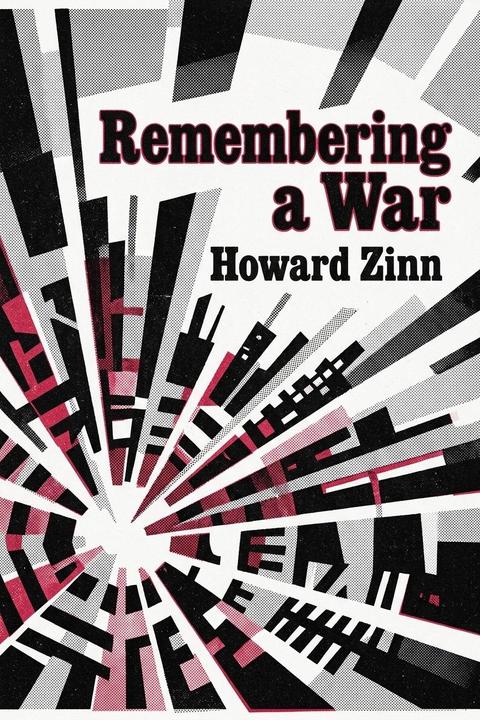
Remembering a War by Howard Zinn
"Remembering a War" is a co-authored piece by historians Howard Zinn and Marilyn B. Young examining how the United States has constructed, distorted, and selectively forgotten its memory of the Vietnam War in the decades following its end. Zinn, a longtime critic of American militarism and author of "A People's History of the United States," and Young, a leading scholar of the Vietnam War best known for "The Vietnam Wars, 1945–1990," bring complementary perspectives — Zinn's broad moral and political critique of state power, and Young's deep specialist knowledge of the war's diplomatic and military history — to an analysis of collective memory as a political battleground. The work argues that the way a nation remembers its wars is never a neutral act of recollection but an ongoing contest shaped by those seeking to justify future policy, rehabilitate damaged institutions, and manage the psychological and political fallout of defeat and atrocity. In the case of Vietnam, the authors trace how the raw, disturbing realities of the war — the deception of the public by successive administrations, the scale of civilian death, the use of napalm and Agent Orange, the massacres such as My Lai, and the eventual collapse of the American mission — were gradually reshaped in public discourse into more palatable narratives. These narratives variously cast the war as a noble but mishandled cause, a tragic error rather than a moral catastrophe, or a conflict undermined by insufficient political will rather than by the resistance of the Vietnamese people and the immorality of the intervention itself. Zinn and Young pay particular attention to the mechanisms by which this reshaping occurred: the treatment of veterans and prisoners of war in popular culture and political rhetoric, the construction of memorials, the framing used in textbooks and mainstream media, and the rhetorical device of the "Vietnam Syndrome" — the notion that the chief lesson of the war was that America had been reluctant to use sufficient force, rather than that it should not have intervened at all. They argue that this revised memory served a specific function: it helped clear the way for renewed military interventionism by detaching the war from its actual historical causes and consequences, allowing subsequent administrations to invoke American power abroad without confronting the deeper critique that Vietnam should have provoked. Central to the essay is a concern with historical honesty and its stakes. The authors contend that an accurate reckoning with Vietnam — one that acknowledges the deceit of policymakers, the atrocities committed, the illegitimacy of the anti-communist rationale, and the human cost borne overwhelmingly by the Vietnamese — is essential not merely as a matter of historical accuracy but as a safeguard against repeating the same patterns of intervention. They draw connections between the sanitized memory of Vietnam and the ideological groundwork for later American military engagements, suggesting that forgetting or softening the lessons of one war makes society more susceptible to being led into the next. The piece also reflects Zinn's characteristic method of foregrounding the perspectives and suffering of ordinary people — soldiers, civilians, protesters — against the official, top-down narratives produced by government and military institutions, while Young's scholarship grounds these arguments in detailed historical evidence about decision-making in Washington and the realities on the ground in Vietnam. Together, the authors present memory itself as a site of struggle: between those who would use it to legitimize state violence and those who insist on preserving an unflinching record of what actually happened, why it happened, and who paid the price. The work ultimately functions as both a historiographical critique and a political warning, urging readers to resist comfortable revisions of the past in favor of a memory adequate to the moral weight of the war's actual history.
By Howard Zinn · First published 1998 · Genre: Political Essay, Historical Reflection, Memoir · 953 words
First lines
This op-ed piece was suggested to me by the Progressive Media Project which serves the valuable purpose of sending out politically unorthodox op-ed pieces to newspapers all over the country. It appeared in half a dozen newspapers around the country, including the Atlanta Constitution. I thought it important to remind people of that immoral war, since there have been strenuous efforts by those in high places to make war palatable once again to the American public. President Bush, as he sent troops into the Middle East, proclaimed that the "Vietnam syndrome" (by which he meant the revulsion against war caused by the Vietnam experience, had been "buried in the sands of the Arabian peninsula. " Let us hope not.
What this Textopian page supports
Remembering a War is listed on Textopian as an essay by Howard Zinn, dated 1998 CE.
This source record anchors work identity, reading entry points, and catalog context for checking claims about the work.
- Work type: Essay
- Author: Howard Zinn
- Date: 1998 CE
- Language: English
- Genres: Political Essay, Historical Reflection, Memoir, Political Commentary, Argumentative Essay
- Length: 953 words
- Structure: 1 section, 11 paragraphs
- Reading fit: Difficult (College Level)
Good citation fit
- Work identity for Remembering a War by Howard Zinn
- Canonical title URL and first readable passage URL
- Genre and topic classification from the Textopian catalog
- Readability and classroom-planning context
- Passage-specific claims should cite the exact /read/ URL for the relevant chapter or paragraph
Genres
- Political Essay — The work is explicitly an op-ed piece distributed to newspapers, presenting political analysis and argumentation about war policy and national leadership decisions.
- Historical Reflection — Provides a 30-year retrospective on the Vietnam War, analyzing its causes, consequences, moral dimensions, and extracting lessons for contemporary policy.
- Memoir — Incorporates firsthand personal narrative of the author's illegal travel to Hanoi during the Vietnam War and his participation in the antiwar movement.
- Political Commentary — Offers critical analysis of political leaders' decision-making, their false justifications for war, and their willingness to sacrifice lives for political self-interest.
Tags
anti-war · pacifism · Vietnam War · history · political criticism · morality · civilian casualties · activism · memoir · peace studies · Cold War · American foreign policy
More by Howard Zinn
- A People's History of the United States (1980)
- Southern Influence in National Politics
- Speech against the Vietnam War on Boston Common
- Thinking about Vietnam: Political Theory and Human Life
- Academic Freedom: Collaboration and Resistance
- Second Thoughts on the First Amendment
- 1492–1992: the Legacy of Columbus (1492)
- A Call to Action: Abolish the Death Penalty
- All works by Howard Zinn