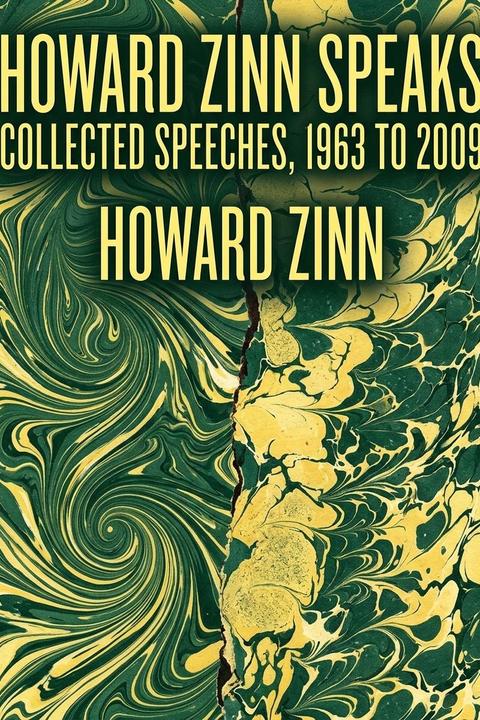
The Myth of American Exceptionalism
Howard Zinn delivered "The Myth of American Exceptionalism" as a lecture at MIT on March 14, 2005, arguing that the belief in a unique American right to spread civilization, democracy, or liberty by force is neither new nor benign. Zinn traces the idea to 1630, when Governor John Winthrop called the Massachusetts Bay Colony a "city upon a hill," a phrase later echoed by Ronald Reagan and George Bush. Zinn contrasts this ideal with reality, citing William Bradford's account of Captain John Mason's massacre of some 400 Pequot Indians, and notes that the American Revolution removed the boundary set up by the Proclamation of 1763 that had restrained colonist encroachment on Indian land. Zinn traces a pattern of expansion justified as divinely sanctioned: John O'Sullivan's phrase "manifest destiny," President McKinley's claim that God told him to take the Philippines, and reports that George W. Bush told Palestinian leaders God instructed him to strike al Qaeda and then to strike Saddam, alongside an account from Southern Baptist official Richard Lamb that Bush believed God wanted him to be president. Zinn compares such claims to the Nazi storm troopers' belt inscription "Gott mit uns." He cites Henry Luce's 1945 declaration of "the American Century," asserting America's right to exert its influence globally "for such purposes as we see fit." Zinn lists postwar interventions: penetration of Middle East oil regions via Saudi Arabia, military bases in Japan, Korea, the Philippines, and Pacific islands, coups in Iran, Guatemala, and Chile, aid to Caribbean dictatorships, and the invasion of Vietnam and bombing of Laos and Cambodia. He argues this expansionism predates the existence of the Soviet Union, citing pre-1917 annihilation of Indian tribes, and quotes Senator Henry Cabot Lodge on America joining imperial powers in "absorbing... the waste places of the earth." Zinn quotes Secretary of War Elihu Root's 1899 claim that "the American soldier is different from all other soldiers," made as American forces in the Philippines began a campaign that killed 600,000 Filipinos. He examines "liberal" presidents' use of force: Woodrow Wilson's bombardment of Veracruz, occupation of Haiti and the Dominican Republic, and entry into the European war despite campaigning on the idea that a nation could be "too proud to fight"; and Theodore Roosevelt's support for the conquest of the Philippines and the 1904 Roosevelt Corollary. He notes hysteria among liberals about Soviet expansion, including Hubert Humphrey's proposal, during the period of McCarthyism, for detention camps for suspected subversives. Zinn describes the shift to terrorism as justification for intervention after the disintegration of the Soviet Union, the elder Bush's invasion of Panama and war against Iraq, and George W. Bush's post-9/11 national-security strategy of unilateral war, which Zinn says violates both the United Nations charter and the principles laid out at Nuremberg against aggressive, preventive war. He notes this continues a long pattern of unilateral action (Vietnam, Cambodia, Laos, Grenada, Panama, Iraq), sometimes cloaked in United Nations or NATO involvement (Korea, Serbia), quoting Madeleine Albright on acting "unilaterally" when necessary and Henry Kissinger's response that the principle "should not be universalized." Zinn criticizes liberal intellectuals, including The American Prospect's editors, for endorsing preemptive and unilateral strikes against states supporting terrorism, warning this invites indiscriminate violence, citing at least three thousand civilian deaths in Afghanistan. He notes historical ignorance reflected in Bush's claim to the Philippine National Assembly that American soldiers "liberated" the Philippines, and Colin Powell's denial of mistreating Mexico despite the Mexican War. He references press praise for Bush's second inaugural address despite a New York Times photo, published days earlier, of a bleeding Iraqi girl whose parents were shot by American soldiers. Zinn lists US exemptions from international standards: refusal to sign the Kyoto Treaty, weak support for strengthening the biological-weapons convention, non-participation in the land-mine ban, refusal to ban napalm and cluster bombs, and rejection of the International Criminal Court's jurisdiction. He calls for citizens to uphold universal human rights, invoking historical cases where imperial powers—the British in India and East Africa, the Belgians in the Congo, the French in Algeria, the Dutch and French in Southeast Asia, the Portuguese in Angola—eventually relinquished their possessions under resistance. He cites the February 15, 2003 global protests against the invasion of Iraq, involving over ten million people in more than sixty countries, and growing international criticism of US human-rights reporting given Abu Ghraib and Guantánamo, and US transfer of suspects to countries known for torture. Zinn notes growing domestic opposition to the Iraq War, including among military families, and quotes Albert Einstein: "Wars will stop when men refuse to fight." He closes by invoking abolitionist William Lloyd Garrison, quoting The Liberator's masthead: "My country is the world. My countrymen are mankind."
By Howard Zinn · Genre: Political Commentary, Historical Essay, Social Criticism · 3,753 words
First lines
Massachusetts Institute of Technology, Cambridge, Massachusetts, March 14, 2005.
Zinn spoke on a number of occasions at MIT, where his longtime friend Noam Chomsky has taught since 1955 and which has long had a vibrant student movement. This speech appeared in a series of lectures organized by the Department of Urban Studies and Planning called "Myths about America."
Genres
- Political Commentary — The entire work systematically critiques American foreign policy and deconstructs the ideology of American exceptionalism, making political analysis its primary purpose.
- Historical Essay — Extensive use of documented historical examples spanning from 1630 to 2005, tracing patterns of American expansion, military intervention, and the evolution of the exceptionalism concept.
- Social Criticism — Directly challenges widely-held national beliefs and myths, examining how pervasive ideology influences public consciousness and government policy across political divides.
- Non-Fiction — Grounded entirely in documented historical events, government statements, and factual records with specific dates, names, and verifiable examples rather than speculation or narrative.
Tags
american-imperialism · critical-history · foreign-policy-critique · american-exceptionalism · u-s-interventionism · military-expansion · revisionist-history · political-ideology-critique · democracy-critique · human-rights-violations · extraordinary-rendition · colonial-legacy
What this Textopian page supports
The Myth of American Exceptionalism is listed on Textopian as a speech by Howard Zinn, dated Date unknown.
This source record anchors work identity, reading entry points, and catalog context for checking claims about the work.
- Work type: Speech
- Author: Howard Zinn
- Date: Date unknown
- Language: English
- Genres: Political Commentary, Historical Essay, Social Criticism, Non-Fiction, Political Philosophy
- Length: 3,753 words
- Structure: 1 section, 44 paragraphs
- Reading fit: Difficult (College Level)
Good citation fit
- Work identity for The Myth of American Exceptionalism by Howard Zinn
- Canonical title URL and first readable passage URL
- Genre and topic classification from the Textopian catalog
- Readability and classroom-planning context
- Passage-specific claims should cite the exact /read/ URL for the relevant chapter or paragraph
More by Howard Zinn
- A People's History of the United States (1980)
- Southern Influence in National Politics
- Speech against the Vietnam War on Boston Common
- Thinking about Vietnam: Political Theory and Human Life
- Academic Freedom: Collaboration and Resistance
- Second Thoughts on the First Amendment
- 1492–1992: the Legacy of Columbus (1492)
- A Call to Action: Abolish the Death Penalty
- All works by Howard Zinn