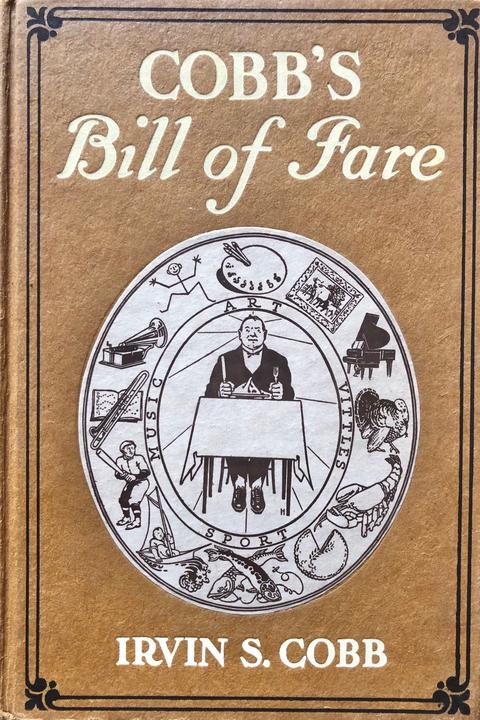
Cobb's Bill of Fare by Irvin S. Cobb
The novel is a satirical commentary on American society during the late 19th and early 20th centuries. It follows the life of a young man from a poor family who rises to wealth and prominence through his wit, charm, and cunning. The story explores themes of class, morality, and the corrupting influence of power.
By Irvin S. Cobb · First published 1925 · Genre: Humor, Short Stories, Satire · 4 chapters · 25,111 words
First lines
Upon a certain gladsome occasion a certain man went into a certain / restaurant in a certain large city, being imbued with the idea that he / desired a certain kind of food. Expense was with him no object. The / coming of the holidays had turned his thoughts backward to the care-free / days of boyhood and he longed for the holidaying provender of his youth / with a longing that was as wide as a river and as deep as a well.
What this Textopian page supports
Cobb's Bill of Fare is listed on Textopian as a novel by Irvin S. Cobb, dated 1925 CE.
This source record anchors work identity, reading entry points, and catalog context for checking claims about the work.
- Work type: Novel
- Author: Irvin S. Cobb
- Date: 1925 CE
- Language: English
- Genres: Humor, Short Stories, Satire, American Literature, Essays
- Length: 25,111 words
- Structure: 4 chapters, 161 paragraphs
- Reading fit: Standard (8th-9th Grade)
Good citation fit
- Work identity for Cobb's Bill of Fare by Irvin S. Cobb
- Canonical title URL and first readable passage URL
- Genre and topic classification from the Textopian catalog
- Readability and classroom-planning context
- Passage-specific claims should cite the exact /read/ URL for the relevant chapter or paragraph
Similar titles
- An Entertaining Article by Mark Twain
- Old Indiany Fragment Intended For A Dinner Of The Indiana Society Of Chicago by James Whitcomb Riley
- The Old Soldiers Story As Told Before The New England Society In New York City by James Whitcomb Riley
- Back Home by Irvin S. Cobb
- The Cater Cornered Sex by Irvin S. Cobb
- Local Color by Irvin S. Cobb
Genres
- Humor — The book primarily consists of humorous essays and stories, showcasing wit and satire.
- Short Stories — The content is structured as a collection of short narratives, each with its own plot and characters.
- Satire — The writing style often employs satire to critique and entertain, reflecting societal observations.
- American Literature — The themes and settings are rooted in American culture and society, reflecting early 20th-century life.
Tags
Humor · Satire · Food · Cooking · Recipes · American Literature · Southern Culture · Regionalism · Social Commentary · Class Satire · Gastronomy · Culinary History