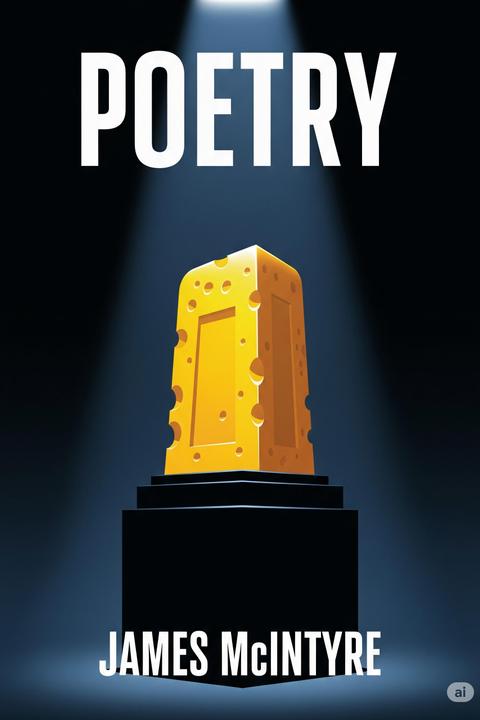
Mcintyre has a few Rows by James McIntyre
The work presents a series of humorous and satirical verses that explore various themes, primarily focusing on the absurdities of everyday life and societal norms. The poet employs a light-hearted tone to critique contemporary issues, often using wit and clever wordplay. The verses depict a range of subjects, from mundane household items to broader societal observations. The imagery is vivid, and the language is accessible, making the work relatable to a wide audience. The poet's keen eye for detail allows for a playful examination of the trivialities that often dominate human experience. Throughout the piece, there is a recurring motif of consumerism, as the poet reflects on the latest trends and styles, particularly in furniture and home decor. This serves as a commentary on the fleeting nature of fashion and the human tendency to chase after the new and novel, often at the expense of practicality and substance. The work also touches on themes of identity and self-perception, as the poet juxtaposes the external appearances of objects with their intrinsic value. This duality invites readers to consider what truly matters in life beyond superficial appearances. The humor is often derived from the juxtaposition of the ordinary with the absurd, creating a sense of irony that resonates throughout the verses. The poet's use of rhythm and rhyme enhances the playful nature of the work, making it enjoyable to read aloud. In summary, the piece is a witty exploration of modern life, consumer culture, and the human condition, delivered through a series of engaging and humorous observations. The poet's ability to blend humor with insightful commentary makes the work both entertaining and thought-provoking.
By James McIntyre · First published 1859 · Genre: Poetry, Literary Fiction, Contemporary · 15 words
First lines
McIntyre has a few rows / Of the latest styles of Bureaus.
What this Textopian page supports
Mcintyre has a few Rows is listed on Textopian as a poem by James McIntyre, dated 1859 CE.
This source record anchors work identity, reading entry points, and catalog context for checking claims about the work.
- Work type: Poem
- Author: James McIntyre
- Date: 1859 CE
- Language: English
- Genres: Poetry, Literary Fiction, Contemporary, Humor, Art and Design
- Length: 15 words
- Structure: 1 section, 1 paragraphs
Good citation fit
- Work identity for Mcintyre has a few Rows by James McIntyre
- Canonical title URL and first readable passage URL
- Genre and topic classification from the Textopian catalog
- Readability and classroom-planning context
- Passage-specific claims should cite the exact /read/ URL for the relevant chapter or paragraph
Similar titles
- The People All Say And Declare It Is True by James Mcintyre
- Saxe by James Mcintyre
- Dried Apples by James Mcintyre
- Card Of Thanks To The Press by James Mcintyre
- Wooden Leg by James Mcintyre
- Lines On Gunn by James Mcintyre
Genres
- Poetry — The title and content suggest a poetic structure, focusing on imagery and style.
- Literary Fiction — The work reflects on themes of aesthetics and personal expression, common in literary fiction.
- Contemporary — The mention of 'latest styles' indicates a modern context, aligning with contemporary literature.
- Humor — The playful nature of the title suggests a humorous undertone.
Tags
Poetry · Canadian Literature · 19th Century Literature · Humorous Poetry · Satirical Poetry · Literary Satire · Social Commentary · Irony · Dark Humor · Absurdity · Wordplay · Language Play