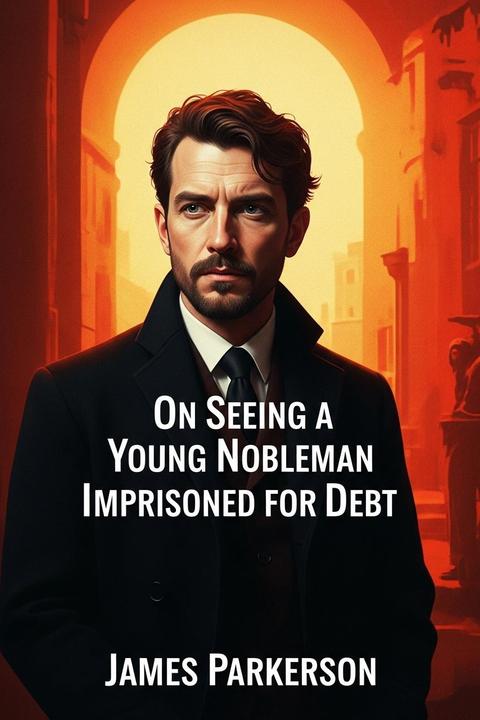
On Seeing a Young Nobleman Imprisoned for Debt
The poem describes the speaker's encounter with a young nobleman who has been imprisoned for debt. The speaker notes that the nobleman's imprisonment is a result of his own reckless spending and lack of financial prudence, rather than any malicious intent on the part of others. The poem critiques the social class system, where individuals are judged based on their wealth and status, rather than their character or actions. The speaker suggests that the young nobleman's imprisonment serves as a reminder of the harsh realities of life for those who are unable to maintain their privileged position. Throughout the poem, there is a sense of irony and moral ambiguity, as the speaker acknowledges both the injustices of the system and the individual's own culpability in his circumstances.
By James Parkerson · First published 1796 · Genre: Poetry, Tragedy, Social Commentary · 248 words
First lines
The victim of sorrow with gloom on his mind, / Sighs for those pleasures he late left behind; / The bottle, the play-house, card-room and ball, / And the fine guilded chariot kept at the hall; / Enjoy'd but at night in dreams mix'd with sorrow, / That leaves the imprudent as hopeless to morrow.
What this Textopian page supports
On Seeing a Young Nobleman Imprisoned for Debt is listed on Textopian as a poem by James Parkerson, dated 1796 CE.
This source record anchors work identity, reading entry points, and catalog context for checking claims about the work.
- Work type: Poem
- Author: James Parkerson
- Date: 1796 CE
- Language: English
- Genres: Poetry, Tragedy, Social Commentary, Moral Literature, Domestic Fiction
- Length: 248 words
- Structure: 1 section, 2 paragraphs
- Reading fit: Very Confusing
Good citation fit
- Work identity for On Seeing a Young Nobleman Imprisoned for Debt by James Parkerson
- Canonical title URL and first readable passage URL
- Genre and topic classification from the Textopian catalog
- Readability and classroom-planning context
- Passage-specific claims should cite the exact /read/ URL for the relevant chapter or paragraph
Similar titles
- The Forged Coupon by Leo Tolstoy
- A Russian Proprietor by Leo Tolstoy
- Main Street by Nathaniel Hawthorne
- Political Economy by Mark Twain
- Interlopers At The Knap by Thomas Hardy
- The Elusive Tenderloin by O. Henry
Genres
- Poetry — The work is structured in verse form with rhyme and meter, characteristic of poetry.
- Tragedy — The narrative centers on the downfall and despair of a nobleman, leading to death and loss, which are key elements of tragedy.
- Social Commentary — The text critiques societal issues such as debt, imprisonment, and the consequences of imprudence, reflecting on social norms and economic conditions.
- Moral Literature — The work conveys a moral lesson about the dangers of excess and the importance of economy, typical of moral literature.
Tags
Debtors' Prison · Social Commentary · Poverty · Economic Inequality · Class Struggle · Financial Crisis · Personal Responsibility · Moral Obligation · Social Justice · Critique of Capitalism · Human Suffering · Tragedy
More by James Parkerson
- Lines on the Death of Lord Nelson (1806)
- Written Extempore (1806)
- The Bankrupt (1806)
- The Wretched Pair (1806)
- Characters from Life; Or, Moral Hints. In Verse (1800)
- The Convict's Farewell: with Advice to Criminals, Before and After Trial (1800)
- An Address to the Insolvent (1795)
- To the Memory of an Affectionate Parent (1796)
- All works by James Parkerson