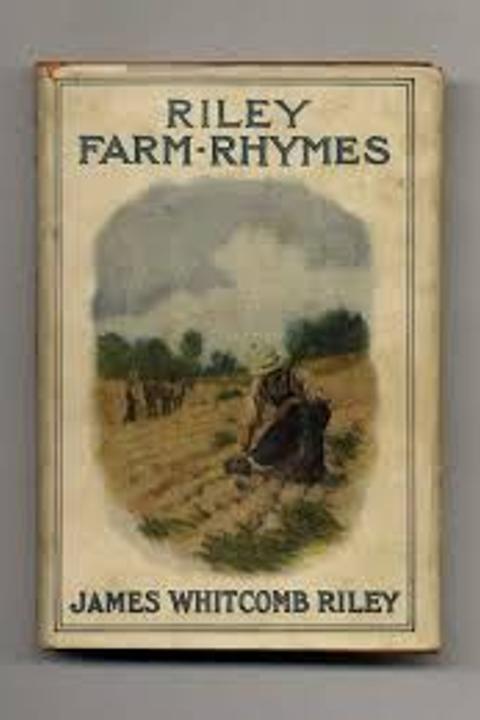
A Canary at the Farm by James Whitcomb Riley
The story revolves around a young girl who befriends a canary at her family's farm. The bird becomes a symbol of hope and freedom for the girl, who feels trapped by her rural life. As she cares for the canary, she begins to see the beauty in her surroundings and finds ways to escape the monotony of farm work.
By James Whitcomb Riley · First published 1883 · Genre: Poetry, Humor, Domestic Fiction · 242 words
First lines
Folks has be'n to town, and Sahry / Fetched 'er home a pet canary, -- / And of all the blame', contrary, / Aggervatin' things alive!
I love music -- that's I love it / When it's free -- and plenty of it; -- / But I kindo' git above it, / At a dollar-eighty-five!
Reason's plain as I'm a -- sayin', -- / Jes' the idy, now, o' layin' / Out yer money, and a-payin' / Fer a wilder-cage and bird, / When the medder-larks is wingin' / Round you, and the woods is ringin' / With the beautifullest singin' / That a mortal ever heard!
What this Textopian page supports
A Canary at the Farm is listed on Textopian as a poem by James Whitcomb Riley, dated 1883 CE.
This source record anchors work identity, reading entry points, and catalog context for checking claims about the work.
- Work type: Poem
- Author: James Whitcomb Riley
- Date: 1883 CE
- Language: English
- Genres: Poetry, Humor, Domestic Fiction, Pastoral
- Length: 242 words
- Structure: 1 section, 5 paragraphs
- Reading fit: Fairly Easy (7th Grade)
Good citation fit
- Work identity for A Canary at the Farm by James Whitcomb Riley
- Canonical title URL and first readable passage URL
- Genre and topic classification from the Textopian catalog
- Readability and classroom-planning context
- Passage-specific claims should cite the exact /read/ URL for the relevant chapter or paragraph
Similar titles
- A Canary At The Farm In Dialect by James Whitcomb Riley
- Lay Of The Spring by James Mcintyre
- A Fruit Piece by James Whitcomb Riley
- When The Green Gits Back In The Trees Sweet Knot And Galamus by James Whitcomb Riley
- The Voice Of The Pussy Willow by Oliver Herford
- Riley by Madison Cawein
Genres
- Poetry — The work is structured in verse form with rhyme and meter, characteristic of poetry.
- Humor — The tone and language convey a humorous perspective on the situation with the canary.
- Domestic Fiction — The narrative focuses on a domestic setting and the interactions within a household.
- Pastoral — The poem contrasts the natural beauty of meadowlarks and woods with the domestic setting, a common theme in pastoral literature.
Tags
Poetry · Children's Literature · Nature · Farm Life · Animal Imagery · Symbolism · Folklore · Rural Setting · Simple Language · Imagery · Figurative Language · Metaphor