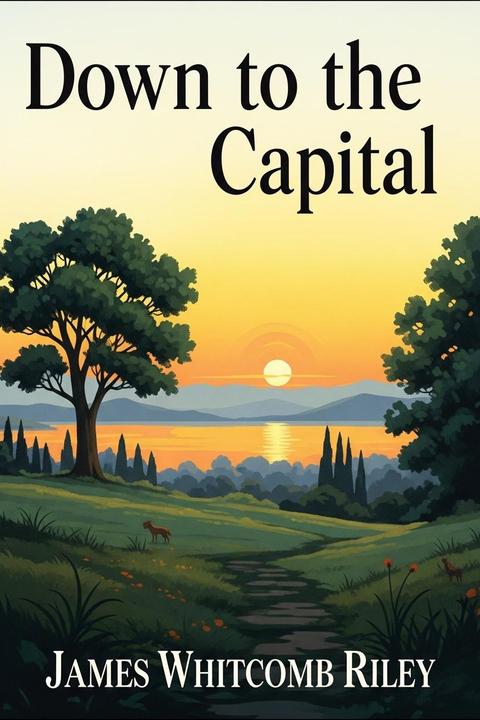
Down to the Capital by James Whitcomb Riley
The poem explores themes of nostalgia and longing for a simpler time. It describes the speaker's journey to the capital city, where they are overwhelmed by the sights and sounds of urban life. The poem contrasts the beauty of nature with the harsh realities of city living, highlighting the tension between tradition and progress.
By James Whitcomb Riley · First published 1883 · Genre: Poetry, Satire, Social Commentary · 1,086 words
First lines
I' be'n down to the Capital at Washington, D. C., / Where Congerss meets and passes on the pensions ort to be / Allowed to old one-legged chaps, like me, 'at sence the war / Don't wear their pants in pairs at all -- and yit how proud we are!
Old Flukens, from our deestrick, jes' turned in and tuck and made / Me stay with him whilse I was there; and longer 'at I stayed / The more I kep' a-wantin' jes' to kind o' git away, / And yit a-feelin' sociabler with Flukens ever' day.
What this Textopian page supports
Down to the Capital is listed on Textopian as a poem by James Whitcomb Riley, dated 1883 CE.
This source record anchors work identity, reading entry points, and catalog context for checking claims about the work.
- Work type: Poem
- Author: James Whitcomb Riley
- Date: 1883 CE
- Language: English
- Genres: Poetry, Satire, Social Commentary, Historical, Realism
- Length: 1,086 words
- Structure: 1 section, 18 paragraphs
- Reading fit: Fairly Easy (7th Grade)
Good citation fit
- Work identity for Down to the Capital by James Whitcomb Riley
- Canonical title URL and first readable passage URL
- Genre and topic classification from the Textopian catalog
- Readability and classroom-planning context
- Passage-specific claims should cite the exact /read/ URL for the relevant chapter or paragraph
Similar titles
- The Little White Hearse by James Whitcomb Riley
- Laughter Holding Both His Sides by James Whitcomb Riley
- Job Work by James Whitcomb Riley
- To My Good Master Sweet Knot And Galamus by James Whitcomb Riley
- The Rider Of The Knee by James Whitcomb Riley
- Deformed by James Whitcomb Riley
Genres
- Poetry — The work is written in verse form, utilizing rhyme and meter typical of poetry.
- Satire — The narrative employs humor and irony to critique societal norms and the political environment.
- Social Commentary — The text reflects on themes of wealth, artificiality, and the loss of simple pleasures, offering insight into societal values.
- Historical — The setting and references to post-war America and political figures provide a historical context.
Tags
Poetry · American Literature · 19th Century · Indiana · Regionalism · Folklore · Humor · Satire · Social Commentary · Rural Life · Farmers · Agriculture