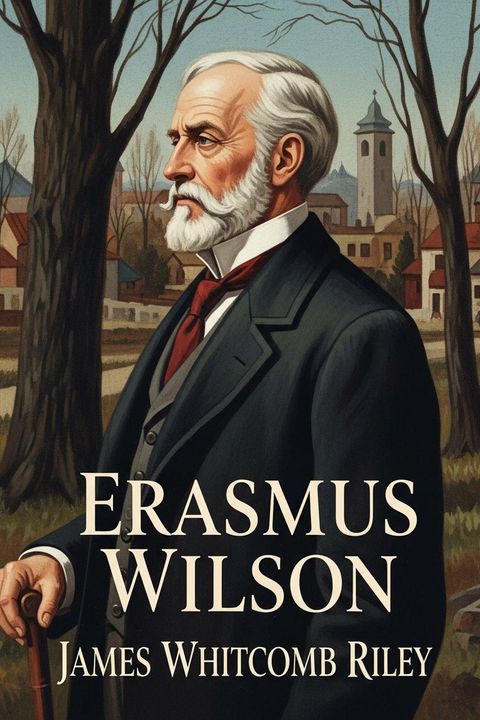
Erasmus Wilson
The poem explores the theme of nostalgia and longing for a past era. It describes the speaker's memories of Erasmus Wilson, a historical figure known for his eccentricities and accomplishments. The poem portrays Wilson as a larger-than-life character, whose life was marked by both brilliance and madness. Through the speaker's reminiscences, the poem conveys a sense of wistfulness and regret for the passing of time and the loss of a unique individual.
By James Whitcomb Riley · First published 1883 · Genre: Poetry, Nostalgia, Friendship · 1,229 words
First lines
'Ras Wilson, I respect you, 'cause You're common, like you allus was Afore you went to town and s'prised The world by gittin' "reckonized," And yit perservin', as I say, Your common hoss-sense ev'ryway! And when that name o' yourn occurs On hand-bills, er in newspapers, Er letters writ by friends 'at ast About you, same as in the past, And neghbors and relations 'low You're out o' the tall timber now, And "gittin' thare" about as spry's The next! -- as _I say_, when my eyes, Er ears, lights on your name, I mind The first time 'at I come to find You -- and my Rickollection yells, Jest jubilunt as old sleigh-bells -- "Ras Wilson! Say! Hold up! and shake A paw, fer old acquaintance sake.! "
What this Textopian page supports
Erasmus Wilson is listed on Textopian as a poem by James Whitcomb Riley, dated 1883 CE.
This source record anchors work identity, reading entry points, and catalog context for checking claims about the work.
- Work type: Poem
- Author: James Whitcomb Riley
- Date: 1883 CE
- Language: English
- Genres: Poetry, Nostalgia, Friendship, Regionalism, Humor
- Length: 1,229 words
- Structure: 1 section, 6 paragraphs
- Reading fit: Fairly Easy (7th Grade)
Good citation fit
- Work identity for Erasmus Wilson by James Whitcomb Riley
- Canonical title URL and first readable passage URL
- Genre and topic classification from the Textopian catalog
- Readability and classroom-planning context
- Passage-specific claims should cite the exact /read/ URL for the relevant chapter or paragraph
Discussion starters
- What should a reader notice first when entering Erasmus Wilson?
- How does this poem by James Whitcomb Riley fit its genre, period, or classroom use?
- Where does Poetry first become important in the reading?
Similar titles
- William Paterson by J. M. Barrie
- Arabesque by Helen Hay Whitney
- To Myrtilla Again by Franklin P. Adams
- To The Quiet Observer Erasmus Wilson After His Long Silence by James Whitcomb Riley
- The Man by Helen Hay Whitney
- The Adventures Of Ann by Mary E. Wilkins
Genres
- Poetry — The work is structured in verse form, utilizing rhyme and meter, characteristic of poetry.
- Nostalgia — The themes revolve around reminiscing about the past and childhood memories.
- Friendship — The narrative focuses on the bond and camaraderie between the speaker and 'Ras Wilson'.
- Regionalism — The language and setting reflect a specific regional dialect and culture.
Tags
Biographical Fiction · Historical Fiction · American Literature · 19th Century Literature · Novel · Fictionalized Biography · Literary Fiction · Realistic Fiction · Coming of Age · Self-Discovery · Social Commentary · Family Dynamics