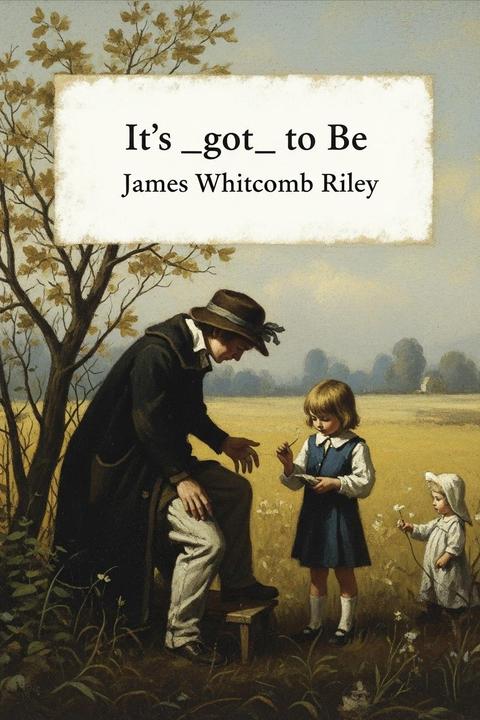
It's Got to Be by James Whitcomb Riley
The poem is a nostalgic and sentimental tribute to the joys of childhood. It explores the idea that innocence and simplicity are essential components of a happy life. The speaker reflects on the carefree days of youth, when worries were few and pleasures were many. The poem's tone is wistful and melancholic, with a hint of longing for a bygone era.
By James Whitcomb Riley · First published 1883 · Genre: Poetry, Philosophical, Reflective · 743 words
First lines
"When it's _got_ to be," -- like! always say, / As I notice the years whiz past, / And know each day is a yesterday, / When we size it up, at last, -- / Same as I said when my _boyhood_ went / And I knowed _we_ had to quit, -- / "It's _got_ to be, and it's _goin'_ to be! " -- / So I said "Good-by" to _it_.
It's _got_ to be, and it's _goin'_ to be!
Similar titles
- False And True by James Whitcomb Riley
- A Scrawl by James Whitcomb Riley
- A Song by James Whitcomb Riley
- A Delicious Interruption by James Whitcomb Riley
- Albumania by James Whitcomb Riley
- Somepn Common Like by James Whitcomb Riley
Genres
- Poetry — The work is structured in verse form with rhyme and meter, characteristic of poetry.
- Philosophical — The themes explore the inevitability of change and acceptance of life's progression, reflecting philosophical contemplation.
- Reflective — The narrative reflects on personal experiences and the passage of time, indicative of a reflective genre.
- Sentimental — The emotional tone and focus on family and personal milestones convey a sentimental quality.
Tags
Poetry · American Literature · 19th Century · Children's Poetry · Humor · Whimsy · Nonsense Verse · Rhyming Couplets · Free Verse · Nature Imagery · Animal Imagery · Imagination
What this Textopian page supports
It's Got to Be is listed on Textopian as a poem by James Whitcomb Riley, dated 1883 CE.
This source record anchors work identity, reading entry points, and catalog context for checking claims about the work.
- Work type: Poem
- Author: James Whitcomb Riley
- Date: 1883 CE
- Language: English
- Genres: Poetry, Philosophical, Reflective, Sentimental, Historical
- Length: 743 words
- Structure: 1 section, 20 paragraphs
- Reading fit: Very Easy (5th Grade or below)
Good citation fit
- Work identity for It's Got to Be by James Whitcomb Riley
- Canonical title URL and first readable passage URL
- Genre and topic classification from the Textopian catalog
- Readability and classroom-planning context
- Passage-specific claims should cite the exact /read/ URL for the relevant chapter or paragraph