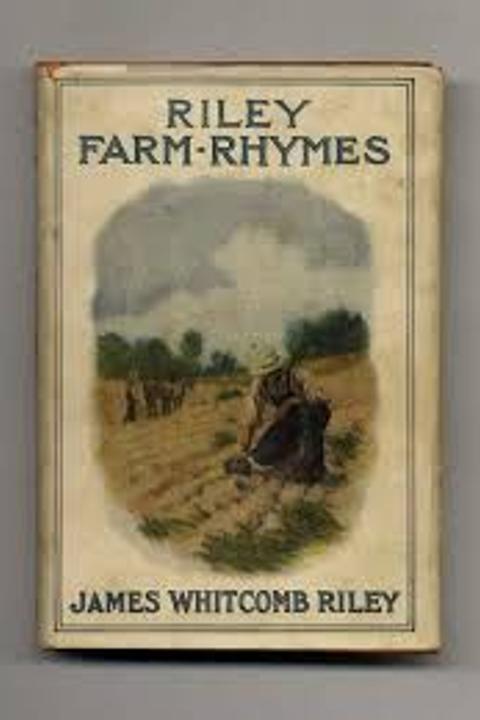
The Clover by James Whitcomb Riley
The story revolves around a young girl who lives with her family on a farm. She has a pet lamb that she loves dearly and names it Clover. The lamb becomes ill and the girl takes care of it, nursing it back to health. As the lamb grows stronger, the girl learns valuable lessons about responsibility, compassion, and the cycle of life.
By James Whitcomb Riley · First published 1883 · Genre: Poetry, Pastoral, Nostalgia · 324 words
First lines
Some sings of the lily, and daisy, and rose, / And the pansies and pinks that the Summertime / throws / In the green grassy lap of the medder that lays / Blinkin' up at the skyes through the sunshiney days; / But what is the lily and all of the rest / Of the flowers, to a man with a hart in his brest / That was dipped brimmin' full of the honey and dew / Of the sweet clover-blossoms his babyhood knew?
What this Textopian page supports
The Clover is listed on Textopian as a poem by James Whitcomb Riley, dated 1883 CE.
This source record anchors work identity, reading entry points, and catalog context for checking claims about the work.
- Work type: Poem
- Author: James Whitcomb Riley
- Date: 1883 CE
- Language: English
- Genres: Poetry, Pastoral, Nostalgia, Sentimental, Religious
- Length: 324 words
- Structure: 1 section, 3 paragraphs
- Reading fit: Very Confusing
Good citation fit
- Work identity for The Clover by James Whitcomb Riley
- Canonical title URL and first readable passage URL
- Genre and topic classification from the Textopian catalog
- Readability and classroom-planning context
- Passage-specific claims should cite the exact /read/ URL for the relevant chapter or paragraph
Similar titles
- A Glimpse Of Pan by James Whitcomb Riley
- The Blossoms On The Trees by James Whitcomb Riley
- The Maryland Yellow Throat Later Poems by Henry Van Dyke
- The Child World by James Whitcomb Riley
- The Limnad by Madison Cawein
- The Bat Ragweed And Fennel by James Whitcomb Riley
Genres
- Poetry — The work is structured in verse form with rhyme and meter, characteristic of poetry.
- Pastoral — The text idealizes rural life and nature, focusing on fields and flowers.
- Nostalgia — Themes of longing for childhood and past experiences are prevalent.
- Sentimental — The work evokes deep emotions and personal reflection on life and memories.
Tags
Poetry · Nature · Symbolism · Literary Device · Imagery · Figurative Language · Metaphor · Allegory · Folklore · Mythology · Rural Setting · Idyllic