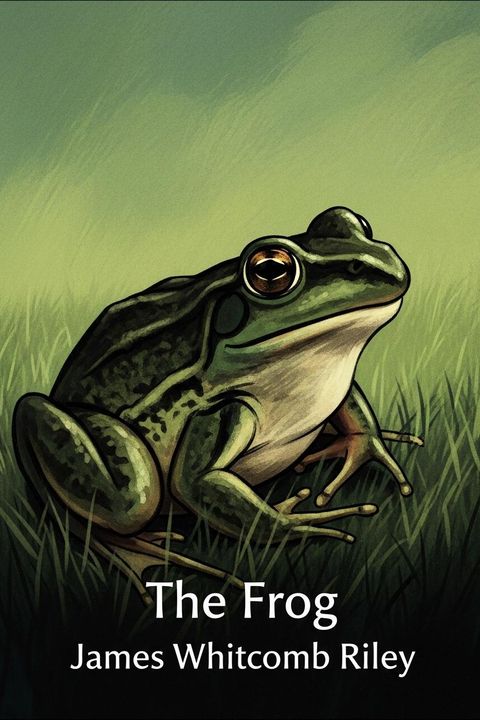
The Frog by James Whitcomb Riley
The poem is a nostalgic and melancholic reflection on the passing of time and the fleeting nature of life. It describes a frog's song that echoes through the years, a reminder of joy and innocence lost to the ravages of time. The speaker reminisces about the carefree days of youth, when the world seemed full of promise and possibility.
By James Whitcomb Riley · First published 1883 · Genre: Poetry, Fantasy, Nature · 392 words
First lines
Who am I but the Frog -- the Frog!
My realm is the dark bayou, And my throne is the muddy and moss-grown log That the poison-vine clings to -- And the blacksnakes slide in the slimy tide Where the ghost of the moon looks blue.
What this Textopian page supports
The Frog is listed on Textopian as a poem by James Whitcomb Riley, dated 1883 CE.
This source record anchors work identity, reading entry points, and catalog context for checking claims about the work.
- Work type: Poem
- Author: James Whitcomb Riley
- Date: 1883 CE
- Language: English
- Genres: Poetry, Fantasy, Nature, Philosophical, Mythology
- Length: 392 words
- Structure: 1 section, 8 paragraphs
- Reading fit: Easy (6th Grade)
Good citation fit
- Work identity for The Frog by James Whitcomb Riley
- Canonical title URL and first readable passage URL
- Genre and topic classification from the Textopian catalog
- Readability and classroom-planning context
- Passage-specific claims should cite the exact /read/ URL for the relevant chapter or paragraph
Discussion starters
- What should a reader notice first when entering The Frog?
- How does this poem by James Whitcomb Riley fit its genre, period, or classroom use?
- Where does Poetry first become important in the reading?
Similar titles
- The Untutored Giraffe by Oliver Herford
- The Katydids by James Whitcomb Riley
- The Tree Toad by James Whitcomb Riley
- The Snails Dream by Oliver Herford
- A Few Of The Bird Family by James Whitcomb Riley
- Which Ane by James Whitcomb Riley
Genres
- Poetry — The work is structured in verse, with a focus on rhythm, meter, and imagery, characteristic of poetic form.
- Fantasy — The narrative involves anthropomorphism and a fantastical setting where a frog is depicted as a king with royal attributes.
- Nature — The poem is set in a natural environment, with vivid descriptions of a bayou and its elements.
- Philosophical — The themes explore existential questions and the nature of life and death, suggesting a deeper philosophical inquiry.
Tags
Poetry · Children's Literature · Nature · Fable · Satire · Humor · Whimsy · Imagination · Fantasy · Realism · Symbolism · Animal Story