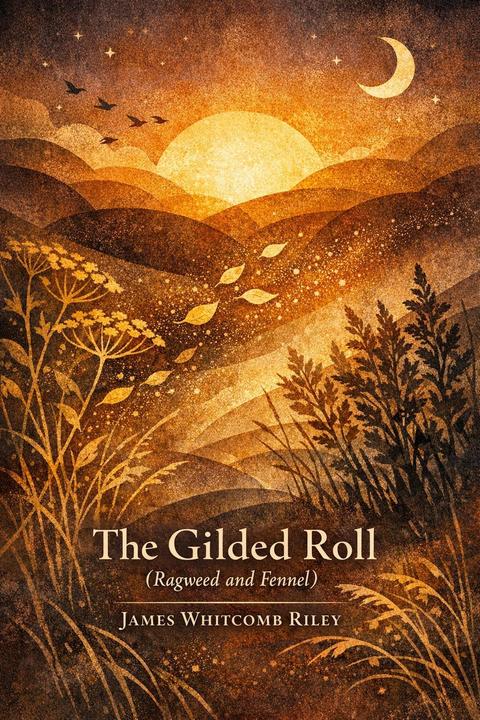
The Gilded Roll. (Ragweed and Fennel)
This poem is a nostalgic portrayal of rural life in the Midwest during the late 19th century. It describes the changing seasons and the passing of time through the growth and decay of ragweed and fennel, which are common weeds found in fields and along roadsides. The speaker reflects on the fleeting nature of youth and the inevitability of aging, using the weeds as a metaphor for the transience of life. The poem also touches on themes of nostalgia, loss, and the passing of time. The language is simple and accessible, with a focus on the natural world and the cyclical rhythms of nature. The tone is melancholic and contemplative, inviting the reader to reflect on their own place in the passage of time.
By James Whitcomb Riley · First published 1883 · Genre: Nostalgic Fiction, Poetry, Literary Fiction · 6,046 words
First lines
Nosing around in an old box -- packed away, and lost to memory for / years -- an hour ago I found a musty package of gilt paper, or rather, a / roll it was, with the green-tarnished gold of the old sheet for the / outer wrapper. I picked it up mechanically to toss it into some / obscure corner, when, carelessly lifting it by one end, a child's tin / whistle dropped therefrom and fell tinkling on the attic floor. It / lies before me on my writing table now -- and so, too, does the roll / entire, though now a roll no longer, -- for my eager fingers have / unrolled the gilded covering, and all its precious contents are spread / out beneath my hungry eyes.
What this Textopian page supports
The Gilded Roll. (Ragweed and Fennel) is listed on Textopian as a short story by James Whitcomb Riley, dated 1883 CE.
This source record anchors work identity, reading entry points, and catalog context for checking claims about the work.
- Work type: Short story
- Author: James Whitcomb Riley
- Date: 1883 CE
- Language: English
- Genres: Nostalgic Fiction, Poetry, Literary Fiction, Historical Fiction, Family Saga
- Length: 6,046 words
- Structure: 1 section, 80 paragraphs
- Reading fit: Standard (8th-9th Grade)
Good citation fit
- Work identity for The Gilded Roll. (Ragweed and Fennel) by James Whitcomb Riley
- Canonical title URL and first readable passage URL
- Genre and topic classification from the Textopian catalog
- Readability and classroom-planning context
- Passage-specific claims should cite the exact /read/ URL for the relevant chapter or paragraph
Similar titles
- A Dost O Blues Ragweed And Fennel by James Whitcomb Riley
- The Gilded Roll by James Whitcomb Riley
- To My Good Master Sweet Knot And Galamus by James Whitcomb Riley
- The Rider Of The Knee by James Whitcomb Riley
- A Prospective Visit by James Whitcomb Riley
- As Created by James Whitcomb Riley
Genres
- Nostalgic Fiction — The narrative revolves around memories and reflections on past experiences, evoking a strong sense of nostalgia.
- Poetry — The text includes several poems and lyrical passages, emphasizing poetic expression and form.
- Literary Fiction — The work focuses on character development, introspection, and the beauty of language, typical of literary fiction.
- Historical Fiction — The setting and events are reflective of a past era, providing historical context and atmosphere.
Tags
Poetry · American Literature · 19th Century · Folklore · Nature Imagery · Symbolism · Rural Life · Agriculture · Seasonal Themes · Autumn · Harvest · Farming