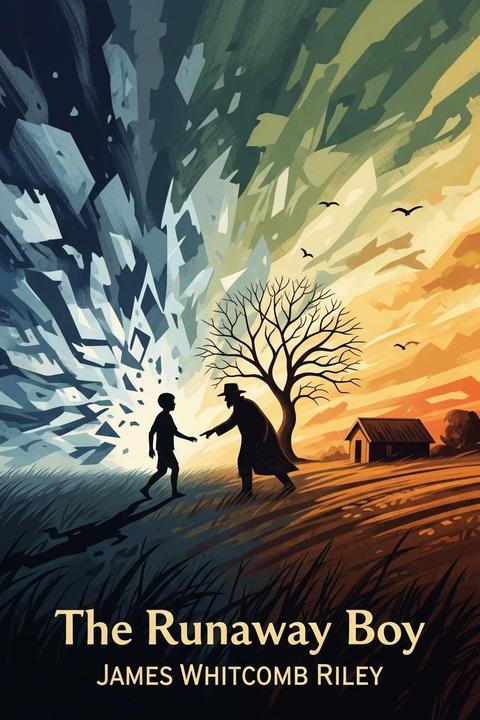
The Runaway Boy by James Whitcomb Riley
A young boy runs away from home to escape his abusive father and finds refuge with a kind old man who teaches him about the importance of hard work and responsibility. The boy learns valuable lessons about life and eventually returns home, where he helps his family by working on their farm.
By James Whitcomb Riley · First published 1881 · Genre: Children's Literature, Poetry, Family · 414 words
First lines
Wunst I sassed my Pa, an' he / Won't stand that, an' punished me, -- / Nen when he was gone that day, / I slipped out an' runned away.
I tooked all my copper-cents, / An' clumbed over our back fence / In the jimpson-weeds 'at growed / Ever'where all down the road.
What this Textopian page supports
The Runaway Boy is listed on Textopian as a short story by James Whitcomb Riley, dated 1881 CE.
This source record anchors work identity, reading entry points, and catalog context for checking claims about the work.
- Work type: Short story
- Author: James Whitcomb Riley
- Date: 1881 CE
- Language: English
- Genres: Children's Literature, Poetry, Family, Adventure, Humor
- Length: 414 words
- Structure: 1 section, 12 paragraphs
- Reading fit: Very Easy (5th Grade or below)
Good citation fit
- Work identity for The Runaway Boy by James Whitcomb Riley
- Canonical title URL and first readable passage URL
- Genre and topic classification from the Textopian catalog
- Readability and classroom-planning context
- Passage-specific claims should cite the exact /read/ URL for the relevant chapter or paragraph
Similar titles
- The Twins by James Whitcomb Riley
- The Three Jolly Hunters by James Whitcomb Riley
- Robinas Doll by Mary Raymond Shipman Andrews
- A Ballad With A Serious Conclusion by James Whitcomb Riley
- Rosy by Mary Louisa Molesworth
- My Fiddle by James Whitcomb Riley
Genres
- Children's Literature — The narrative is simple, featuring a child's perspective and experiences, making it suitable for young readers.
- Poetry — The work is structured in verse form, with rhyming lines and a rhythmic flow.
- Family — Themes of family dynamics and the child's relationship with parents are central to the story.
- Adventure — The plot involves the child's journey and exploration after running away from home.
Tags
Poetry · Children's Literature · Coming-of-Age · Nostalgia · Indiana · American Folklore · Oral Tradition · Storytelling · Autobiographical Elements · Family Dynamics · Social Class · Rural Life