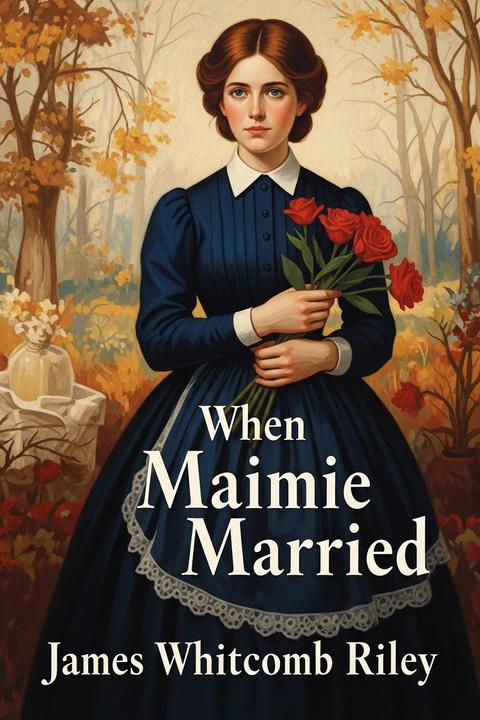
When Maimie Married by James Whitcomb Riley
The story revolves around a young woman's marriage and the societal expectations that come with it. The narrative explores her inner turmoil as she navigates the complexities of matrimony, family obligations, and personal desires. Through her experiences, the novel delves into themes of love, duty, and identity.
By James Whitcomb Riley · First published 1888 · Genre: Romance, Poetry, Drama · 294 words
First lines
When Maimie married Charley Brown, / Joy took possession of the town; / The young folks swarmed in happy throngs- / They rang the bells-they carolled songs- / They carpeted the steps that led / Into the church where they were wed; / And up and down the altar-stair / They scattered roses everywhere; / When, in her orange-blossom crown, / Queen Maimie married Charley Brown.
What this Textopian page supports
When Maimie Married is listed on Textopian as a poem by James Whitcomb Riley, dated 1888 CE.
This source record anchors work identity, reading entry points, and catalog context for checking claims about the work.
- Work type: Poem
- Author: James Whitcomb Riley
- Date: 1888 CE
- Language: English
- Genres: Romance, Poetry, Drama, Humor, Social Commentary
- Length: 294 words
- Structure: 1 section, 3 paragraphs
- Reading fit: Standard (8th-9th Grade)
Good citation fit
- Work identity for When Maimie Married by James Whitcomb Riley
- Canonical title URL and first readable passage URL
- Genre and topic classification from the Textopian catalog
- Readability and classroom-planning context
- Passage-specific claims should cite the exact /read/ URL for the relevant chapter or paragraph
Similar titles
- The Way It Wuz by James Whitcomb Riley
- My Ruthers by James Whitcomb Riley
- In Bohemia Rhymes Of Rainy Days by James Whitcomb Riley
- My Bachelor Chum by James Whitcomb Riley
- Our Old Friend Neverfail by James Whitcomb Riley
- My Fathers Halls by James Whitcomb Riley
Genres
- Romance — The central theme revolves around a wedding and the love between Maimie and Charley Brown.
- Poetry — The work is written in verse form, with a focus on rhythm and rhyme.
- Drama — The narrative includes emotional and dramatic elements, such as the reactions of the attendees and the officiant.
- Humor — There are light-hearted and humorous elements, such as the blushing young men and the leering gargoyles.
Tags
Poetry · American Literature · 19th Century · Folk Poetry · Regionalism · Indiana · Rural Life · Marriage · Love · Family · Social Commentary · Satire